Blog
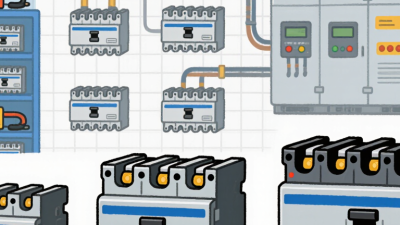
Best AC Circuit Breaker Manufacturers in China
Choosing among the Best AC Circuit Breaker Manufacturers in China takes more than comparing prices or product photos. An AC Circuit Breaker must carry normal current reliably and interrupt fault current safely. Ratings, operating conditions, and tested performance all matter. A compact molded-case unit may suit a workshop panel, while a larger air circuit breaker may serve an industrial distribution board. Details count.
Electrical engineer Charles Proteus Steinmetz was a pioneer in alternating-current engineering. As a paraphrase of the practical lesson behind his work—not a verified verbatim quotation: “Understand the current before choosing the protection.” That principle is useful when assessing manufacturers. Buyers should examine rated voltage, breaking capacity, pole configuration, trip characteristics, and supporting test documentation. They should also ask how the supplier controls production consistency and handles technical questions. A polished brochure is not proof. Neither is a low price.
This guide introduces Chinese manufacturers through product range, engineering capability, quality systems, and export experience. It also considers whether a company can provide clear specifications and dependable after-sales support. Those checks can make comparisons more useful. Yet no ranking can replace application-specific engineering review; this is easy to overlook. Confirm that each proposed breaker matches the system design and installation environment. The strongest supplier is not automatically the largest. Look for evidence, ask precise questions, and treat unclear claims as a reason to investigate further.
Read more »
 By:Oliver
- October 29, 2026
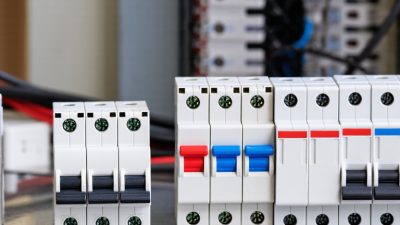
2026 Best Miniature Circuit Breaker Types for Global Buyers
Global buyers are entering 2026 with more demanding electrical protection requirements. The International Energy Agency’s Electricity 2024 report projects global electricity demand to grow by an average of 4% annually through 2026. More loads mean more protection decisions.
A Miniature Circuit Breaker is no longer a simple catalog item. It must match the circuit’s voltage, current, fault level, installation environment, and connected equipment. IEC 60898-1 remains a key reference for household and similar installations, while IEC 60947-2 applies to broader industrial switching and protection equipment. These standards help buyers compare performance, but they do not remove the need for engineering judgment.
Small details matter. A Type B curve may suit lighting and resistive loads. Type C can better tolerate moderate motor inrush. Type D is intended for higher starting currents, such as transformers or industrial motors. AC, DC, single-pole, two-pole, and four-pole designs each create different selection questions. Breaking capacity also deserves close attention, especially in commercial buildings with higher prospective fault currents.
There is no universal best type.
That assumption needs challenging.
This 2026 guide compares the main Miniature Circuit Breaker types for international purchasing teams. It considers trip curves, poles, rated current, breaking capacity, temperature effects, certification, and application fit. It also draws on IEC standards and IEA market data, rather than relying only on supplier descriptions. Some product labels appear similar across regions, yet their testing conditions may differ. Buyers should verify current certificates, test reports, and installation requirements before approval. A cheaper breaker can become expensive when nuisance tripping, poor coordination, or unsuitable fault protection disrupts a real facility.
Read more »
By:Oliver
- October 22, 2026

China Top 10 Circuit Breaker Manufacturers to Buy?
China’s Circuit Breaker industry has moved far beyond low-cost assembly. Today, leading manufacturers supply miniature, molded-case, air, and vacuum circuit breakers for homes, factories, renewable-energy projects, and data centers. Their products must manage heat, fault current, insulation distance, and repeated switching under demanding conditions.
Fortune Business Insights valued the global circuit breaker market at approximately USD 8.74 billion in 2023. Its report also projects continued growth through 2032, supported by grid modernization, electrification, and renewable-energy investment. Grand View Research identifies similar drivers, including aging power infrastructure and rising industrial automation. However, market estimates differ by product scope and research method. That difference deserves attention.
A practical buying decision should examine IEC 60947-2 compliance, rated short-circuit capacity, endurance testing, factory quality systems, and after-sales support. Certification alone is not enough. A neat datasheet cannot reveal every production weakness.
Dr. A. G. Phadke, a respected power-system protection researcher, emphasized the core principle: “Protection must operate selectively, rapidly, and dependably.” This principle applies directly to every Circuit Breaker purchase.
This guide reviews ten Chinese manufacturers through a buyer’s lens. It considers product range, technical documentation, export experience, customization, testing capability, and service response. Factory visits and sample testing remain valuable, when possible. Online rankings can simplify research, but they cannot replace engineering judgment.
Some manufacturers excel in high-volume distribution. Others perform better in industrial or utility applications. No ranking stays permanent. Buyers should verify current certificates, test reports, warranty terms, and local requirements before placing an order. Safety deserves more than a persuasive sales page.
Read more »
By:Oliver
- October 22, 2026
How to Choose the Right MCB Breaker?
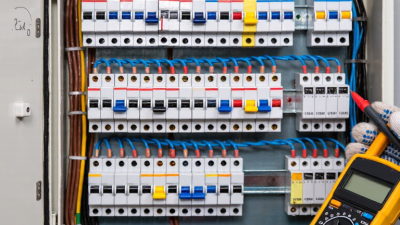
Choosing the right MCB Breaker is a practical safety decision, not a simple catalog exercise. A breaker must match the circuit’s voltage, load current, fault level, cable capacity, and operating environment. In a real panel, these details appear on labels, cable insulation, test records, and sometimes faded handwritten notes. Small errors can create nuisance tripping, overheating, or inadequate fault protection.
The International Energy Agency’s Electricity 2024 report expects global electricity demand to grow by an average of 3.4% annually through 2026. More demand means more circuits, distributed equipment, and changing load profiles. This trend makes accurate protection selection increasingly important. IEC 60898-1 provides requirements for circuit-breakers used in household and similar installations. It addresses rated current, tripping performance, and short-circuit capacity. These requirements offer a reliable technical foundation, but they do not replace a site assessment.
A suitable MCB Breaker should reflect the conductor size and the actual inrush behavior of connected equipment. Lighting, motors, compressors, and power supplies may need different trip characteristics. Type B, C, and D curves are not interchangeable labels. The available prospective short-circuit current also matters, especially in commercial buildings or near transformers. A neat label is not enough. I have seen installations where the breaker rating looked correct, yet the cable route, ambient heat, or grouping conditions changed the safe capacity. This article examines those overlooked details, including pole configuration, breaking capacity, discrimination, installation conditions, and compliance with applicable standards. The final choice should be verified by a qualified electrical professional and documented clearly.
Read more »
By:Oliver
- October 22, 2026