0%

Choosing among the Best AC Circuit Breaker Manufacturers in China takes more than comparing prices or product photos. An AC Circuit Breaker must carry normal current reliably and interrupt fault current safely. Ratings, operating conditions, and tested performance all matter. A compact molded-case unit may suit a workshop panel, while a larger air circuit breaker may serve an industrial distribution board. Details count.

Electrical engineer Charles Proteus Steinmetz was a pioneer in alternating-current engineering. As a paraphrase of the practical lesson behind his work—not a verified verbatim quotation: “Understand the current before choosing the protection.” That principle is useful when assessing manufacturers. Buyers should examine rated voltage, breaking capacity, pole configuration, trip characteristics, and supporting test documentation. They should also ask how the supplier controls production consistency and handles technical questions. A polished brochure is not proof. Neither is a low price.

This guide introduces Chinese manufacturers through product range, engineering capability, quality systems, and export experience. It also considers whether a company can provide clear specifications and dependable after-sales support. Those checks can make comparisons more useful. Yet no ranking can replace application-specific engineering review; this is easy to overlook. Confirm that each proposed breaker matches the system design and installation environment. The strongest supplier is not automatically the largest. Look for evidence, ask precise questions, and treat unclear claims as a reason to investigate further.
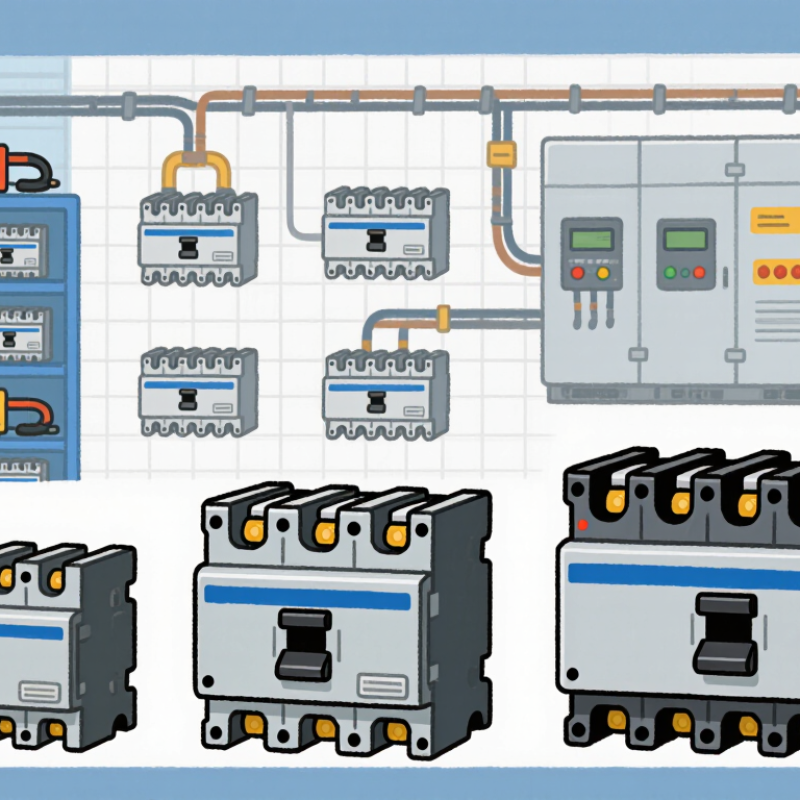
Best AC Circuit Breaker Manufacturers in China

AC Circuit Breakers in China: IEC 60947-2 Covers Systems up to 1,000 V AC

IEC 60947-2 applies to low-voltage circuit-breakers designed for AC systems with rated voltages up to 1,000 V. For buyers comparing manufacturers in China, this scope is a useful starting point, not a complete selection rule. A breaker’s rated voltage, current, and short-circuit breaking capacity must match the actual installation. Check the Icu and Ics values at the intended operating voltage. The numbers can change across voltage ratings. That detail matters.

Ask for test documentation tied to the exact model and configuration, including pole count and trip-unit settings. Confirm which edition of IEC 60947-2 was used, and distinguish test reports from general claims of compliance. In a distribution cabinet, ambient heat, busbar spacing, and available fault current can affect the choice. Coordination with upstream and downstream protection also deserves attention. A device may meet the standard yet still be poorly suited to a specific panel. I would question any selection based on frame size alone; it is convenient, but incomplete. Verify the manufacturer’s ratings against the project’s drawings and system conditions before ordering.

AC Circuit Breakers in China: IEC 60947-2 Voltage Scope

IEC 60947-2 covers circuit-breakers for AC systems with rated voltages up to 1,000 V. The chart shows common voltage reference points and the standard’s upper AC scope limit; it does not represent manufacturer ratings.

IEC 60898-1 Defines Household Breakers up to 440 V, 125 A, and 25 kA

IEC 60898-1 defines a specific performance envelope for household and similar AC circuit breakers. The IEC standard sets limits of 440 V, 125 A, and 25 kA for rated voltage, current, and short-circuit capacity. These are scope ceilings, not default design targets. A 25 kA rating, for example, does not mean every home installation requires that level. The correct selection depends on the prospective fault current and the installation conditions.

For buyers comparing manufacturers in China, ask for test reports that identify the exact product model and rating. Check the declared voltage, current, breaking capacity, and trip characteristics against IEC 60898-1. Confirm that reports come from a competent testing laboratory and match the supplied production version. Small differences matter. A useful report should make them visible. One point is easy to overlook: a catalogue figure alone does not verify performance under a particular installation’s fault conditions.

Tips: Match the breaker’s breaking capacity to the site’s measured or calculated fault level. Keep the test report and product identification together. If either is unclear, pause and verify before procurement. That extra check can prevent a costly mismatch.

Leading Chinese AC Breaker Manufacturers and Their Product Portfolios

Chinese AC circuit-breaker manufacturers commonly supply equipment for residential, commercial, and industrial installations. Their portfolios often include miniature circuit breakers for final circuits and molded-case breakers for feeders and motor protection. Larger systems may use air circuit breakers, while residual-current devices help detect leakage faults. Some suppliers also offer isolators, auxiliary contacts, shunt trips, and enclosure options. Product depth varies. A catalog may look broad, yet not every configuration is available with the same lead time.

Tips: Match the breaker to the system voltage, current, pole count, and expected fault level. Check the trip curve and breaking capacity against the project design. Ask for current technical datasheets and test records. Small details matter.

When comparing manufacturers, review production controls, inspection procedures, and support for custom configurations. Confirm how ratings are tested and labeled, rather than relying on a short product description. Request sample units when practical, and inspect terminals, markings, and enclosure fit. A polished catalog is not proof of consistent production. It is also worth checking spare-part availability and response times before placing a large order. Some requirements are easy to miss; written specifications make comparisons clearer.

How to Compare Breakers by Rated Current, Breaking Capacity, and Application

When comparing AC circuit breakers, begin with rated current, not the largest number in a catalog. Rated current should suit the circuit’s expected load and the conductor’s capacity. A 32-amp breaker may fit one installation, yet overload another. Check ambient temperature and continuous loads, too. Small details matter.

Breaking capacity is different. It indicates the fault current a breaker can safely interrupt. Compare its rating with the prospective short-circuit current at the installation point. For example, a workshop panel near a transformer may face higher fault current than a long branch circuit. Ask manufacturers for relevant test documents, not just a product sheet. Clear records help; vague answers should prompt another question.

Application changes the choice. Lighting circuits, air-conditioning units, and motors can have different starting currents and operating patterns. A motor may trip a poorly matched breaker during startup, even when its normal running current seems acceptable. Review the trip curve, pole configuration, and installation conditions. It is easy to focus on headline ratings and miss compatibility. That happens. Compare technical data, consistency between samples, and traceable quality checks before placing an order.

Best AC Circuit Breakers in China: Compare Rated Current, Breaking Capacity, and Application

Breaker Type Common Standard Typical Rated Current Typical Breaking Capacity Typical AC Voltage Common Applications Key Comparison Points
Miniature Circuit Breaker (MCB) IEC 60898-1 About 1–125 A Rated short-circuit capacity (Icn) commonly 4.5, 6, 10, or up to 15 kA, depending on the model Typically 230 V single-phase or 400 V three-phase Residential circuits, lighting, socket outlets, and small commercial branch circuits Check rated current, trip curve (such as B, C, or D), number of poles, and Icn at the intended voltage.
Molded-Case Circuit Breaker (MCCB) IEC 60947-2 Commonly about 16–1,600 A; product ranges vary Rated ultimate short-circuit breaking capacity (Icu) is model- and voltage-dependent; roughly 25–100 kA at 400/415 V is a common selection range Commonly 400/415 V; some models are rated for systems up to 690 V Commercial and industrial distribution, feeder protection, motors, and larger loads Compare Icu and service breaking capacity (Ics) at the actual operating voltage, plus trip-unit settings and selectivity requirements.
Air Circuit Breaker (ACB) IEC 60947-2 Commonly about 630–6,300 A Model-dependent; approximately 50–100 kA at 400/415 V is a representative range Commonly 400/415 V; some models are rated for systems up to 690 V Main low-voltage switchboards, generator protection, and high-current industrial or commercial services Compare frame and sensor ratings, short-time withstand current (Icw), Icu, Ics, protection functions, and coordination with downstream breakers.
Vacuum Circuit Breaker (VCB) IEC 62271-100 Commonly about 630–3,150 A Rated short-circuit breaking current commonly falls around 20–50 kA, depending on voltage and model Medium-voltage systems, commonly 6–40.5 kV Medium-voltage switchgear, substations, industrial plants, and utility distribution Compare rated voltage, short-circuit breaking current, rated short-time withstand current, operating sequence, and switchgear compatibility.

The ranges above are representative, not universal product specifications. Actual ratings vary by design, pole configuration, frequency, ambient conditions, and operating voltage. Confirm the manufacturer’s datasheet and the applicable IEC standard before selection; breaking-capacity figures should only be compared at the same voltage and under the same rating category.

Assessing Manufacturers Through GB/T 14048.2 Compliance and Type Testing

For buyers comparing AC circuit breaker manufacturers in China, GB/T 14048.2 is a useful starting point. It sets technical requirements for low-voltage circuit breakers, but a standards reference alone proves little. Ask for the test report and confirm that its model, frame size, rated current, and trip unit match the product being quoted.

Type testing should cover the declared operating conditions and relevant performance, such as temperature rise, endurance, and short-circuit breaking capacity. Check the tested voltage and current ratings carefully. A report for one configuration may not cover every accessory or rating in a product family. Details matter. Where possible, verify the report with the issuing laboratory and review its scope and date.

Factory quality controls matter too. Ask how production units are checked against the tested design, and request sample inspection records or traceability details. A neat certificate is not the whole story. I would still compare the physical markings, terminal layout, and protection settings with the report. Manufacturers may provide incomplete files; that is worth noting, not dismissing automatically. A clear answer about gaps is more useful than a polished claim without supporting evidence.

FAQS

What systems does IEC 60947-2 cover?

It covers low-voltage circuit-breakers for AC systems rated up to 1,000 V. This scope is only a starting point.

Which ratings should I check before choosing a breaker?

Check rated voltage, rated current, and short-circuit breaking capacity. Match them to the actual installation and conductor capacity.

What do Icu and Ics values tell me?

They describe breaking capacities at a specified voltage. Check both values at your system’s operating voltage; ratings can change.

Why does the installation’s fault current matter?

The breaker must interrupt the prospective fault current at its location. A panel near a transformer may face higher fault current than a long branch circuit.

What test documents should I request?

Ask for test records for the exact model and configuration. Confirm pole count, trip-unit settings, and the IEC 60947-2 edition used.

Is a general claim of compliance enough?

No. Compare traceable test reports with the project drawings and system conditions. A broad claim leaves useful details unclear.

How can ambient conditions affect breaker selection?

Cabinet heat, busbar spacing, and continuous loads can influence suitability. These details are easy to overlook.

Why might a motor trip a breaker during startup?

Starting current and operating patterns differ from normal running conditions. Review the trip curve and application, not just the headline rating. It happens.

Conclusion

China’s AC circuit breaker market serves industrial, commercial, and residential applications under different technical requirements. IEC 60947-2 applies to low-voltage circuit breakers in systems up to 1,000 V AC, while IEC 60898-1 covers household and similar-use breakers rated up to 440 V, 125 A, and 25 kA. Understanding which standard fits an installation helps buyers narrow their choices and assess whether a product is suitable for its intended environment.

When comparing manufacturers, consider rated current, rated voltage, breaking capacity, operating conditions, and application rather than relying on a single specification. Industrial systems may require different protection characteristics from household circuits. Buyers can also assess technical documentation, production consistency, and quality controls, while checking compliance with GB/T 14048.2 and requesting relevant type-test evidence. A careful review of these factors can support a safer, more informed selection of an AC Circuit Breaker.

Oliver

Oliver

Oliver is a professional marketing specialist dedicated to helping businesses understand products, markets, and practical solutions through clear, reliable, and valuable content. With extensive knowledge of the company’s product portfolio, he regularly contributes to the company website’s......