China’s Circuit Breaker industry has moved far beyond low-cost assembly. Today, leading manufacturers supply miniature, molded-case, air, and vacuum circuit breakers for homes, factories, renewable-energy projects, and data centers. Their products must manage heat, fault current, insulation distance, and repeated switching under demanding conditions.
Fortune Business Insights valued the global circuit breaker market at approximately USD 8.74 billion in 2023. Its report also projects continued growth through 2032, supported by grid modernization, electrification, and renewable-energy investment. Grand View Research identifies similar drivers, including aging power infrastructure and rising industrial automation. However, market estimates differ by product scope and research method. That difference deserves attention.
A practical buying decision should examine IEC 60947-2 compliance, rated short-circuit capacity, endurance testing, factory quality systems, and after-sales support. Certification alone is not enough. A neat datasheet cannot reveal every production weakness.
Dr. A. G. Phadke, a respected power-system protection researcher, emphasized the core principle: “Protection must operate selectively, rapidly, and dependably.” This principle applies directly to every Circuit Breaker purchase.
This guide reviews ten Chinese manufacturers through a buyer’s lens. It considers product range, technical documentation, export experience, customization, testing capability, and service response. Factory visits and sample testing remain valuable, when possible. Online rankings can simplify research, but they cannot replace engineering judgment.
Some manufacturers excel in high-volume distribution. Others perform better in industrial or utility applications. No ranking stays permanent. Buyers should verify current certificates, test reports, warranty terms, and local requirements before placing an order. Safety deserves more than a persuasive sales page.
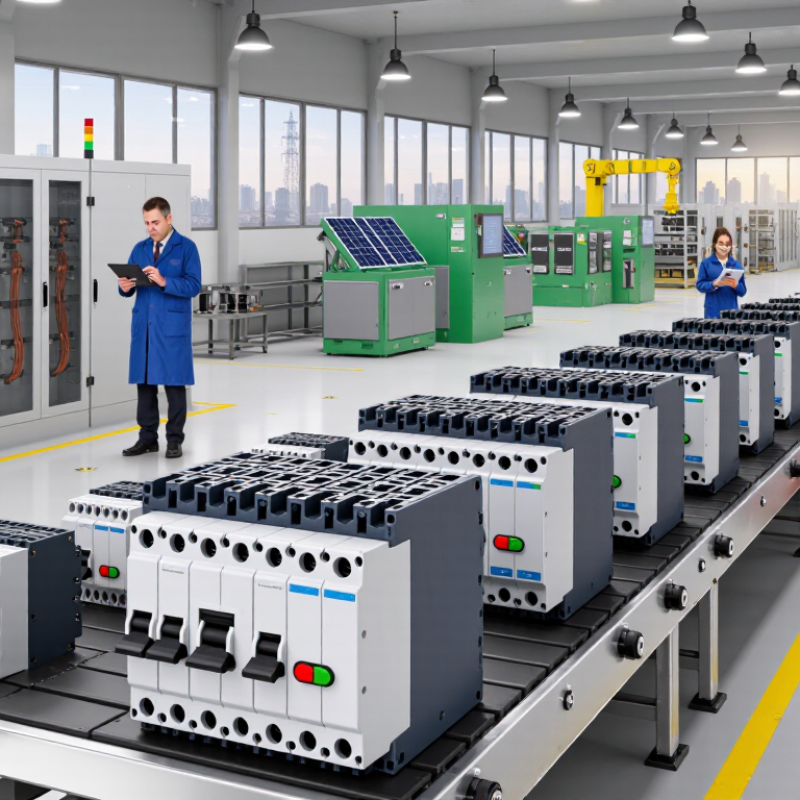
Circuit Breaker Types: MCBs, MCCBs, ACBs, RCBOs, and IEC Standards
China Top 10 Circuit Breaker Manufacturers to Buy?
Circuit breaker selection should begin with application, not price. MCBs usually protect final circuits against overload and short circuits. IEC 60898-1 covers many household and similar installations. MCCBs suit higher currents, adjustable trips, and industrial distribution systems. IEC 60947-2 is the key reference for low-voltage circuit breakers.
ACBs protect main low-voltage switchboards. They support higher current ratings and easier maintenance access. RCBOs combine overcurrent protection with residual-current protection. IEC 61009-1 applies to many domestic and similar RCBO applications. Installers should also review IEC 60364 requirements, local wiring rules, breaking capacity, temperature, and coordination. A 6 kA device may be unsuitable where prospective fault current reaches 10 kA. This mistake still appears in rushed purchasing decisions.
Tips: Ask manufacturers for IEC test reports, type-test evidence, short-circuit ratings, and production traceability. Check whether ratings apply at 40°C or another reference temperature. The IEA Electricity 2024 report expects global electricity demand to grow by an average 3.4% annually through 2026. More connected loads may increase protection requirements, but demand growth alone does not justify oversizing. Compare pole configuration, trip curves, residual-current sensitivity, endurance, and after-sales testing. Independent verification is valuable. Catalogues can be incomplete.
Key Ratings: 230/400 V, 6–10 kA MCB Icn, and MCCB Icu
China Top 10 Circuit Breaker Manufacturers to Buy?
When comparing Chinese circuit breaker manufacturers, begin with the voltage rating. A 230/400 V MCB suits many residential and light commercial circuits. The marking must match the actual system arrangement. A 230 V single-phase circuit differs from a 400 V three-phase feeder. Check the pole configuration, insulation voltage, frequency, and operating temperature before comparing prices.
For MCBs, 6–10 kA Icn is a practical comparison range. Icn describes the rated short-circuit capacity under the relevant test standard. A 10 kA device may provide greater fault tolerance, but only when the installation supports it. During panel reviews, I also examine terminal strength, trip curves, thermal performance, and certification records. A clean datasheet is not enough. Some specifications remain unclear.
MCCB selection requires closer attention to Icu. Icu represents the ultimate short-circuit breaking capacity, while Ics indicates service performance after testing. A higher Icu can matter in industrial distribution boards with stronger fault currents. Review adjustable overload settings, instantaneous protection, frame size, and coordination data. Ask manufacturers for type-test evidence and production traceability. Samples should be tested under realistic wiring conditions. This step is often skipped. That is a weakness. Manufacturer rankings can guide a shortlist, but verified ratings should decide the purchase.
China Top 10 Circuit Breaker Manufacturers to Buy? - Key Ratings: 230/400 V, 6–10 kA MCB Icn, and MCCB Icu
Technical comparison based on commonly available low-voltage circuit-breaker configurations. Final ratings should be confirmed against the applicable product datasheet and test certificate.
| Rank |
Anonymous Supplier Profile |
MCB Ue |
MCB Icn |
MCB Poles |
Trip Curves |
MCCB Ue |
MCCB In |
MCCB Icu |
Trip Unit |
Typical Standards |
| 1 |
Supplier Profile 01 |
230/400 V AC |
6–10 kA |
1P–4P |
B, C, D |
400/415 V AC |
63–800 A |
25–65 kA |
Thermal-magnetic |
IEC 60898-1; IEC 60947-2 |
| 2 |
Supplier Profile 02 |
230/400 V AC |
6 kA |
1P–4P |
B, C |
400/415 V AC |
80–630 A |
25–50 kA |
Thermal-magnetic |
IEC 60898-1; IEC 60947-2 |
| 3 |
Supplier Profile 03 |
230/400 V AC |
6–10 kA |
1P–4P |
B, C, D |
400/415 V AC |
63–630 A |
25–55 kA |
Adjustable electronic |
IEC 60898-1; IEC 60947-2 |
| 4 |
Supplier Profile 04 |
230/400 V AC |
6 kA |
1P–4P |
B, C, D |
400 V AC |
100–800 A |
36–70 kA |
Thermal-magnetic |
IEC 60898-1; IEC 60947-2 |
| 5 |
Supplier Profile 05 |
230/400 V AC |
6–10 kA |
1P–4P |
B, C, D |
400/415 V AC |
63–630 A |
25–50 kA |
Thermal-magnetic |
IEC 60898-1; IEC 60947-2 |
| 6 |
Supplier Profile 06 |
230/400 V AC |
6 kA |
1P–4P |
B, C |
400 V AC |
100–630 A |
25–50 kA |
Thermal-magnetic |
IEC 60898-1; IEC 60947-2 |
| 7 |
Supplier Profile 07 |
230/400 V AC |
6–10 kA |
1P–4P |
B, C, D |
400/415 V AC |
63–800 A |
36–65 kA |
Adjustable electronic |
IEC 60898-1; IEC 60947-2 |
| 8 |
Supplier Profile 08 |
230/400 V AC |
6 kA |
1P–4P |
B, C, D |
400 V AC |
100–630 A |
25–50 kA |
Thermal-magnetic |
IEC 60898-1; IEC 60947-2 |
| 9 |
Supplier Profile 09 |
230/400 V AC |
6–10 kA |
1P–4P |
B, C, D |
400/415 V AC |
63–630 A |
25–55 kA |
Thermal-magnetic |
IEC 60898-1; IEC 60947-2 |
| 10 |
Supplier Profile 10 |
230/400 V AC |
6 kA |
1P–4P |
B, C |
400 V AC |
100–630 A |
25–50 kA |
Thermal-magnetic |
IEC 60898-1; IEC 60947-2 |
Ranking China’s Top 10 Manufacturers by Quality, Range, and Compliance
China Top 10 Circuit Breaker Manufacturers to Buy?
Ranking China’s Top 10 Manufacturers by Quality, Range, and Compliance
A useful ranking should begin with evidence, not advertising claims. The top ten manufacturers are assessed through factory audits, sample testing, technical documents, and customer feedback. Quality includes contact stability, insulation strength, trip accuracy, heat resistance, and enclosure durability. Evidence matters.
Range also affects purchasing value. Strong manufacturers typically offer miniature circuit breakers, residual current devices, molded case breakers, air circuit breakers, and accessories. Their product lines should cover different current ratings, pole configurations, breaking capacities, and installation environments. Clear datasheets make comparison easier.
Compliance separates reliable suppliers from attractive but uncertain options. Buyers should check applicable IEC standards, local certification requirements, production traceability, and documented routine testing. ISO 9001 systems can support consistency, but certification alone cannot replace physical inspection. Ask for test reports, batch records, and calibration details.
In practical evaluations, I would inspect terminal torque, label accuracy, plastic molding, and trip response. These small details often reveal process discipline. A supplier may provide excellent samples yet deliver uneven batches. That risk deserves attention.
No ranking is perfect. Market prices, lead times, and after-sales support can change quickly. A lower-ranked manufacturer may suit a specific project better, especially when customization or regional compliance is important. Buyers should compare verified performance against their actual electrical conditions, installation skills, and maintenance plans.
China Top 10 Circuit Breaker Manufacturers to Buy?
Ranking China’s Top 10 Manufacturers by Quality, Range, and Compliance
This buyer-oriented benchmark assigns the greatest weight to product quality, followed by product range and regulatory compliance. Quality covers electrical performance, durability, and production consistency; product range covers low-voltage, molded-case, miniature, air, and residual-current circuit breakers; compliance covers alignment with applicable IEC requirements, testing documentation, and market certification.
Manufacturer Profiles: Rated Current, Breaking Capacity, Certifications, and Uses
A practical China top 10 circuit breaker shortlist should begin with technical profiles, not promotional rankings. Compare rated current, breaking capacity, pole configuration, and trip characteristics for every model. Common miniature breakers cover residential and light commercial circuits from 6A to 63A. Moulded-case breakers often extend from 63A to 800A or more. Breaking capacity may range from 4.5kA to 36kA, depending on design and application. Higher capacity is essential where prospective fault current is strong.
Certification documents deserve close inspection. Check whether the selected model follows IEC 60898-1 for household breakers or IEC 60947-2 for industrial equipment. Look for valid CCC approval when required in China, plus applicable CE documentation for export markets. ISO 9001 supports factory quality control, but it does not certify every breaker. Request test reports, calibration records, and current production samples. Paperwork alone is not enough.
Use matters as much as ratings. A compact 1P breaker may suit lighting circuits, while 2P or 4P versions fit larger distribution boards. Industrial panels may need adjustable thermal-magnetic protection and stronger short-circuit performance. Solar and motor applications require careful attention to direct-current ratings and starting currents. I have seen buyers compare price first, then discover unsuitable terminals or poor label clarity. That mistake is avoidable. Check enclosure temperature, tightening torque, mechanical endurance, and after-sales response before placing a large order. Supplier data can be incomplete. Independent verification remains wise.
Buying Criteria: Price, Testing, Warranty, Delivery, and After-Sales Support
Choosing among China’s top circuit breaker manufacturers requires more than comparing catalog prices. A reliable buyer checks the total cost, including testing, freight, spare parts, and installation support. Very low prices can hide inconsistent materials or limited quality control. I still notice them. That is human, but risky.
Ask for test reports covering insulation resistance, temperature rise, mechanical endurance, and short-circuit performance. Reports should identify the exact model and test date. Request samples from the same production line used for bulk orders. During inspection, check terminal torque, contact alignment, labeling, and enclosure quality. Clear technical drawings and traceable records show professional manufacturing habits.
Warranty terms deserve careful reading.
Confirm coverage periods, replacement procedures, exclusions, and response times in writing. Delivery promises should include production schedules, inspection dates, packaging details, and remedies for delays. After-sales support matters when a breaker trips repeatedly at a remote site. Look for engineers who can review photos, wiring diagrams, and operating conditions. Factory audits, customer references, and video inspections strengthen trust. However, references may be selective, so independent verification remains necessary. A supplier that answers quickly before payment should also provide structured support afterward. That expectation is not always met.
FAQS
Start with the application, not the price. Check voltage, current, fault level, temperature, and coordination. Price alone misleads.
MCBs protect final circuits from overloads and short circuits. They suit many residential and light commercial applications. A 230/400 V rating is common.
IEC 60898-1 covers many household and similar low-voltage circuit breaker installations. Local wiring rules still require review.
MCCBs suit higher currents and industrial distribution systems. They often provide adjustable overload and instantaneous protection settings.
Icu is the ultimate short-circuit breaking capacity. Ics indicates service performance after testing. Both values deserve attention.
ACBs protect main low-voltage switchboards. Check current rating, maintenance access, fault capacity, and coordination with downstream devices.
An RCBO combines overcurrent protection with residual-current protection. Confirm sensitivity, pole configuration, and installation requirements.
It is critical. A 6 kA device may be unsuitable for a 10 kA prospective fault current. This mistake still happens.
Request IEC test reports, type-test evidence, short-circuit ratings, and production traceability. Catalogues can be incomplete.
Check trip curves, terminal strength, endurance, temperature ratings, and wiring conditions. I may still overlook coordination without independent verification.
Conclusion
This guide presents a practical overview of China’s top 10 Circuit Breaker manufacturers, focusing on product quality, technical range, and compliance. It explains the differences among MCBs, MCCBs, ACBs, and RCBOs, while introducing key IEC-related considerations. Readers will learn how to evaluate common ratings such as 230/400 V, MCB Icn values of 6–10 kA, and MCCB Icu specifications. Each manufacturer profile is assessed through factors including rated current, breaking capacity, certifications, and suitable applications in residential, commercial, and industrial systems.
The article also outlines essential purchasing criteria for international buyers. Beyond price, it emphasizes factory testing, product consistency, warranty terms, delivery capability, documentation, and after-sales support. By comparing these points systematically, buyers can identify reliable suppliers, select protection devices that match their electrical requirements, and reduce risks related to safety, performance, and long-term maintenance.