Choosing the right MCB Breaker is a practical safety decision, not a simple catalog exercise. A breaker must match the circuit’s voltage, load current, fault level, cable capacity, and operating environment. In a real panel, these details appear on labels, cable insulation, test records, and sometimes faded handwritten notes. Small errors can create nuisance tripping, overheating, or inadequate fault protection.
The International Energy Agency’s Electricity 2024 report expects global electricity demand to grow by an average of 3.4% annually through 2026. More demand means more circuits, distributed equipment, and changing load profiles. This trend makes accurate protection selection increasingly important. IEC 60898-1 provides requirements for circuit-breakers used in household and similar installations. It addresses rated current, tripping performance, and short-circuit capacity. These requirements offer a reliable technical foundation, but they do not replace a site assessment.
A suitable MCB Breaker should reflect the conductor size and the actual inrush behavior of connected equipment. Lighting, motors, compressors, and power supplies may need different trip characteristics. Type B, C, and D curves are not interchangeable labels. The available prospective short-circuit current also matters, especially in commercial buildings or near transformers. A neat label is not enough. I have seen installations where the breaker rating looked correct, yet the cable route, ambient heat, or grouping conditions changed the safe capacity. This article examines those overlooked details, including pole configuration, breaking capacity, discrimination, installation conditions, and compliance with applicable standards. The final choice should be verified by a qualified electrical professional and documented clearly.
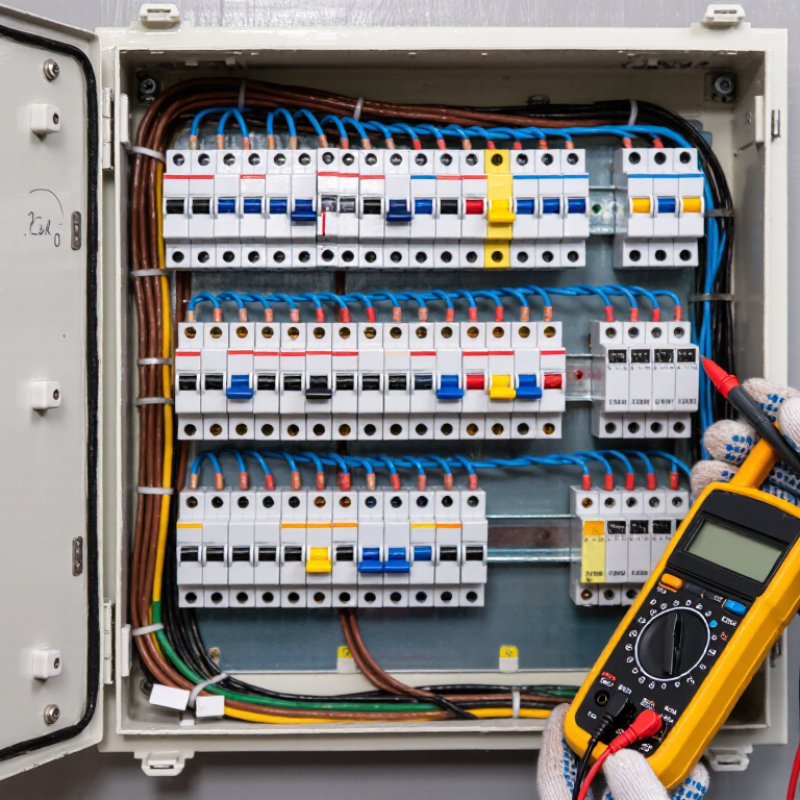
Understand What an MCB Breaker Does and Why It Matters
How to Choose the Right MCB Breaker?
An MCB breaker protects an electrical circuit from overloads and short circuits. When current rises beyond a safe level, its internal mechanism trips and opens the circuit. This helps prevent overheated wires, damaged equipment, and possible electrical fires. It trips fast. That matters.
Choosing one requires more than matching the visible switch size. Check the circuit’s rated current, operating voltage, number of poles, and breaking capacity. The trip curve also matters because motors and lighting may create different starting currents. In a workshop, a breaker that trips during every motor start becomes frustrating and unreliable. I have learned that a slightly higher rating is not automatically better. It can hide an overloaded cable. The breaker must protect the wiring, not merely keep equipment running.
Tips: Read the distribution-board label and confirm the cable size before selecting an MCB. Match the breaker’s rating with the circuit design and expected load. Consider moisture, heat, dust, and frequent switching in the installation area. Do not guess. A qualified electrician should verify compatibility, tighten terminals correctly, and test the circuit after installation. Local electrical requirements should also be checked, because designs that seem acceptable can still fail inspection or perform poorly in real conditions.
How to Choose the Right MCB Breaker? - Understand What an MCB Breaker Does and Why It Matters
| Selection Dimension | What It Means | Typical Options or Data | How to Choose |
|---|---|---|---|
| Primary Function | An MCB protects electrical circuits against overload and short-circuit current. | Thermal protection for overload; magnetic protection for short circuits. | Use an MCB as circuit protection, not as a replacement for a residual-current device or surge protective device. |
| Rated Current (In) | The current the MCB is designed to carry continuously under specified conditions. | Common ratings include 2 A, 6 A, 10 A, 16 A, 20 A, 25 A, 32 A, 40 A, 50 A and 63 A. | Select a rating that protects the cable and is suitable for the expected load. The breaker rating must not exceed the permitted cable current. |
| Load Current | The current expected during normal operation of the connected equipment. | Single-phase estimate: I = P ÷ (V × power factor). | Calculate the design current first, then choose the nearest suitable standard MCB rating above the design current while checking cable capacity. |
| Trip Curve | The magnetic trip range determines how quickly the MCB responds to high inrush or short-circuit current. |
B: approximately 3–5 × In C: approximately 5–10 × In D: approximately 10–20 × In |
B is generally suited to resistive or low-inrush loads; C is common for mixed loads and moderate motor or transformer inrush; D is intended for high-inrush equipment when the installation permits it. |
| Number of Poles | The number of conductors switched and protected by the device. | 1P, 1P+N, 2P, 3P and 4P configurations are commonly available. | Match the pole arrangement to the system voltage, earthing method and local wiring rules. Neutral switching requirements vary by installation standard. |
| Rated Voltage (Ue) | The maximum operating voltage for which the MCB is designed. | Typical systems include approximately 120 V, 230 V, 400 V and 415 V AC, depending on the electrical network. | Choose an MCB whose rated voltage is equal to or higher than the circuit voltage and verify AC or DC suitability. |
| Breaking Capacity | The maximum prospective short-circuit current the MCB can safely interrupt. | Common values include 4.5 kA, 6 kA and 10 kA, but available ratings depend on the product and standard. | The MCB breaking capacity must be at least equal to the prospective fault current at the installation point. |
| Cable Compatibility | The cable must withstand the protected load current without excessive heating. | Ampacity depends on conductor material, cross-sectional area, insulation, installation method, ambient temperature and grouping. | Confirm the cable’s corrected current-carrying capacity before selecting the MCB. Do not size the breaker from load power alone. |
| Load Type | Different loads produce different starting currents and operating characteristics. | Lighting, socket circuits, heaters, motors, pumps, compressors, transformers and electronic power supplies. | Consider inrush current and manufacturer requirements. A curve that is too sensitive may nuisance-trip; one that is too high may reduce protection. |
| Standards and Certification | Standards define performance, testing and application requirements. | IEC 60898-1 is commonly associated with MCBs for household and similar installations; IEC 60947-2 covers circuit-breakers for broader industrial applications. | Use a device compliant with the applicable national or regional standard and installation regulations. |
| Ambient Conditions | Temperature, enclosure ventilation and grouping can affect thermal performance. | High ambient temperature and multiple adjacent devices may require rating correction according to the product documentation. | Apply the manufacturer’s derating data when MCBs are installed in hot, crowded or poorly ventilated enclosures. |
| Coordination and Selectivity | Coordination helps the protective device nearest to a fault operate first. | Upstream and downstream ratings, time-current curves and backup protection affect selectivity. | Check coordination tables or time-current characteristics when continuity of supply is important. |
| Final Verification | A correct choice must satisfy electrical, mechanical and regulatory requirements. | Check current, voltage, poles, curve, breaking capacity, cable rating, dimensions and applicable regulations. | Have the design and installation verified by a qualified electrician, especially for commercial, industrial or high-fault-current systems. |
Note: Electrical ratings and installation requirements vary by jurisdiction and application. Always confirm the final selection against the applicable wiring regulations and the device documentation.
FAQS
Match the breaker’s breaking capacity with the highest prospective fault current at its installation point.
No. A 32 A breaker may carry the load but still have unsuitable short-circuit capacity.
It shows the maximum fault current the breaker can safely interrupt. Check it carefully.
Supply voltage, transformer impedance, cable length, conductor size, and upstream protection all matter.
Yes. A main panel may have higher fault current than a distant socket.
Longer cables usually add impedance and reduce fault current. Do not assume this without calculation.
Check rated current, tripping curve, pole count, connection size, voltage, frequency, and earthing arrangement.
Confirm the distribution board, busbar, enclosure, and conductor size. Small mismatches may create terminal heat.
Isolate the supply, tighten terminals to the specified torque, and test insulation and protective continuity.
A neat panel can hide a loose connection or an unsafe assumption. Record uncertain load assumptions for later review.
Conclusion
Choosing the right MCB Breaker is essential for protecting electrical circuits from overloads and short circuits while supporting reliable system performance. Begin by understanding how the breaker works and evaluate the circuit’s operating voltage, expected current, and connected load. These details help determine the correct current rating and prevent nuisance tripping or inadequate protection. You should also select the appropriate number of poles and trip curve according to the circuit design, equipment characteristics, and expected starting currents.
Another important consideration is the breaker’s breaking capacity. It must be high enough to safely interrupt the maximum fault current available at the installation point. Before installation, verify that the MCB Breaker complies with applicable electrical standards and is compatible with the distribution board, wiring, and other protective devices. Proper sizing, coordination, and installation by a qualified professional can improve safety, reduce equipment damage, and ensure dependable operation.