Multi-language technical consultation for low voltage circuit breaker engineering and wholesale inquiries.
Deutsch
Português
Español
Français
Italiano
Русский
한국어
日本語
العربية
ภาษาไทย
Tiếng Việt
Türkçe
Nederlands
Indonesia
עברי特
हिंदी
IEC Sourcing Guide & Direct Manufacturing
Low Voltage Circuit Breaker Sourcing Guide: How Global Buyers Select, Specify, and Procure Industrial-Grade Protection Devices
Procuring the correct low voltage circuit breaker is the cornerstone of modern switchboard safety, operational uptime, and regulatory compliance. Zhejiang Graybar Electric Co., Ltd. engineers and manufactures heavy-duty MCBs, MCCBs, and ACBs in Liushi Town, Wenzhou—delivering certified breaking performance, high short-circuit withstand ratings, and OEM scalability directly to global panel builders, EPCs, and electrical equipment importers.
1,000V ACMaximum operating insulation rating for industrial low voltage systems
Up to 6300AContinuous current handling across modular ACB and MCCB architectures
5 pcs MOQFlexible trial orders for standard MCB, MCCB, and SPD distribution models
100% InspectedDielectric, millivolt drop, and instantaneous trip calibration before dispatch
Tiered Engineering Architecture
Low Voltage Circuit Breaker Recommendations
A reliable low voltage electrical distribution system relies on cascading coordination. Zhejiang Graybar Electric Co., Ltd. provides calibrated protection across the three primary tiers of low voltage installations, balancing breaking capacity, thermal endurance, and lifecycle economics.
Low Voltage Circuit Breaker Portfolio Engineered by Zhejiang Graybar Electric Co., Ltd. for Industrial, Commercial, and Renewable Applications.
Strategic Sourcing Intelligence
Future Sourcing & Procurement Trends for Low Voltage Circuit Breakers
The global low voltage circuit breaker procurement landscape is shifting away from purely price-driven transactional purchasing toward lifecycle value, digital verification, and supply chain transparency.
1. Certified Service Capacity (Ics = 100% Icu)
Global project tenders no longer accept breakers evaluated solely on ultimate breaking capacity (Icu). Buyers now strictly mandate that service breaking capacity (Ics) equals 100% of Icu under IEC 60947-2, ensuring the breaker can interrupt real-world severe faults without needing immediate unit replacement.
2. Total Cost of Acquisition vs. Initial Unit Price
Experienced distributors and panel builders are evaluating total acquisition costs—including thermal loss ratings (watts dissipated per pole), contact erosion resistance, and freight consolidation efficiency. Lower internal resistance directly translates to reduced switchboard operating temperatures and lower energy bills.
3. Consolidated Multi-Category Shipments
Rather than managing split purchase orders across separate suppliers for MCBs, MCCBs, ACBs, and SPDs, leading procurement directors favor vertically integrated manufacturers like Zhejiang Graybar Electric Co., Ltd. that combine all distribution components into consolidated, palletized ocean shipments.
Procurement Strategy
Navigating Factory Lead Times & Raw Material Volatility
Over 60% of an industrial circuit breaker’s manufacturing cost is directly linked to electrolytic copper, fine silver for electrical contact tips, and high-performance thermoset DMC/BMC plastics. Savvy procurement officers avoid spot-market volatility by partnering directly with manufacturers situated in Liushi Town, Wenzhou—the epicenter of China's electrical supply chain—where raw component buffers insulate buyers from sudden international price shocks and deliver reliable production schedules.
Future Technology Trends in Low Voltage Circuit Breakers
Driven by industrial decarbonization, distributed renewable energy generation, and IoT monitoring, low voltage circuit breakers are rapidly evolving beyond conventional electro-mechanical trip mechanisms.
1. Digitalization & Native Modbus / IoT Communication
The transition from passive thermal-magnetic tripping mechanisms to intelligent Electronic Trip Units (ETUs) with native telemetry.
Modern industrial switchboards require real-time current, harmonic distortion (THD), neutral imbalance, and temperature monitoring at the breaker level. Modern low voltage breakers now integrate RS485 Modbus-RTU, Ethernet, and cloud-ready IoT interfaces directly into the breaker cradle or trip unit. This enables predictive maintenance, notifying facility managers of contact tip degradation, spring charging wear, and impending overloads before an unexpected catastrophic tripping occurs.
Primary MetricReal-Time Current / Voltage / Harmonic Sensing
Communication ProtocolsRS485 Modbus-RTU, BACnet, Ethernet
2. DC High-Voltage Ratings for Solar PV & BESS Systems
Adapting low voltage arc interruption technologies to handle continuous direct-current loads up to 1500V DC without zero-crossing.
With the explosive rollout of commercial solar photovoltaic arrays and Battery Energy Storage Systems (BESS), the demand for dedicated DC low voltage circuit breakers is growing rapidly. Unlike AC currents where alternating cycles naturally pass through zero voltage, DC currents sustain high-energy continuous arcs when contacts open. Next-generation breakers utilize permanent magnetic arc-blowout fields, extended multi-grid deionising chambers, and specialized silver-tin-oxide contacts to quench arcs up to 1500V DC safely.
Target Voltage1000V DC to 1500V DC High Voltage Strings
Application SectorsUtility PV Inverters, Battery Energy Storage, EV Fast Chargers
Engineering Selection Matrix
Technical Comparison: Low Voltage Circuit Breakers (MCB vs MCCB vs ACB)
Select the correct device family based on short-circuit ratings, frame size, coordination requirements, and service duty cycles.
Parameters & Specifications
Miniature Circuit Breaker (MCB)
Moulded Case Circuit Breaker (MCCB)
Air Circuit Breaker (ACB)
Standard Current Range (In)
0.5A to 63A (optional 125A mini-frame)
16A to 800A (expandable to 1600A)
630A to 6300A
Governing IEC Standard
IEC 60898-1 (Residential) / IEC 60947-2 (Ind.)
IEC 60947-2
IEC 60947-2
Ultimate Breaking Capacity (Icu)
4.5kA, 6kA, 10kA, 15kA
25kA, 36kA, 50kA, 70kA, 85kA
50kA, 65kA, 85kA, 100kA, 120kA
Short-Time Withstand (Icw for 1s)
Not Rated (Category A - instantaneous)
Typically Category A (Some Cat B up to 15kA)
Category B (Full Selectivity up to 100kA 1s)
Trip Mechanism Technology
Fixed Thermal Bimetal + Magnetic Plunger
Fixed/Adjustable Thermal-Mag or Digital ETU
Micro-processor Intelligent Trip Unit (LSI/LSIG)
Installation Format
Standard 35mm symmetrical DIN Rail
Base Plate Mounted / Plug-in / Draw-out
Draw-out Chassis with Cradle or Fixed Bolted
Common Switchboard Role
Final sub-distribution, socket and light loops
Feeder lines, motor branch panels, sub-mains
Main incoming transformer / generator switchboards
Field Replaceable Accessories
Shunt trip, auxiliary contact, undervoltage
Rotary handle, motor operator, shunt, alarm
Closing coil, motorized spring charging, key interlock
Engineering Note: When designing cascaded systems, ensure the upstream breaker provides full discriminative time delay selectivity (Category B) to prevent nuisance total blackouts during downstream sub-circuit faults.
Final Circuit Protection Series
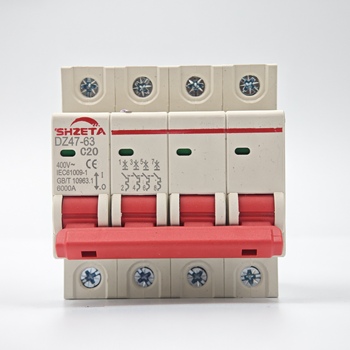
Miniature Circuit Breakers (MCB)
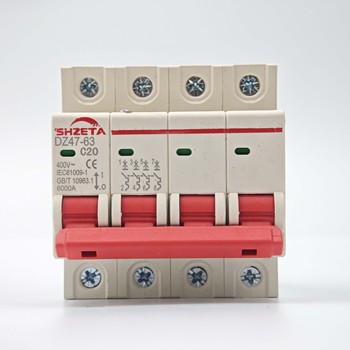
Engineered for high-density DIN-rail distribution boards. Featuring high-grade flame-retardant polyamide enclosures, arc chutes with 9 to 12 deion plates, and dual-purpose bi-connect terminals suitable for both comb busbars and stranded cables.
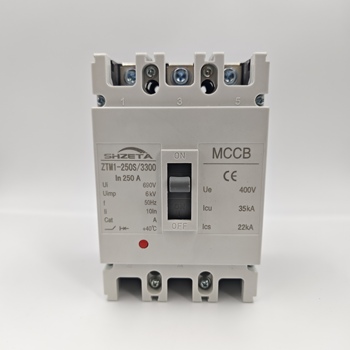
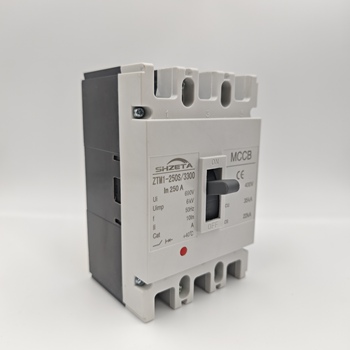
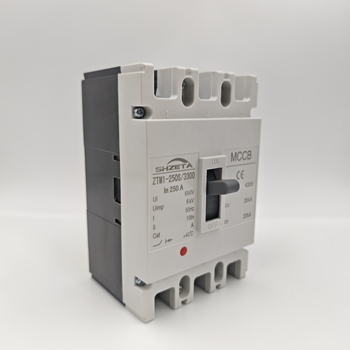
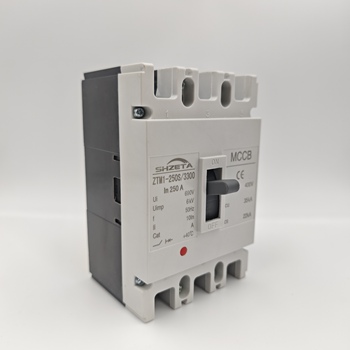
Robust high-capacity MCCBs designed for secondary distribution, motor control centers (MCC), and heavy infrastructure panels. Features DMC thermosetting housings with high dielectric resistance and zero flame propagation.
IEC 60947-2125A – 250A – 800A Frames35kA to 85kA Icu1P to 4PMOQ 5 pcs
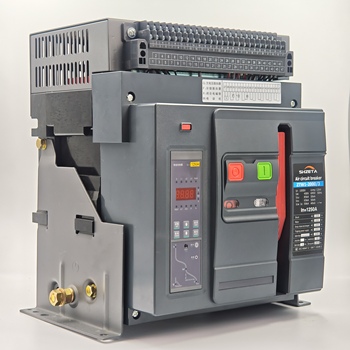
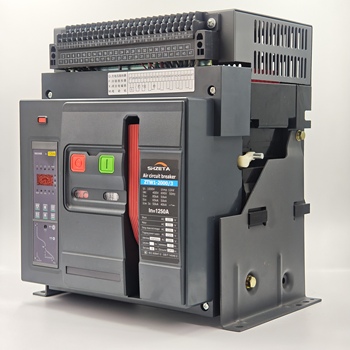
Intelligent universal circuit breakers rated for critical low voltage main incomers, transformer secondary switchboards, and primary generator distribution. Engineered with modular electronic trip controllers (LSIG protection), integrated self-diagnostics, and high electrodynamic withstand capacity.
630A to 6300ADraw-out & FixedCategory B SelectivityIcw up to 100kA 1sMOQ 1 pc
Surge Arresters, Dual Power Transfer & AC Contactors
A reliable low voltage switchgear system requires complementary overvoltage suppression, source transfer capability, and motor starter controls operating seamlessly alongside main breakers.
Automatic Transfer Switches (ATS)
Engineered to IEC 60947-6-1 for fast, reliable power changeover in healthcare, data centers, and critical processing facilities.
Our dual-power ATS units feature mechanical and electrical interlocking to prevent out-of-phase cross-connection between grid lines and standby generator sets. Built-in micro-processor logic monitors voltage loss, phase loss, and frequency deviations, executing rapid automated changeover under 100ms.
Class TypePC-Class / CB-Class Integrated Breaker
Switching TimeAdjustable Transfer Delay (0 to 30s)
Coordinated transient overvoltage protection (IEC 61643-11) and heavy-duty motor switching (IEC 60947-4-1).
High-energy metal oxide varistors (MOV) in our modular surge protectors clamp lightning surges safely, while our AC contactors incorporate wear-resistant silver-cadmium contacts for demanding AC-3 motor starting.
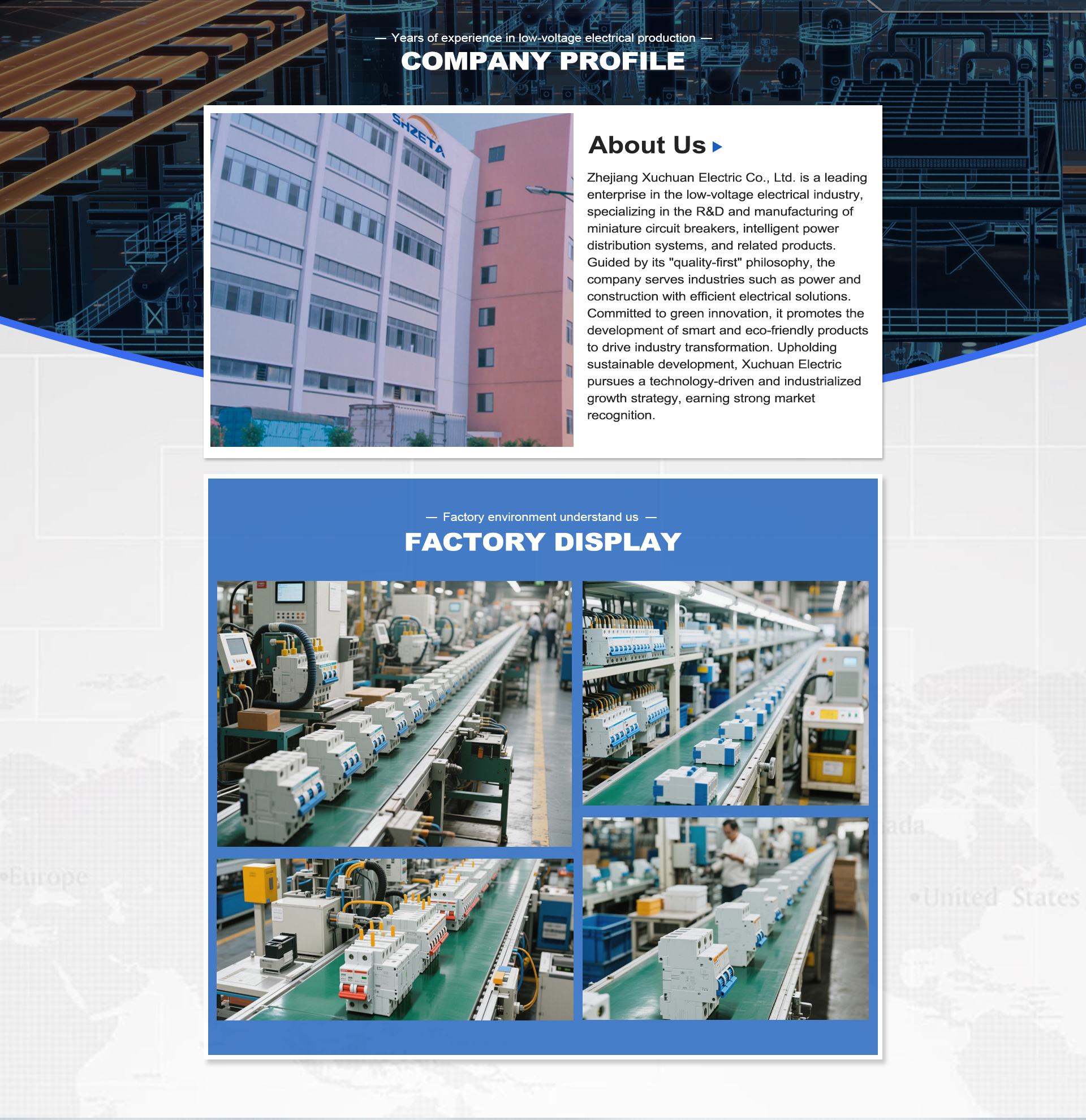
Zhejiang Graybar Electric Co., Ltd. is a dedicated manufacturer and exporter specializing in industrial-grade low voltage circuit protection devices. Operating from Huangyu Village, Liushi Town, Wenzhou—widely recognized as China's low-voltage electrical capital—we combine state-of-the-art injection molding, automated contact stamping, and computerized calibration benches to produce reliable MCBs, MCCBs, ACBs, SPDs, and ATS units.
Unlike brokers or trading houses, our facilities have undergone stringent third-party on-site verification. We serve electrical wholesalers, OEM brand holders, switchboard panel builders, and EPC power contractors across Latin America, the Middle East, Southeast Asia, Europe, and Africa. By controlling every stage of production—from bimetallic sensor calibration to final arc chamber assembly—we maintain strict quality consistency and competitive factory-direct pricing.
Company Name: Zhejiang Graybar Electric Co., Ltd.
Manufacturing Base: Huangyu Village, Liushi Town, Wenzhou, Zhejiang, China
Core Competency: End-to-end low voltage circuit breaker manufacturing and OEM branding
Testing line: Precision magnetic trip calibration and dielectric testing.Complete low voltage protection lineup ready for worldwide export.
International Compliance & Standards
Engineered to Stringent IEC Testing Regimes
Every low voltage circuit breaker supplied by Zhejiang Graybar Electric Co., Ltd. is manufactured to international electrotechnical safety specifications.
IEC 60947-2
Moulded case circuit breakers (MCCB) and low voltage air circuit breakers (ACB)
IEC 60898-1
Miniature circuit breakers (MCB) for household, residential, and commercial boards
IEC 61643-11
Low-voltage surge protective devices connected to 50/60Hz AC electrical systems
IEC 60947-6-1
Multiple-function automatic transfer switching equipment (ATS)
IEC 60947-4-1
Low voltage contactors and motor-starters for industrial power control
Need customized test certificates or factory routine test certificates for your project submittal? Email [email protected] with your project specifications.
Enterprise Reliability
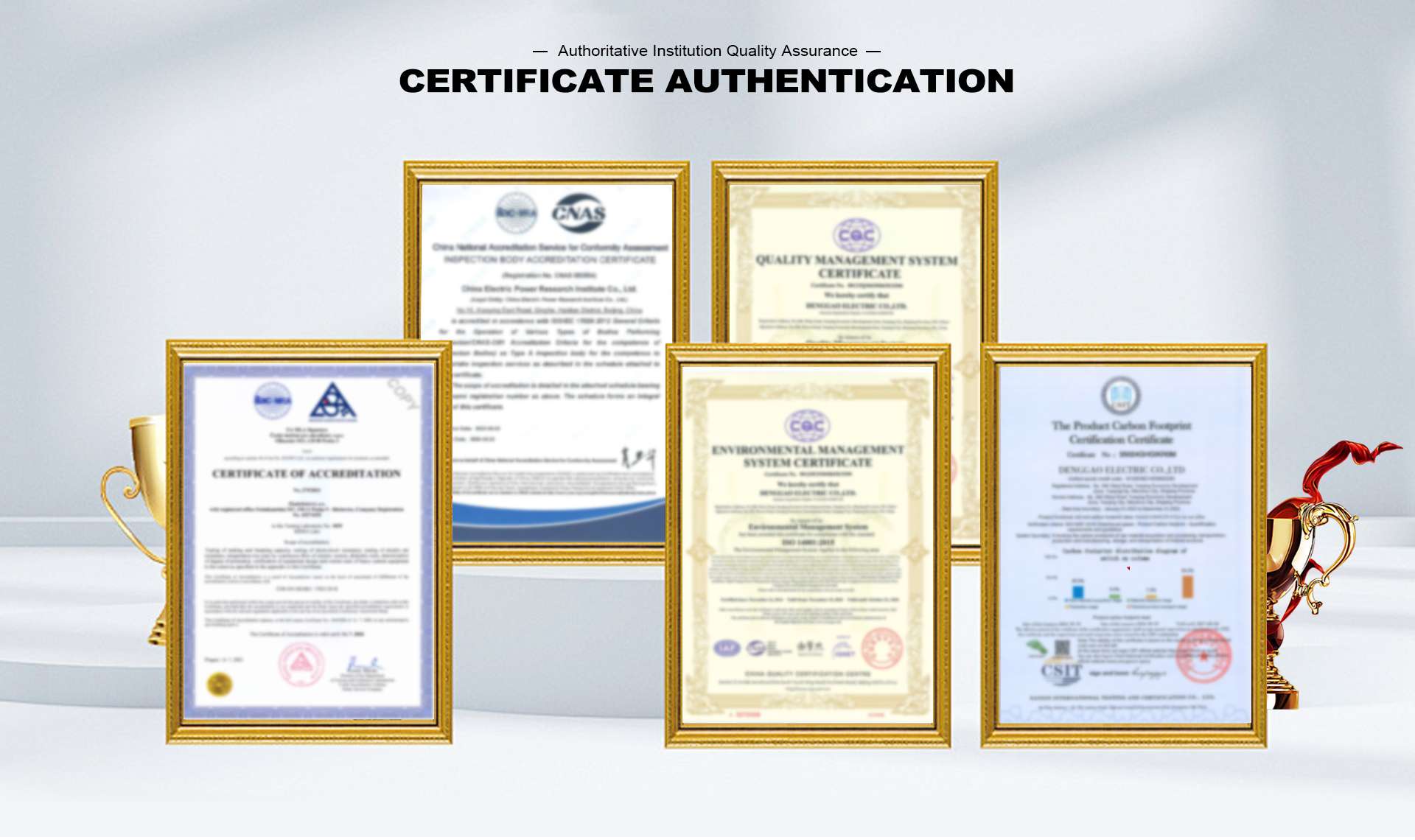
Verified Factory Credentials & Commercial Records
Review our verified third-party business standing, audited export capacity, and certified trade ratings.
Frequently Asked Questions on Low Voltage Circuit Breakers
Detailed answers to the technical, operational, and commercial questions most frequently asked by global procurement teams.
How do international buyers differentiate between Icu and Ics when specifying an MCCB or ACB?
Under standard IEC 60947-2, Icu (Ultimate Short-Circuit Breaking Capacity) is the maximum prospective fault current the low voltage circuit breaker can interrupt safely under test sequence O - t - CO (Open - time delay - Close-Open). Following this severe test, the breaker is safely prevented from bursting or endangering nearby personnel, but its internal contact surfaces and arc chutes may suffer irreversible thermal damage, making it unsuitable for continuous long-term service.
In contrast, Ics (Service Short-Circuit Breaking Capacity) defines the fault current level the breaker can interrupt under test sequence O - t - CO - t - CO and remain completely operational, retaining full dielectric insulation and temperature-rise limits. Ics is expressed as a percentage of Icu (e.g., 50%, 75%, or 100%). For commercial hospitals, mission-critical data centers, process petrochemical plants, and marine switchboards, procurement engineers should mandate Ics = 100% Icu to ensure that after clearing an electrical fault, the switchgear can be immediately re-energized without expensive downtime.
Why is 4-pole switching strictly recommended over 3-pole switching in modern distribution systems?
Historically, symmetrical three-phase balanced industrial loads permitted three-pole (3P) circuit breakers with an unswitched common solid neutral bar. However, contemporary facilities operate dense non-linear electronic loads such as computer server power supplies, variable frequency drives (VFDs), and solid-state LED ballasts. These devices generate severe triplen harmonics (specifically 3rd, 9th, and 15th harmonic currents) that do not cancel out in the neutral conductor; instead, they add up arithmetically, causing neutral current to occasionally reach 130% to 170% of the active phase currents.
Furthermore, in dual-power switchboards utilizing Automatic Transfer Switches (ATS) between mains utilities and standby diesel generators, an unswitched neutral creates circulating ground-fault loop paths. This circulation can trigger nuisance tripping in Residual Current Devices (RCDs) and sensitive ground fault protection (GFP) relays. Deploying a 4-pole low voltage circuit breaker (4P) ensures complete galvanic isolation of both phase and neutral lines, guaranteeing system safety during unscheduled maintenance.
What are the technical and operational differences between draw-out and fixed ACB installations?
The distinction between draw-out and fixed Air Circuit Breakers centers on maintenance accessibility versus initial capital footprint:
Draw-Out ACB: The circuit breaker body is installed on a heavy-duty sliding chassis that docks into a stationary switchboard cradle. Using an external racking handle, operators can advance the breaker through three mechanical positions: 'Connected', 'Test' (where secondary control circuits operate but primary busbars are isolated), and 'Disconnected'. Automatic safety shutters close over the high-voltage busbar contacts when the breaker is racked out. This allows routine maintenance, contact tip visual inspection, or rapid breaker replacement in less than 15 minutes without shutting down main busbars—vital for 24/7 continuous process industries.
Fixed Type ACB: The breaker frame is bolted directly to the copper switchboard busbars. Servicing or replacement requires a total upstream de-energization and substation lockout. However, fixed ACBs are substantially lighter, feature smaller enclosure footprints, and offer lower purchase costs, making them the preferred choice for commercial buildings where scheduled weekend maintenance shutdowns are feasible.
How does temperature derating impact low voltage circuit breaker sizing in hot climates?
Low voltage circuit breakers relying on thermal-magnetic trip units use a calibrated bimetallic strip that deflects in response to ohmic I²t heating. Standard breakers are calibrated at a reference ambient temperature of 30°C (IEC 60898-1 for MCBs) or 40°C (IEC 60947-2 for MCCBs/ACBs). In regions such as the Middle East, North Africa, Southeast Asia, or inside densely populated IP54/IP65 sealed outdoor distribution panels, interior cabinet temperatures often reach 50°C to 65°C.
In these environments, thermal energy from the high surrounding ambient air pre-deflects the bimetal strip. As a result, the breaker will experience premature nuisance tripping well below its nominal rated operational current (In). Electrical engineers must consult the manufacturer’s ambient temperature derating table and apply corrective multipliers (typically 0.85 to 0.92 for 55°C operation), or deliberately upscale the nominal breaker frame size. Alternatively, selecting breakers with Microprocessor-based Electronic Trip Units (ETUs) substantially minimizes temperature sensitivity because digital sensors measure RMS current values directly rather than relying on thermal deflection.
What MOQ, documentation, and OEM packaging support does Zhejiang Graybar Electric Co., Ltd. offer?
At Zhejiang Graybar Electric Co., Ltd., we recognize that engineering distributors and switchgear panel builders must verify product samples before placing full container contracts. We support engineering verification with minimum order quantities starting from 5 pieces for standard MCBs, MCCBs, and SPDs, and starting from 1 piece for Air Circuit Breakers (ACB).
For established distributors and private brands, we provide full OEM/ODM manufacturing packages. This includes custom high-contrast laser marking of corporate logos and customized trip curves, dual-frequency dial printing, high-strength drop-tested export packaging, barcoded master cartons, multilingual operating manuals, and project-specific routine test certificates delivered with every consignment. Contact our sales engineering team directly via Send an Inquiry or email [email protected] to request sample evaluations.
How Zhejiang Graybar Electric Co., Ltd. executes orders from single-line diagram review to port dispatch.
Specification Audit
Our engineers review your electrical load schedule, prospective fault currents, voltage ratings, and trip curves.
Technical Quoting
Receive detailed model recommendations, verified dimensional drawings, and transparent tiered factory pricing.
Sample Evaluation
Low MOQ sample testing enables your QA team to independently verify dielectric performance, contact resistance, and fitment.
Batch QC & Assembly
Automated production line assembly followed by individual millivolt drop tests, tripping tests, and dial calibration.
Consolidated Export
Palletized shock-proof packaging, export customs documentation, and coordinated logistics straight to your destination port.
Ready to Source Low Voltage Circuit Breakers Factory-Direct?
Connect directly with the engineering desk at Zhejiang Graybar Electric Co., Ltd. Send your BOM, single-line diagrams, or OEM distribution inquiries to [email protected]. An electrical engineer will respond with technical datasheets and competitive commercial proposals.