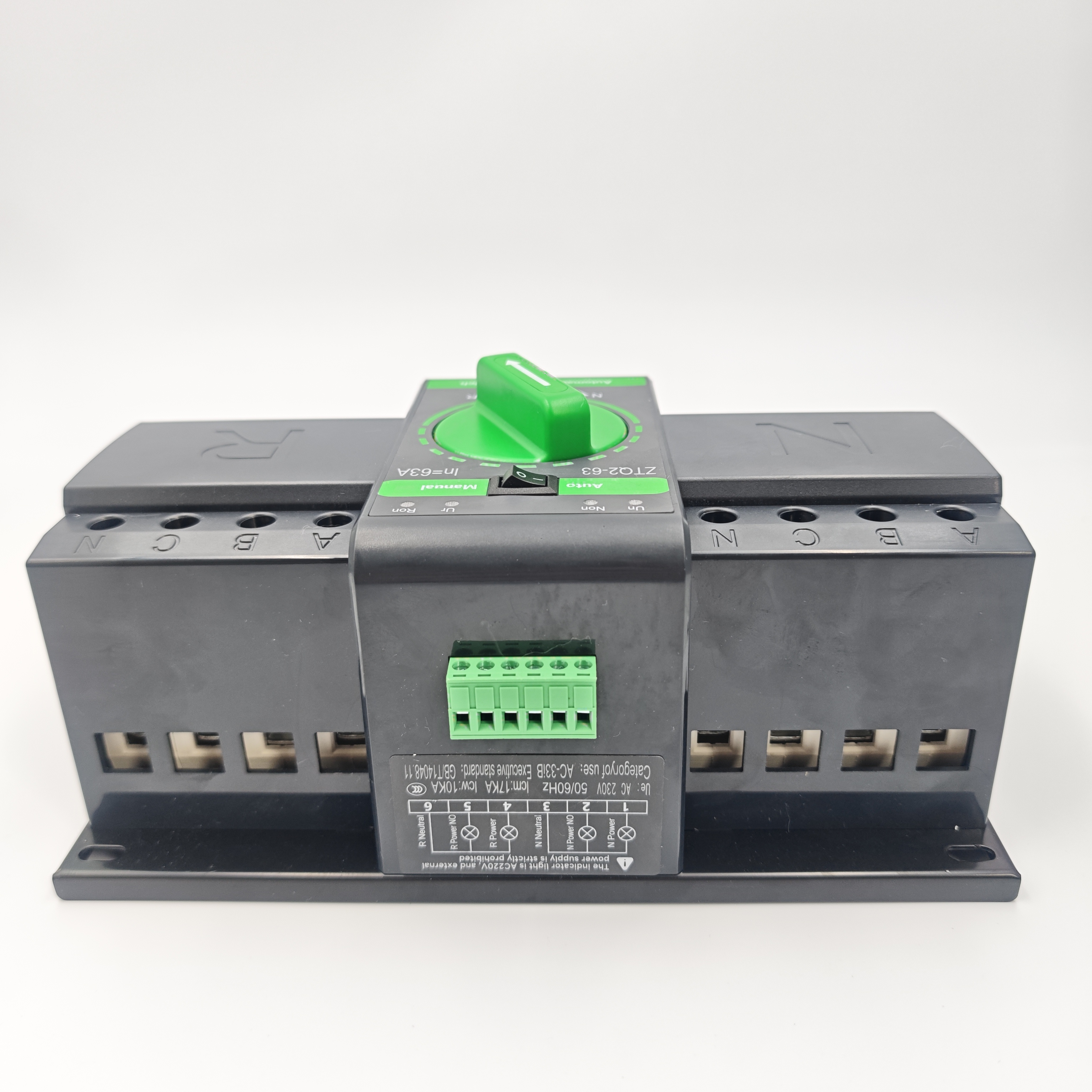
Dual Power Transfer Switch Circuit Automatic ATS PC Three Phase 63 A -125A
- Rated Current63A – 125A
- Poles3P / 4P
- Transfer Time< 50ms Seamless
- StandardIEC 60947-6-1
Engineered to IEC 60947-2, IEC 60947-6-1, and IEC 60898-1 standards. Tested for high fault breaking capacities, ambient temperature endurance, and continuous commercial duty.
A rigorous examination of low-voltage air circuit breaker construction, arc dissipation dynamics, micro-controller protection units, and mechanical coordination.
Universal Frame Circuit Breakers (also termed Air Circuit Breakers or ACB, such as the DW45 intelligent series) serve as the primary defensive barrier at the main low-voltage switchboard (MDB). In heavy commercial and municipal distribution environments, incoming lines encounter prospective short-circuit currents ranging from 50kA to 120kA.
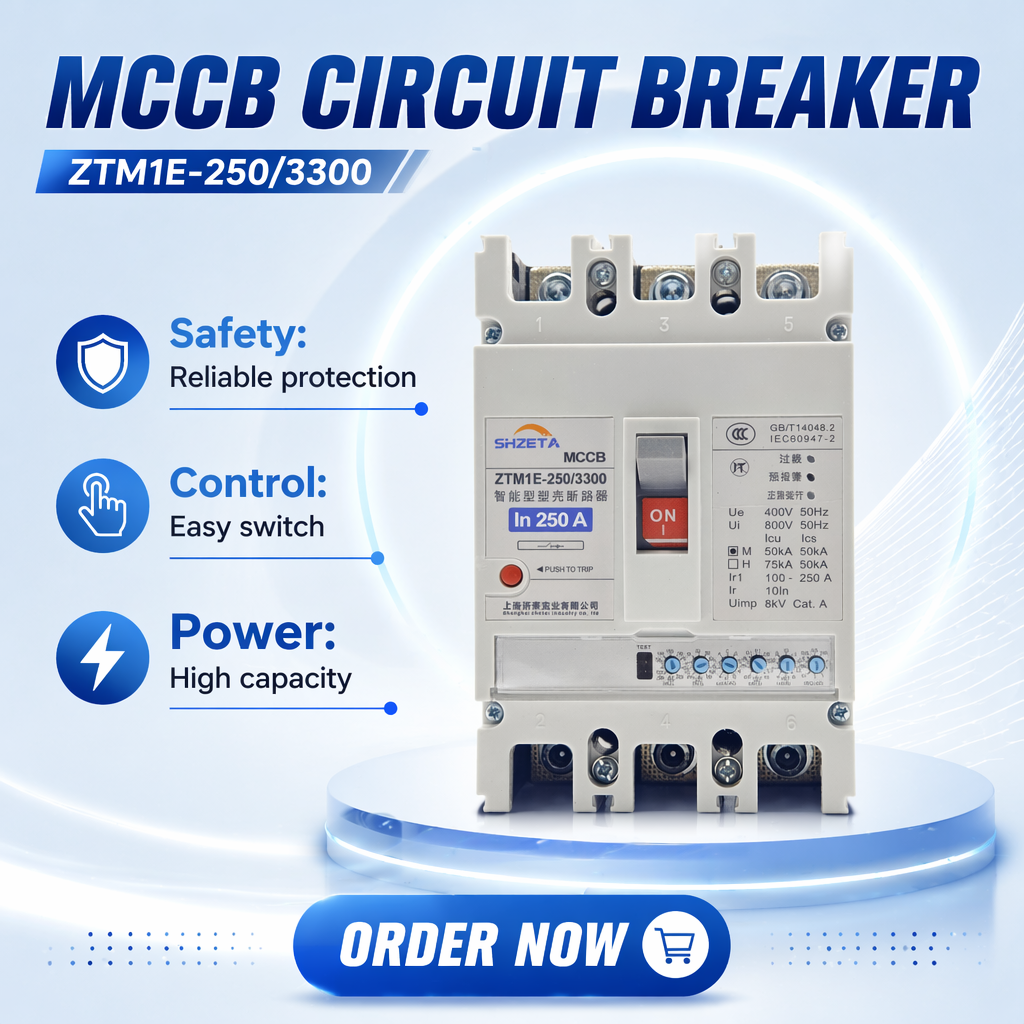
Graybar frame circuit breakers are categorized under IEC 60947-2 Utilization Category B. This designation proves their deliberate short-time withstand current ($I_{cw}$) capability, permitting intentional time delays (up to 1000ms) under high fault currents without unlatching. This enables downstream Molded Case Circuit Breakers (MCCB) and Miniature Circuit Breakers (MCB) to isolate branch faults selectively, avoiding full substation blackouts.

The arc chute chamber incorporates insulated ceramic splitters and multi-vane de-ionizing metallic plates. High-intensity magnetic blowout fields force the electric arc into the splitter stack within milliseconds, stretching, cooling, and quenching fault voltages up to 1000V AC without residual flame emission.
Microcontroller-driven trip releases feature True-RMS current sampling up to the 31st harmonic. Configurable protection schemes allow comprehensive parameterization across Long Time Delay ($I_r$), Short Time Delay ($I_{sd}$), Instantaneous Overcurrent ($I_i$), and Ground Fault ($I_g$) trip thresholds.
Draw-out models feature a three-position mechanical indicator: Connected, Test, and Disconnected. Heavy safety shutters automatically shield live primary busbar stabs when the chassis is racked out, eliminating the need to de-energize the entire switchboard during annual contact maintenance.
Tailored engineering specifications addressing the operational challenges of the regional transmission grid, thermal generation plants, heavy manufacturing plants, and municipal development initiatives.
Procuring low-voltage electrical apparatus destined for installations in Pyongyang requires concrete technical alignment with regional electrical supply characteristics. The local grid architecture encounters significant voltage variations (often swinging between 170V and 260V on single-phase circuits), periodic system frequency drifts (48.5 Hz to 51.5 Hz), and severe seasonal temperature gradients ranging from deep sub-zero winters (-20°C) to humid, rain-heavy summers. Standard commercial-grade circuit protection often suffers nuisance tripping or dielectric degradation under these conditions.
Key industrial sectors—such as the Ryongsong Machine Complex, machine-tool fabrication facilities, textile plants, and cement operations along the Taedong River industrial corridor—rely heavily on robust ACB incomers (1600A to 3200A frames) and thermal-magnetic MCCBs (up to 250A/400A).
Inductive electric motor banks generate substantial starting inrushes (6 to 8 times nominal current). Standard instantaneous trip settings trip prematurely; our custom-calibrated D-curve MCBs and MCCBs equipped with adjustable short-delay magnetic pick-up suppress motor startup transients while preserving instantaneous clearance during actual dead-short conditions.
Large-scale residential projects—such as the high-density residential towers along Songhwa Street, Mirae Scientists Street, and the Hwasong District developments—require compact, multi-tier distribution topologies. High load density demands space-optimized switchgear with minimal footprint.
Graybar 4-pole MCCBs and modular DIN-rail MCBs isolate the neutral conductor in three-phase four-wire (TN-S and TT) systems. This architecture prevents hazardous neutral floating voltages and neutral conductor overheating caused by unbalanced single-phase loads and the harmonic distortions typical of modern non-linear LED lighting and inverter electronics.
Pumping stations drawing from the Taedong River and municipal central heating heat-exchange stations demand zero unplanned interruptions. Failure of a single main breaker can cascade into system shutdowns impacting municipal heating loops or industrial water filtration.
Deploying draw-out intelligent ACBs with RS485 Modbus telemetry (interfacing seamlessly with class-0.5 power meters like the HY-311-80VY) allows substation operators to monitor real-time phase balance, current harmonics, and contact wear indicators. Preventative maintenance warnings can be logged prior to any physical breakdown.
Seasonal ambient temperatures in the region present severe challenges for standard switchgear plastics and mechanical springs. In unheated sub-stations during winter, mechanical trip linkages risk sticking due to grease crystallization, while summer humidity induces surface tracking across phase barriers.
Graybar circuit breakers utilize high-grade, glass-fiber reinforced DMC (Dough Molding Compound) and BMC thermoset plastics with a comparative tracking index (CTI) > 600V. Internal copper busbars are silver- or tin-electroplated to resist oxidation, accompanied by low-temperature synthetic lubricants tested functional down to -40°C.
Adapting to decentralized energy production, rooftop photovoltaic arrays, and critical standby power infrastructure.

Across enterprises, research institutions, and hospitals serving Pyongyang, reliance on a single municipal utility feeder is rarely practical. Modern facilities routinely operate dual incoming lines: a primary municipal feeder coupled with an automatic standby diesel generator set (genset) or energy storage battery bank.
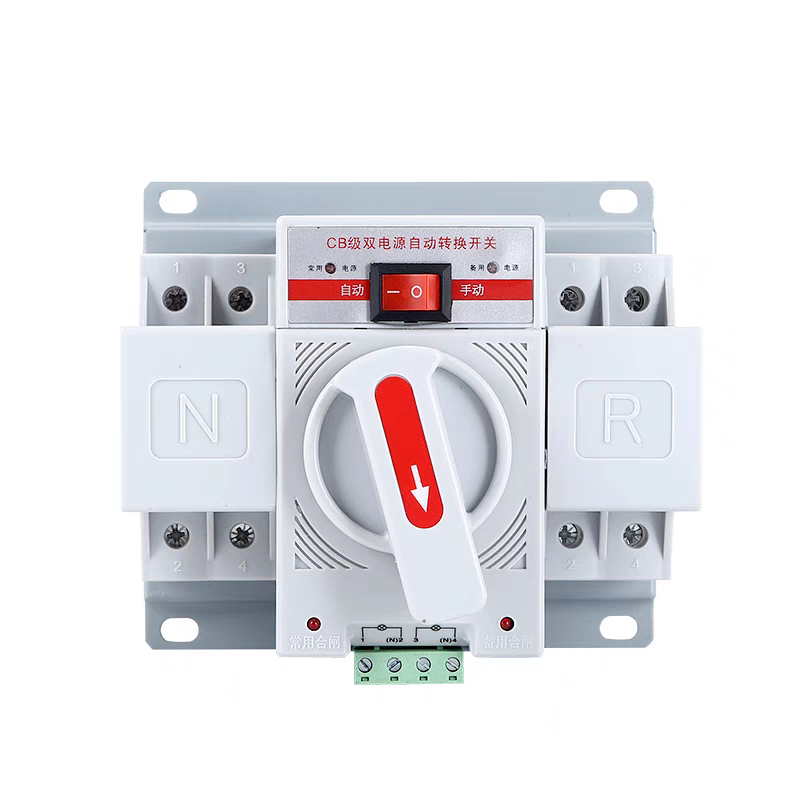
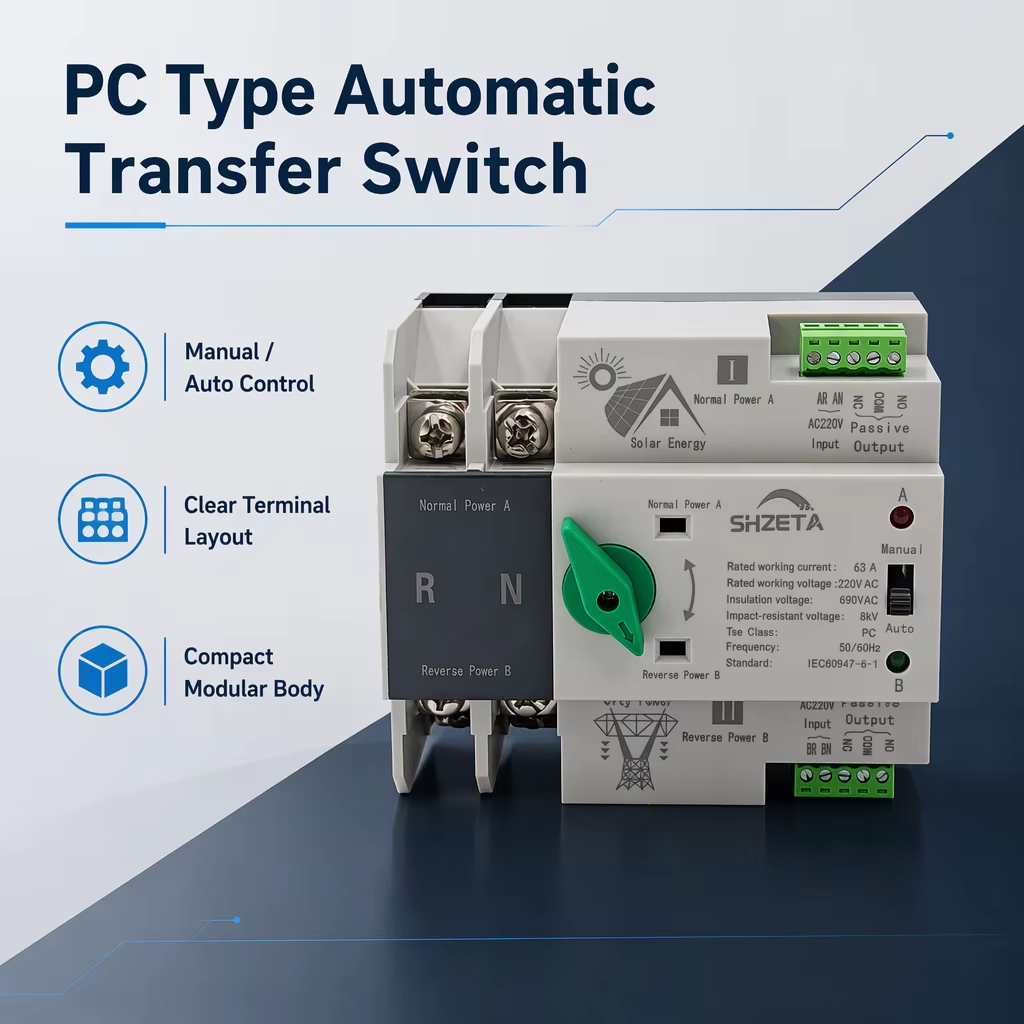
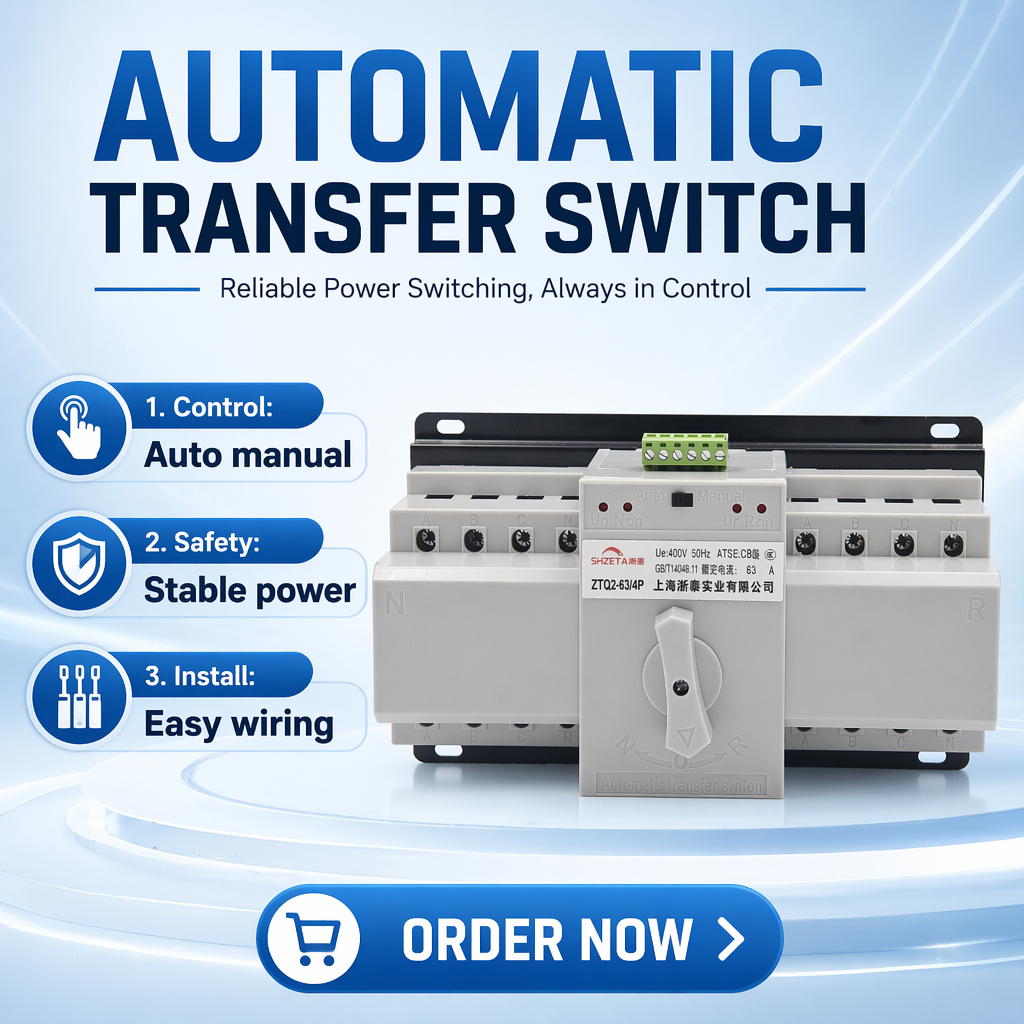
PC-class Automatic Transfer Switches (such as our 4-pole 63A to 125A units) feature an electromagnetically driven mechanism rather than an electric motor gear drive. This achieves transition speeds under 50 milliseconds. When the utility line experiences phase absence or brownout conditions, the integrated logic controller initiates dry-contact generator cranking, transferring critical medical or process loads without triggering brownout restarts.
Pyongyang has observed rapid adoption of commercial and municipal rooftop solar arrays to supplement localized power supplies. Direct current (DC) circuits present a far higher fire and arcing hazard than AC circuits because DC current lacks a natural zero-crossing point.
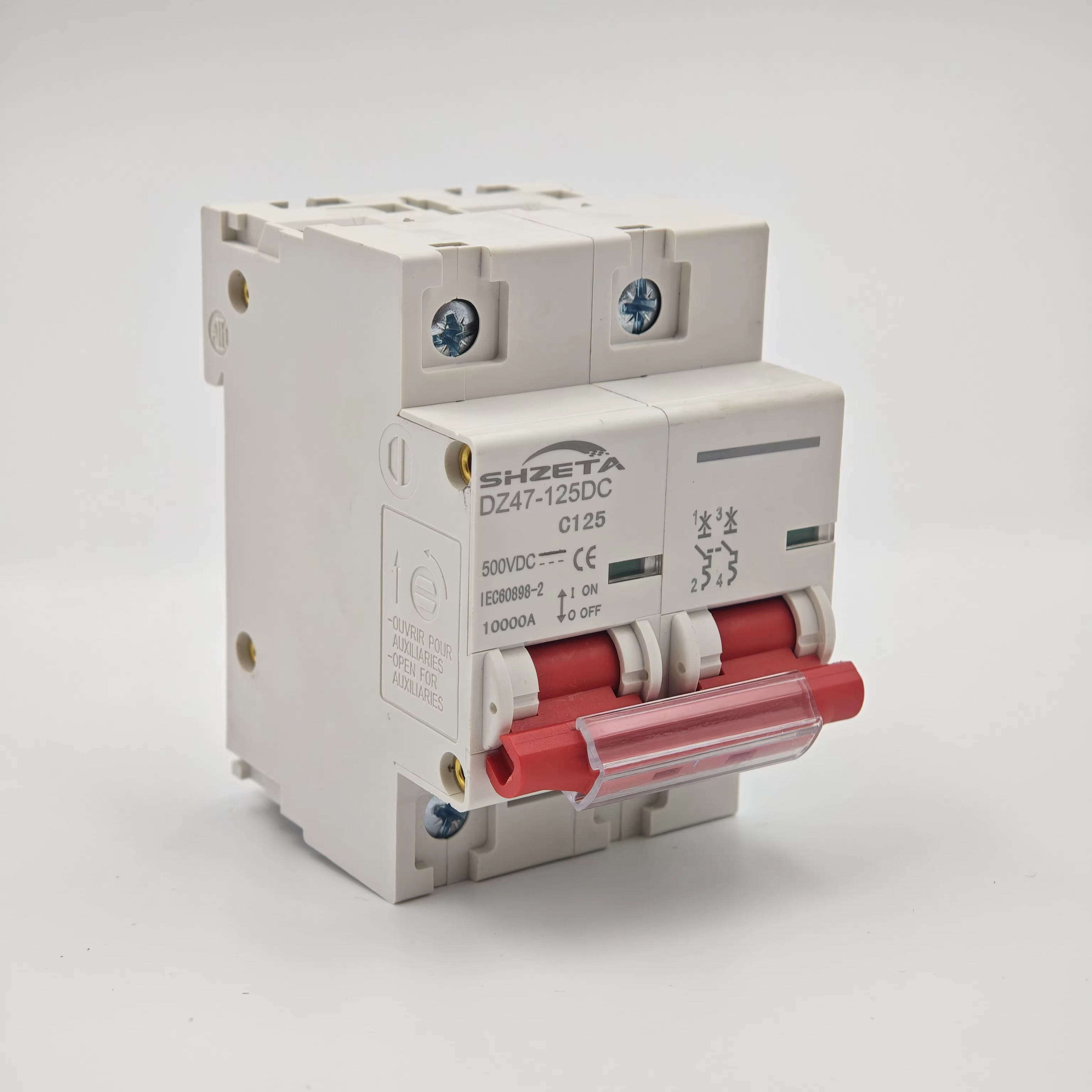
Our 2P 500V and 4P 1000V DC MCBs utilize specialized internal permanent magnets that stretch the DC arc directly into the splitter chute. Designed specifically for PV string combiners and solar inverter inputs, they provide reliable galvanic isolation under sustained full-load fault conditions.
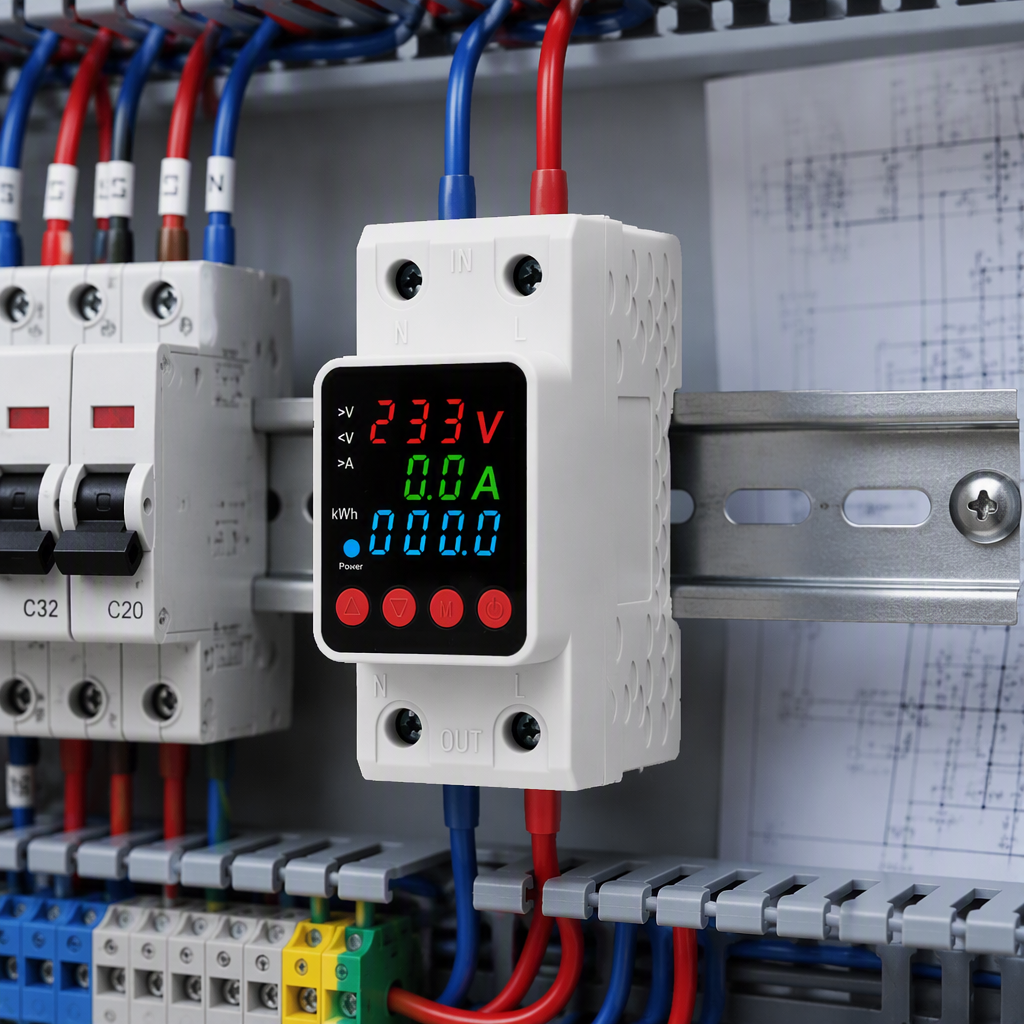
With grid capacity under heavy demand during peak industrial operating hours, monitoring energy balance is vital. Multi-parameter digital meters installed at secondary distribution points allow facility managers to enforce peak-load shedding protocols.
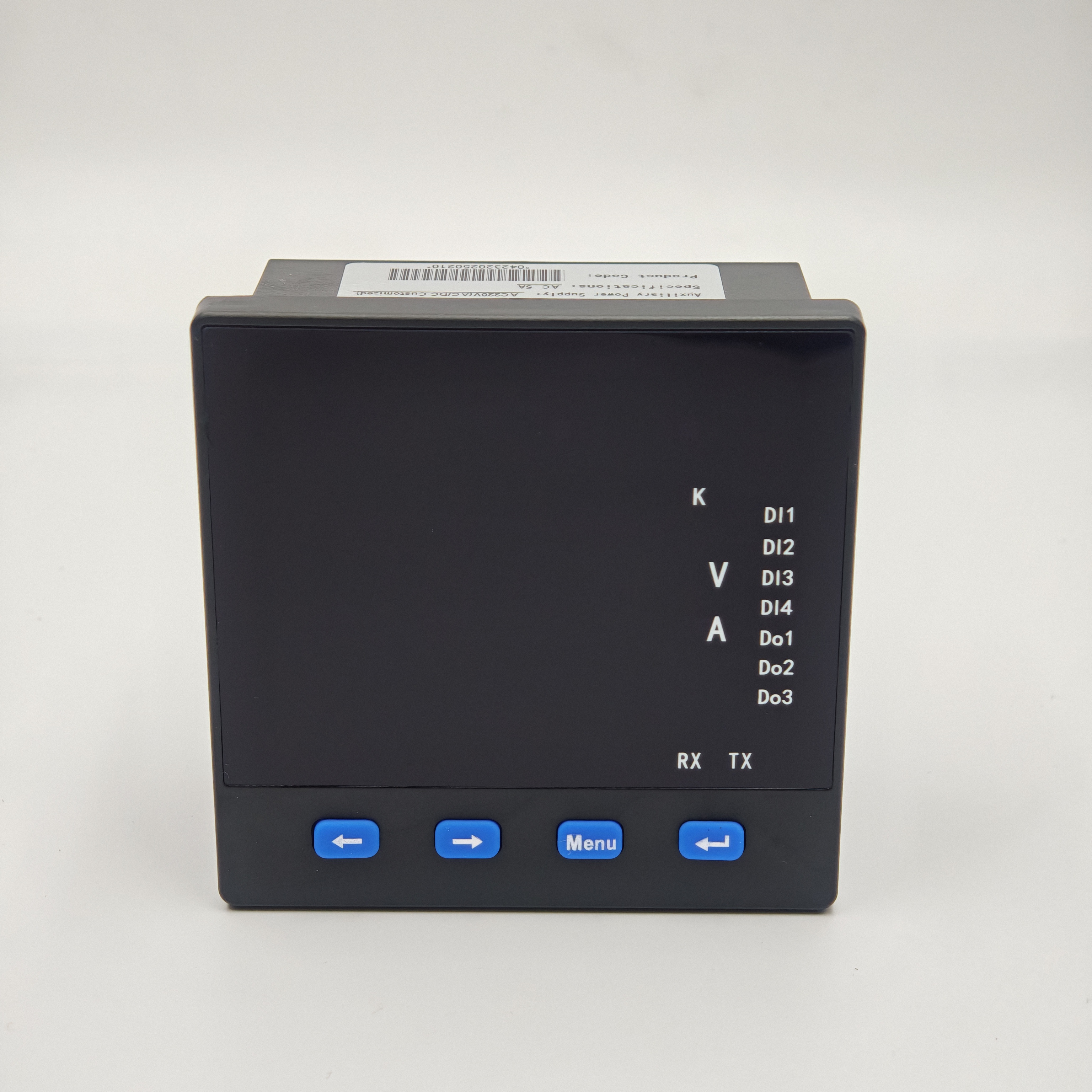
Equipped with class-0.5 accuracy current sensors and isolated RS-485 outputs running standard Modbus protocols, our meters report true power consumption, power factor, reactive harmonics, and continuous voltage sags to central control stations without requiring expensive proprietary software.
Transmission grid fluctuations combined with intense summertime thunderstorm activity in the northwestern Korean peninsula induce severe voltage transients along distribution lines, threatening sensitive microprocessors in variable-frequency drives (VFDs) and computer systems.
We supply coordinated Type 1 + Type 2 surge protective devices (SPD) utilizing heavy-duty zinc oxide varistors (MOV) and gas discharge tubes (GDT). With discharge ratings up to 60kA (8/20µs), these modular arresters suppress high-voltage lightning strikes at the service entrance before energy reaches branch breakers.
A reference engineering matrix to assist electrical design institutes, panel builders, and procurement officers in selecting protective switchgear based on operational parameters.
| Equipment Type | Typical Rated Current ($I_n$) | Rated Breaking Capacity ($I_{cu}$) | Standard Reference | Protection Functions | Primary Installation Point |
|---|---|---|---|---|---|
| Universal ACB (Frame Breaker) | 630A to 6300A | 50kA to 120kA @ 400V | IEC 60947-2 (Cat. B) | L, S, I, G, ZSI, Harmonic Filtering, Thermal Memory | Main Substation Low-Voltage Switchboard (MDB) |
| Heavy Molded Case Breaker (MCCB) | 63A to 800A | 35kA to 100kA @ 400V | IEC 60947-2 (Cat. A) | Adjustable Thermal-Magnetic or Electronic Trip Unit | Sub-Distribution Feeder Boards, Motor Control Centers |
| Automatic Transfer Switch (ATS) | 16A to 1600A | Up to 100kA prospective (w/ fuse/MCCB) | IEC 60947-6-1 | Autonomous Grid-to-Grid / Grid-to-Genset Switching | Critical Load Emergency Distribution Panels |
| Miniature Circuit Breaker (MCB) | 1A to 125A | 4.5kA to 15kA @ 230/400V | IEC 60898-1 / 60947-2 | Fixed Thermal Bimetal & Magnetic Plunger (B, C, D Curve) | Terminal Final Circuit Boards, Light & Small Motors |
| Photovoltaic DC Breaker | 16A to 125A (MCB) / Up to 400A (MCCB) | 10kA to 20kA @ 500V/1000V DC | IEC 60947-2 (DC) | Magnetic Arc Blowout, DC Overload & Short-Circuit | Solar Combiner Boxes, Inverter Direct Input Banks |
Headquartered in Liushi Town, Wenzhou—China's low-voltage electrical capital—Zhejiang Graybar Electric combines robust engineering, testing laboratories, and streamlined supply chains.
Direct proximity to premier copper refineries, silver-contact sinterers, and flame-retardant molding suppliers allows us to maintain stable lead times and rapid prototype customization.
Every production batch undergoes dielectric insulation checks, temperature-rise verification at rated currents, and calibrated trip-time testing on calibrated computerized test benches.
Support for project-based engineers: Low MOQs starting from 1 unit on custom-configured Air Circuit Breakers and 5 units on standard MCCB/ATS lines allow low-risk validation.
Full support for custom laser-etched nameplates, bespoke breaking capacities, custom terminal spreaders, multi-language wiring diagrams, and export-grade wooden crate packing.
Zhejiang Graybar Electric operates under rigorous ISO9001:2015 quality management procedures. Low-voltage apparatus must deliver uncompromising performance; a breaker that fails to unlatch during a high-energy short-circuit can result in switchgear fire, transformer damage, or personnel hazard.
Our raw materials—including pure electrolytic copper for current-carrying paths, silver-nickel and silver-cadmium oxide contact buttons, and precision bimetallic strips—undergo spectrographic analysis upon delivery. Calibration records are cataloged by production lot, guaranteeing full technical documentation for EPC engineering contracts and export inspection.

Detailed technical answers addressing procurement, operational parameters, climate adaptations, and logistics for engineers and buyers.
Our intelligent Electronic Trip Units (ETU) are built with wide-range switch-mode power supplies (SMPS) capable of maintaining full operational readiness between 60% and 130% of nominal auxiliary control voltage. Furthermore, the electronic sampling circuitry utilizes digital filtering algorithms to measure True RMS currents accurately regardless of supply frequency variations between 45 Hz and 65 Hz. This prevents the nuisance unlatching that frequently plagues older thermal-magnetic analog trip assemblies during grid instability.
A fixed-type ACB is permanently bolted directly to the main copper switchboard busbars via mechanical busbar clamps. This provides a compact, cost-efficient assembly ideal for small substations with scheduled annual shutdowns. A draw-out ACB rests on a dedicated chassis or cradle equipped with telescoping guide rails and hand-crank racking mechanisms. The breaker can be racked out to the 'Test' position (disconnecting primary power while keeping secondary control circuits live for testing) or racked out entirely for contact inspection without shutting down the common busbar feeding adjacent factory units.
Standard engineering plastics (such as lower-grade ABS) experience severe embrittlement and loss of impact strength below -10°C, risking catastrophic structural fracture during high-energy arc discharge. Graybar utilizes thermosetting polyester resin (DMC/BMC) and glass-fiber reinforced polyamide 66 formulated specifically for high mechanical shock resistance down to -40°C. Furthermore, internal energy-storage spring mechanisms, latches, and needle bearings are treated with low-temperature synthetic fluoro-silicone grease that maintains consistent viscosity across extreme temperature ranges, preventing mechanical unlatching delays.
Yes. In modern commercial structures with heavy single-phase LED lighting and consumer electronics, third-harmonic currents accumulate directly in the neutral conductor, frequently causing neutral current to equal or exceed phase current. We manufacture 4-pole ACBs and MCCBs offering 100% neutral rating ($4P4R$ configuration) alongside 50% neutral rating options. The neutral pole includes dedicated current sensor integration to detect neutral overload and short-circuit faults with identical accuracy to phase conductors.
Recognizing the specialized nature of capital infrastructure projects, our Air Circuit Breakers (ACB) can be ordered starting from 1 unit per custom configuration (frame size, trip unit type, accessory coil voltage). Standard molded case breakers (MCCB) and automatic transfer switches (ATS) have a standard MOQ of 5 units. For international export, all breakers are sealed in moisture-barrier vapor bags with desiccant packs, surrounded by dense high-density polyethylene foam cushioning, and packed into reinforced export plywood cases suitable for multi-modal transport without risk of mechanical damage.
Absolutely. We regularly provide OEM production for electrical switchgear manufacturers, panel builders, and regional trading companies. This includes custom laser-etched front escutcheons, branded nameplates with specific project identifiers, customized trip curve configurations, customized auxiliary switch contacts (such as 4NO/4NC or 6NO/6NC), and extended or rotated copper terminal connection bars to mate cleanly with existing switchboard busbar arrangements.