Technical Whitepaper: Precision Calibration & Tripping Dynamics of 63A MCBs
In low-voltage electrical distribution networks, the 63 Ampere miniature circuit breaker (MCB) functions as an indispensable defensive threshold. Operating as both terminal branch protection and intermediate feeder segmentation, a 63A MCB must balance rigorous galvanic isolation, precise overload reaction, and instantaneous magnetic clearing without inducing nuisance tripping. For engineering teams, panel builders, and procurement specialists operating across the San Antonio metropolitan region—where electrical infrastructures experience profound load shifts and extreme climatic fluctuations—the choice of circuit protection requires uncompromising adherence to material science and electromagnetic coordination.
Key Engineering Standard: Zhejiang Graybar Electric Co., Ltd. manufactures 63A MCBs calibrated rigorously to IEC/EN 60898-1 (for residential and commercial terminal distribution) and IEC/EN 60947-2 (for industrial control systems and machine skid integration). The CE marking guarantees conformity with the Low Voltage Directive (LVD 2014/35/EU) and Electromagnetic Compatibility (EMC 2014/30/EU), establishing international safety interoperability for export-oriented equipment.
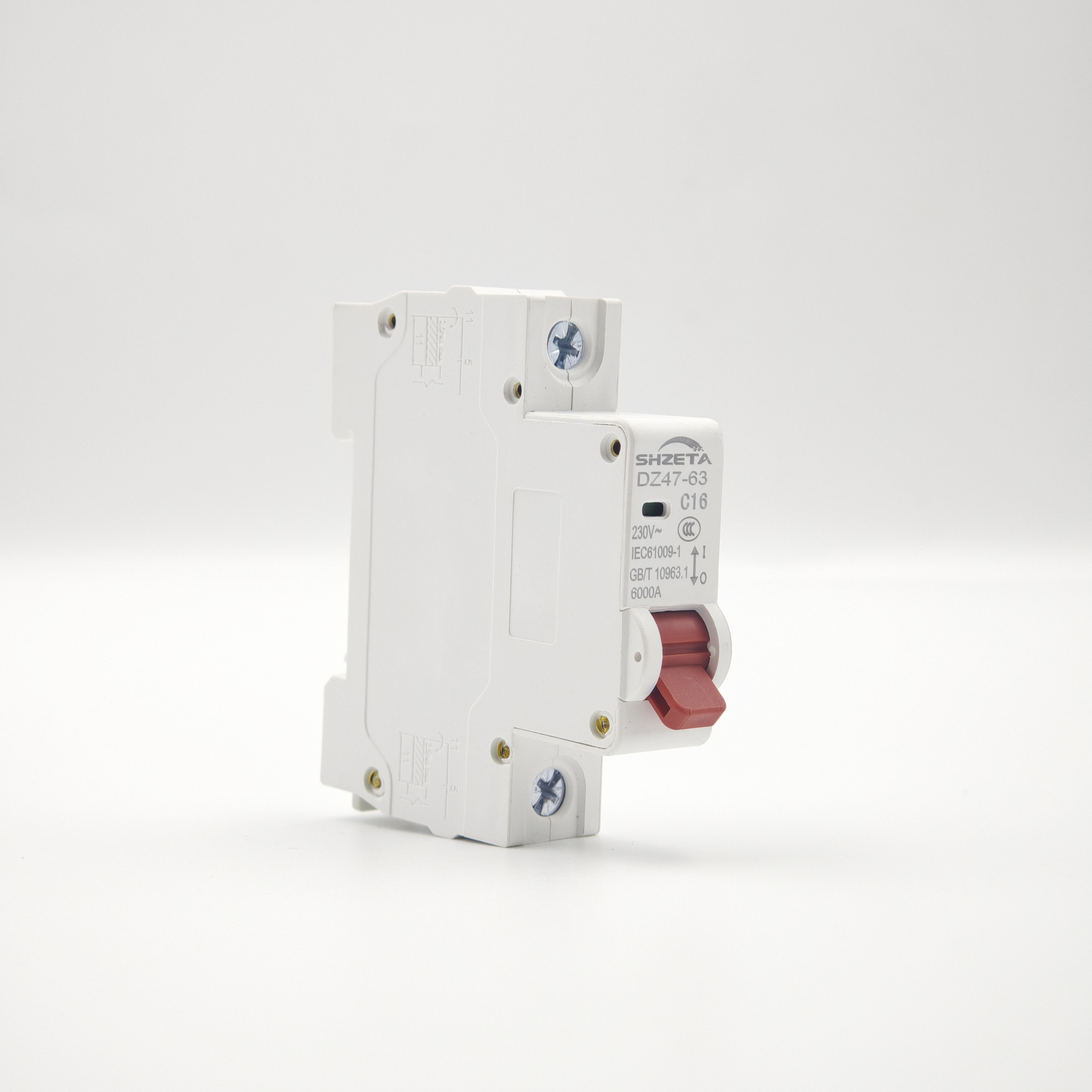
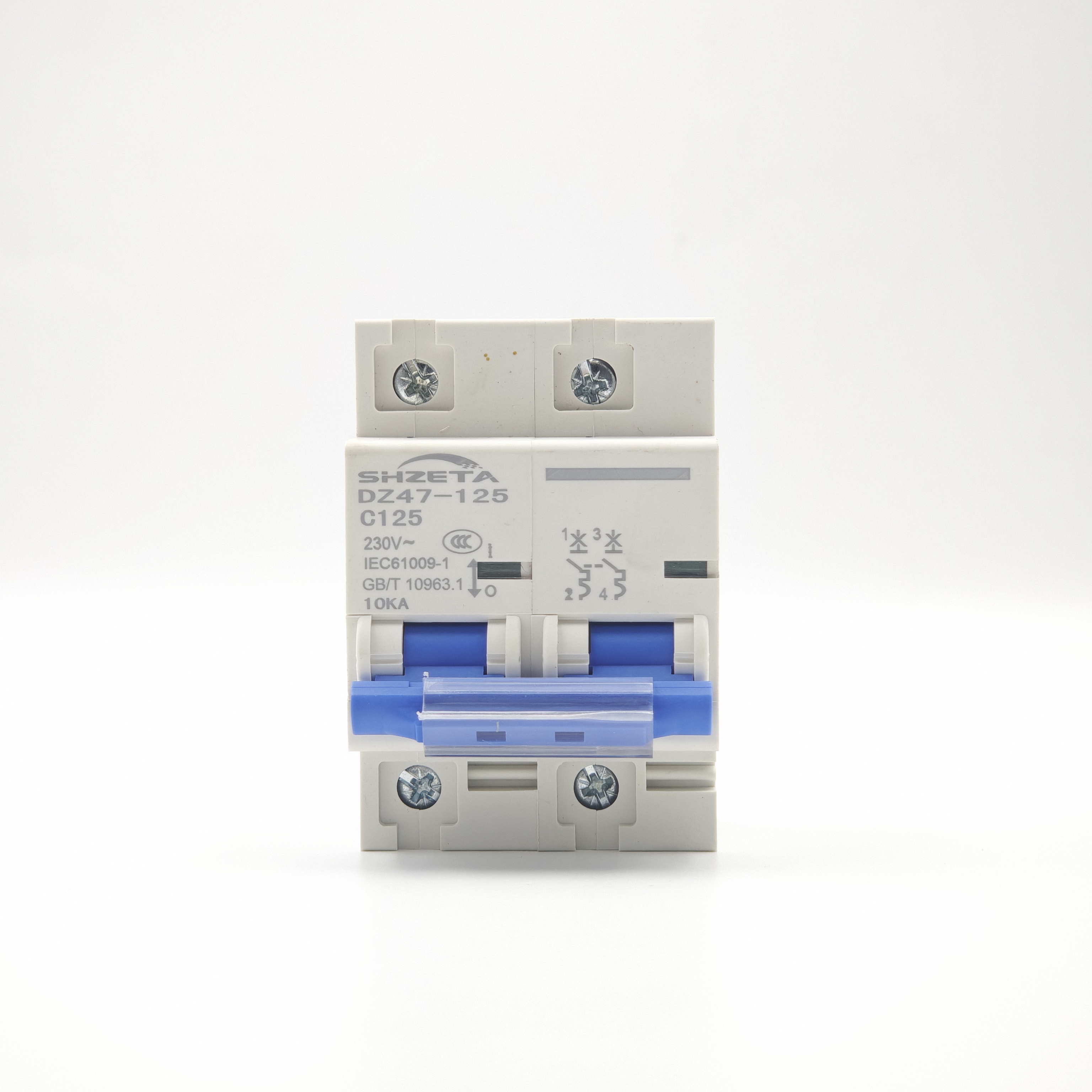
A miniature circuit breaker is governed by two complementary internal physical actions: an inverse-time thermal mechanism designed to manage sustained overcurrents, and an electromagnetic plunger assembly engineered for instantaneous short-circuit protection. In our 63A frame series, the thermal trip element utilizes a precision-welded bi-metal strip with distinct thermal expansion coefficients. As current exceeds the nominal rating ($I_n = 63\text{A}$), resistive heating induces mechanical deflection until it releases the spring-loaded latch mechanism.
$1.13 \times I_n$ (No trip) / $1.45 \times I_n$ (Trip)
High inrush, motor coils, industrial rectifiers, transformers
Toyota supplier park automation, manufacturing stamping skids
Short-circuit mitigation is governed by the electromagnetic solenoid. Under prospective fault currents—which can surge past several thousand amperes within milliseconds—the flux generated across the coil generates a Lorentz force that throws the moving contact arm open prior to thermal actuation. This triggers the arc transfer into a 12-to-13-plate de-ionizing arc chute. The arc splitter plates segment the high-energy electric arc, cooling it instantaneously and generating a high arc back-voltage that forces current zero extinction in under 2.5 milliseconds. This lightning-fast energy limitation ($I^2t$) safeguards downstream copper conductors from thermal degradation and prevents catastrophic busbar deformation.
Thermal Derating Analysis: Central Texas Ambient Realities ($40^\circ\text{C}$ to $55^\circ\text{C}$)
A critical blind spot for system specifiers procuring European standard or international CE-certified MCBs for deployment in Central Texas is ambient calibration temperature. Under IEC 60898-1 standard specifications, nominal operating ampacity is calibrated against a benchmark reference ambient of $30^\circ\text{C}$ ($86^\circ\text{F}$). However, outdoor switchgear, rooftop solar combiner panels, and unconditioned industrial enclosures situated across Bexar County, Texas, frequently encounter internal operating environments exceeding $50^\circ\text{C}$ ($122^\circ\text{F}$) during prolonged summer heat waves.
When the ambient enclosure temperature rises, the ambient heat accelerates the bi-metal strip's initial deflection angle. Failure to account for the thermal derating factor ($K_t$) inevitably triggers false tripping at currents well below the nominal 63A threshold. For precision engineering design, the effective continuous current rating ($I_{eff}$) is computed via:
$$\mathbf{I_{eff} = I_n \times K_t \times K_n}$$
Where:
• $I_n = 63\text{A}$ (Nominal Breaker Rating)
• $K_t$ = Temperature correction coefficient ($0.91 \text{ at } 40^\circ\text{C}$; $0.85 \text{ at } 45^\circ\text{C}$; $0.80 \text{ at } 50^\circ\text{C}$; $0.74 \text{ at } 55^\circ\text{C}$)
• $K_n$ = Multi-pole enclosure proximity factor ($0.90$ for 2–3 side-by-side MCBs; $0.85$ for 4–5 units; $0.80$ for $\ge 6$ contiguous units)
For example, if an electrical panel builder in San Antonio installs four adjacent 63A 3-pole MCBs inside a non-ventilated outdoor NEMA 4X / IP66 enclosure enduring a $50^\circ\text{C}$ internal solar load, the derating calculation yields:
Specifying engineers must therefore coordinate their conductor sizing (e.g., opting for $16\text{ mm}^2$ or 6 AWG $90^\circ\text{C}$ rated copper conductor) and configure the busbar ventilation topology accordingly. Zhejiang Graybar Electric provides custom bimetallic calibration upon request, including tropicalized calibrations indexed to $40^\circ\text{C}$ base ambients specifically suited for southern North American and tropical installations.
Regional Infrastructure Integration
San Antonio Application Scenarios for 63A Protection
From defense test benches to heavy manufacturing and commercial solar, discover how our 63A circuit breakers integrate across Bexar County's primary economic sectors.
CPS Energy Interconnected Solar PV & Storage
San Antonio leads Texas in municipal solar generation through CPS Energy's clean energy programs. Our 63A DC MCBs (up to 1000V DC) and AC microinverter aggregation breakers serve as primary overcurrent protective devices (OCPD) in 480V/277V commercial rooftop solar strings and battery energy storage system (BESS) racks across the Alamo City.
Westover Hills Data Center Hyperscale Facilities
San Antonio's Westover Hills is a critical southwestern node for financial and cloud data centers. In these 24/7 mission-critical facilities, our 63A C-curve and D-curve miniature circuit breakers provide dedicated branch power distribution to high-density Server Rack PDU circuits, remote terminal power distribution units (RPDUs), and HVAC air handling controllers.
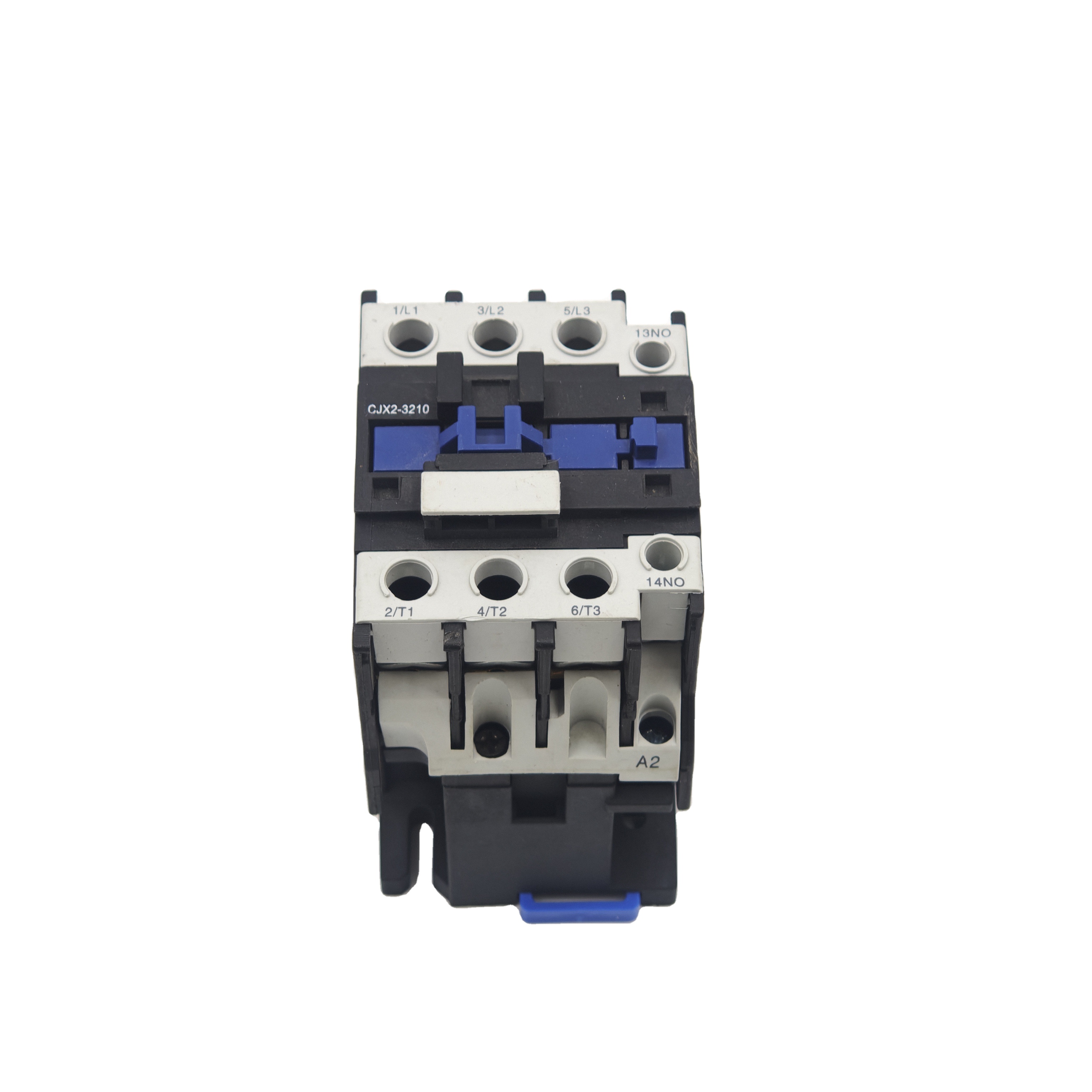
In South San Antonio's automotive manufacturing cluster, automated robotic cells, stamping presses, and robotic welding lines require rigorous secondary circuit protection. Our DIN-rail 63A breakers protect control transformers, servo power units, and 400V/230V auxiliary panels, mitigating downtime from heavy inductive inrush currents.
Port San Antonio Aerospace & Defense Skids
Aerospace maintenance, robotics research, and defense contractors at Port San Antonio construct specialized test fixtures and ground-support skids. Because many of these aerospace test consoles are designed for international deployment or foreign military sales, builders standardize on CE-certified 63A multi-pole circuit breakers matching global IEC protocols.
Cold Storage & I-35 Logistics Corridors
As the primary logistics artery linking Mexico and the US Midwest, San Antonio hosts massive refrigerated warehousing facilities. Our 63A 3-Pole breakers provide dependable protection for multi-stage refrigeration compressors, condensing units, and motorized pallet sorting conveyors exposed to severe continuous duty cycles.
Local Electrical Industry Trends: The San Antonio & Central Texas Outlook
The electrical power ecosystem of Greater San Antonio is experiencing unprecedented transformation driven by three convergent pressures: the Texas ERCOT grid reliability requirements, municipal decarbonization mandates via the City of San Antonio's Climate Action & Adaptation Plan (CAAP), and massive industrial reshoring along the Texas-Mexico border trade corridor.
1. ERCOT Microgrid Resilience & Standby Synchronization: Following winter and summer grid strain events, San Antonio industrial operators are rapidly retrofitting facilities with natural gas micro-turbines, commercial backup generators, and automatic transfer schemes. A 63A sub-feed circuit breaker integrated with high-speed dual power ATS systems ensures seamless islanding and reconnection without dropping sensitive PLC and SCADA communication nodes.
2. OEM Machine Builder Dual-Standard Standardization: Historically, panel builders in Central Texas maintained segregated inventories: UL 489 breakers for regional domestic panels, and IEC/CE breakers for export skids. In recent years, system integrators are actively sourcing hybrid-certified components or standardizing European CE architecture on machine skid sub-assemblies to optimize global supply chains and streamline testing procedures.
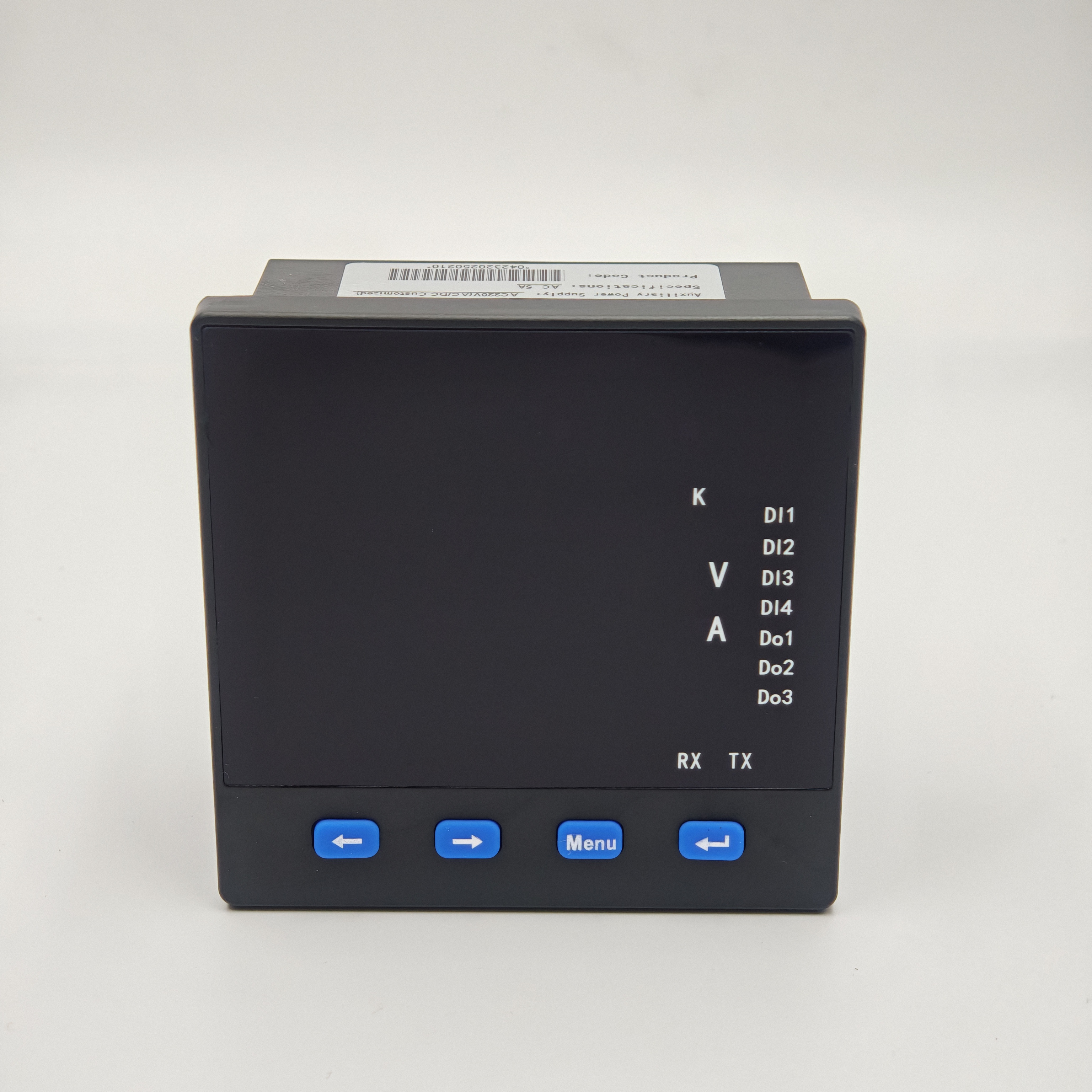
3. Transition Toward Intelligent Sub-Metering and Energy Management: With CPS Energy time-of-use pricing and demand peak surcharges, commercial facilities across Bexar County are coupling 63A circuit branch protectors with RS485/Modbus multifunction power meters. Monitoring voltage drop, harmonic distortion, and reactive power at the 63A sub-feeder level allows maintenance engineers to execute predictive breaker servicing prior to contact wear or terminal overheating.
Manufacturing Authority & Reliability
Why San Antonio Importers Partner with Zhejiang Graybar Electric
Direct factory-level advantages rooted in China's low-voltage capital—Liushi Town, Wenzhou—delivering uncompromised engineering value to Texas distributors and panel builders.
01. Epicenter Manufacturing
Situated in Huangyu Village, Liushi Town, Wenzhou, our factory leverages direct access to the world's most concentrated electrical raw material supply chains—ensuring superior silver-alloy contacts and premium flame-retardant thermoplastics.
02. Rigorous Quality Control
Every single 63A MCB undergoes 100% automated calibration: instant electromagnetic trip testing at 5x/10x $I_n$, bi-metal thermal release validation, dielectric withstand verification, and terminal torque shear tests.
03. Flexible B2B Procurement
Eliminate excessive inventory risk. We support small initial trial batches with low starting MOQs (5 pcs for standard MCB/MCCB models, 1 pc for intelligent ACBs) allowing engineers to evaluate physical samples prior to full container orders.
04. Turnkey OEM / ODM
Comprehensive customization including private label laser marking, bespoke tripping curves (tropicalized calibration for Southern US climates), multi-lingual technical datasheets, and custom barcoded packaging for distributor warehousing.
Frequently Asked Questions
San Antonio Procurement & Engineering FAQ
Get answers to critical engineering, regulatory compliance, and logistics questions commonly raised by electrical engineers and buyers in Central Texas.
Can CE-certified 63A MCBs be legally installed in San Antonio, Texas commercial installations?
In the United States, municipal jurisdictions including the City of San Antonio Development Services Department enforce the National Electrical Code (NEC / NFPA 70). Standard building branch distribution panels generally require equipment listed to UL 489. However, CE-certified (IEC 60898-1 / 60947-2) 63A circuit breakers are widely and legally procured throughout San Antonio for: (1) OEM machinery and skid-mounted industrial control assemblies intended for export to Europe, Latin America, and Asia; (2) Supplementary protection inside industrial control panels governed by UL 508A / NFPA 79 where component approval allows dual-rated IEC devices; (3) Specialized telecommunication power shelves, battery storage systems, and off-grid research platforms operating independently of utility branch panels.
How do extreme San Antonio summer temperatures affect the tripping threshold of a 63A breaker?
Standard 63A MCBs are factory calibrated at $30^\circ\text{C}$ ($86^\circ\text{F}$). When installed in outdoor rooftop combiner boxes or uncooled metal enclosures in San Antonio where interior temperatures reach $50^\circ\text{C}$ ($122^\circ\text{F}$), the breaker experiences thermal pre-deflection. In accordance with thermal derating tables, a standard 63A breaker will de-rate to approximately 50.4A continuous current ($63\text{A} \times 0.80$). If multiple breakers are grouped together on a DIN rail, an additional proximity grouping factor ($0.85$) applies, reducing capacity to approximately 42.8A. Zhejiang Graybar Electric provides custom thermal calibration adjusted for $40^\circ\text{C}$ or $50^\circ\text{C}$ base references to prevent nuisance tripping in hot environments.
What is the technical distinction between 6kA and 10kA breaking capacity for a 63A MCB?
Breaking capacity ($I_{cn}$ / $I_{cu}$) defines the maximum prospective short-circuit current the breaker can safely interrupt without mechanical explosion, contact welding, or terminal flashover. A 6kA breaker is engineered for typical residential and light-commercial branch panels where transformer distance and conductor impedance keep fault levels below 6,000 amperes. A 10kA-rated 63A MCB features an enlarged arc-quenching chamber, heavier silver-tin-oxide ($AgSnO_2$) contacts, and thick copper shunt plates capable of safely clearing 10,000 amperes. For industrial installations near distribution transformers in San Antonio industrial parks, specifying a 10kA breaking capacity is highly recommended to satisfy prospective fault level calculations.
Can a 63A AC circuit breaker be used interchangeably in DC solar applications?
No, standard AC miniature circuit breakers must never be used in high-voltage DC circuits. Alternating current naturally passes through a zero-voltage crossing 100 or 120 times per second, which aids in extinguishing the electric arc. Direct current has no natural zero crossing; once an arc forms across opening contacts, it burns continuously until it destroys the housing. Dedicated DC 63A circuit breakers feature powerful internal permanent magnets that blow the DC arc into the arc splitter plates to force rapid extinction. Zhejiang Graybar Electric manufactures purpose-built DC MCBs specifically rated up to 1000V DC for solar photovoltaic strings and battery banks.
What is the standard lead time and logistics procedure for shipments to San Antonio, Texas?
For evaluation samples and low-MOQ orders (5–100 pieces), products are dispatched via DHL/FedEx air express from Ningbo or Shanghai directly to San Antonio International Airport (SAT) with a delivery transit time of 4 to 7 business days. For bulk container shipments and OEM production orders, freight is routed via ocean container to the Port of Houston, followed by dedicated intermodal rail/truck drayage into San Antonio distribution warehouses, totaling an average transit of 25 to 32 days. Complete export documentation including CE certificates, material test reports (MTR), and bill of lading (B/L) are provided seamlessly.
Request Technical Datasheets or Order Factory Samples
Collaborate directly with our engineering sales desk in Liushi, Wenzhou. We assist San Antonio panel builders, industrial contractors, and equipment wholesalers with curve selection, temperature calibration, and rapid sample dispatch.