Engineering Portfolio: Circuit Protection & Switching Systems
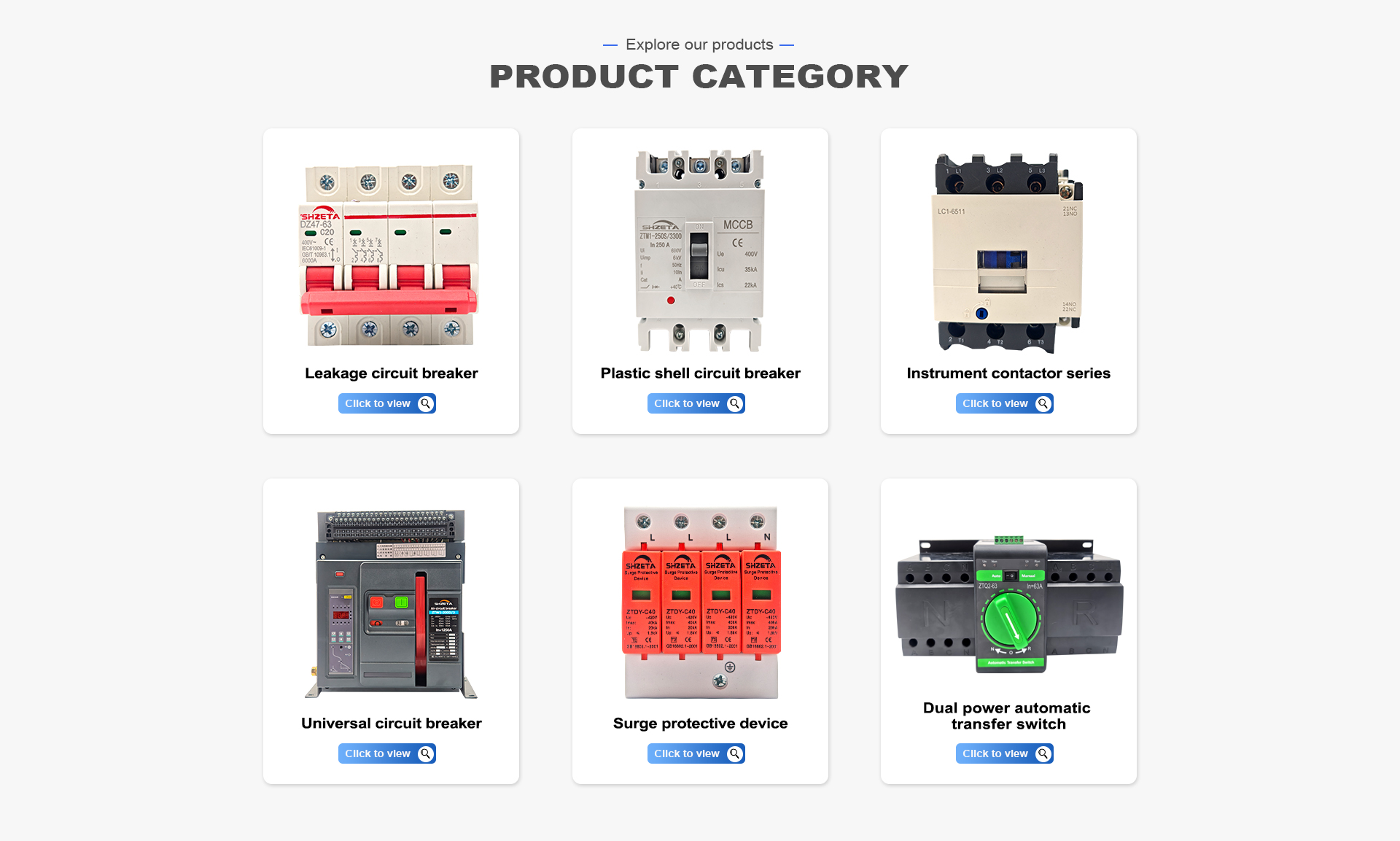
Explore our export-grade miniature circuit breakers, automatic transfer switches, and contactors manufactured in strict compliance with IEC 60898-1, IEC 60947-2, and global switchgear topologies.
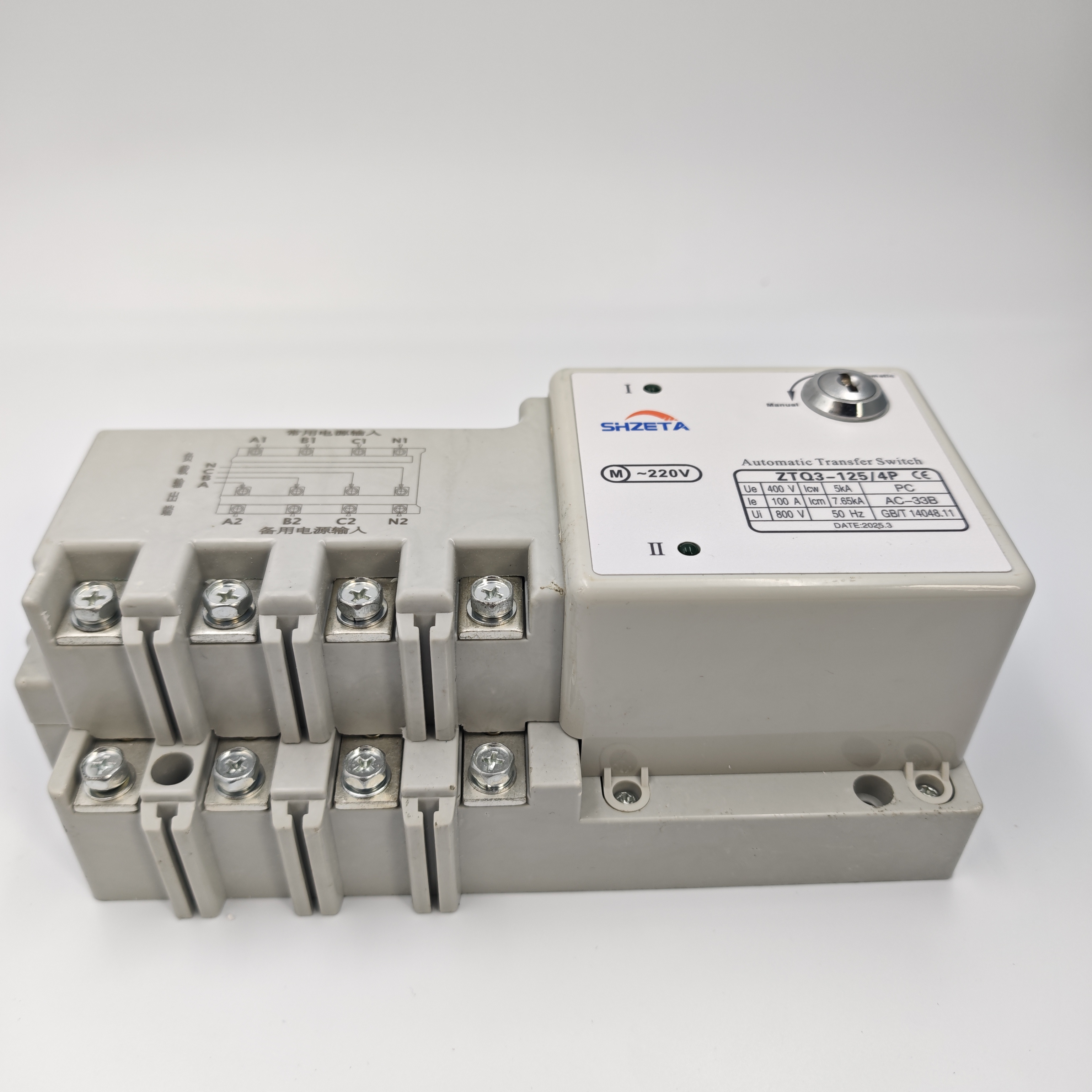
Dual Power Automatic Transfer Switch ZTQ3-100A/4P
- Frame Rating:100A / 4P
- Transition:Customizable Breaking
- Compliance:IEC 60947-6-1
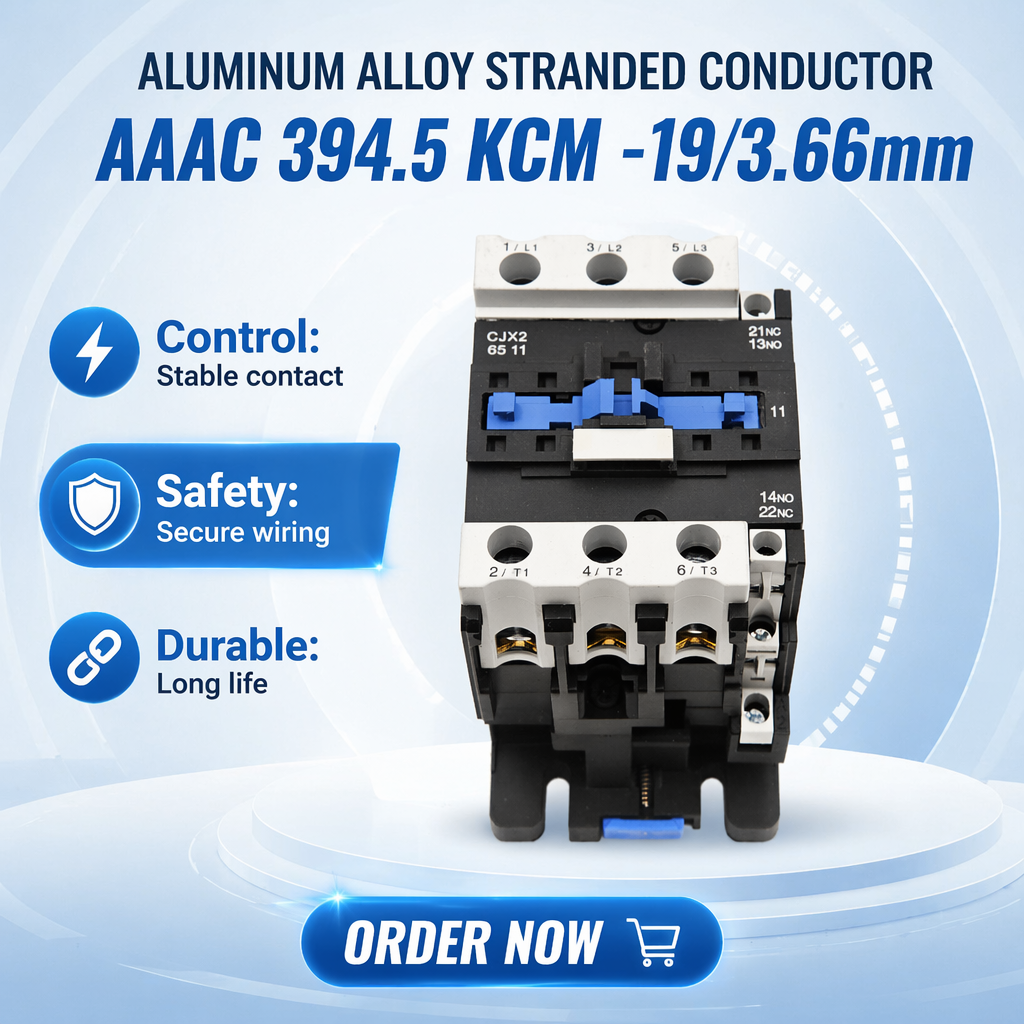
Electrical AC Magnetic Contactor 3-Pole CJX2-8011
- Configuration:3P / 50-60Hz
- Mounting:35mm DIN Rail
- Rating:80A Main Circuit
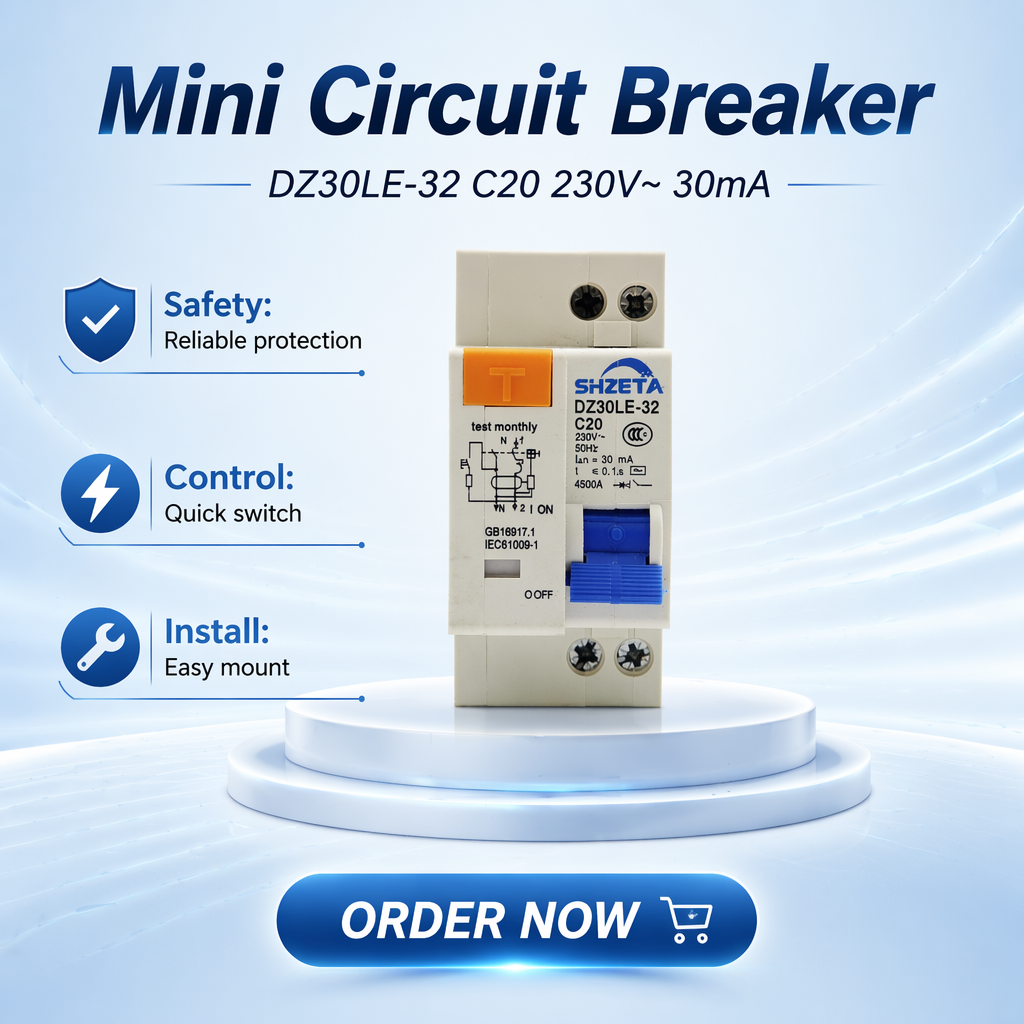
DZ30LE-32A Plastic Circuit Protection System
- Protection:Residual + Overcurrent
- Application:Commercial Lighting
- Trip Curve:Type C / High Sensitivity
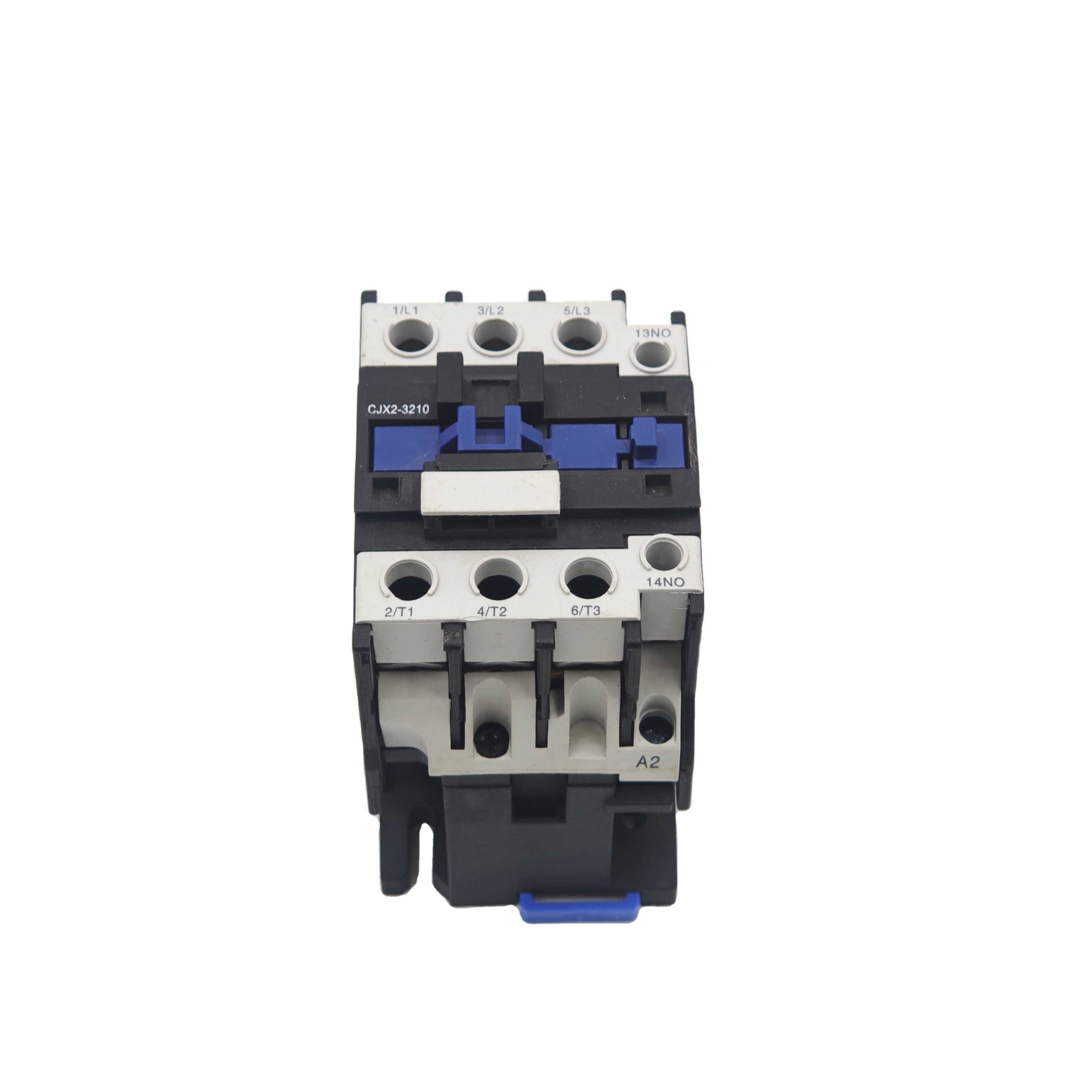
CJX2-1210 AC Three-Phase Contactor 220V/380V
- Rated Current:12A AC-3
- Mounting:Surface / DIN Mount
- Control Volts:220V / 380V Coil
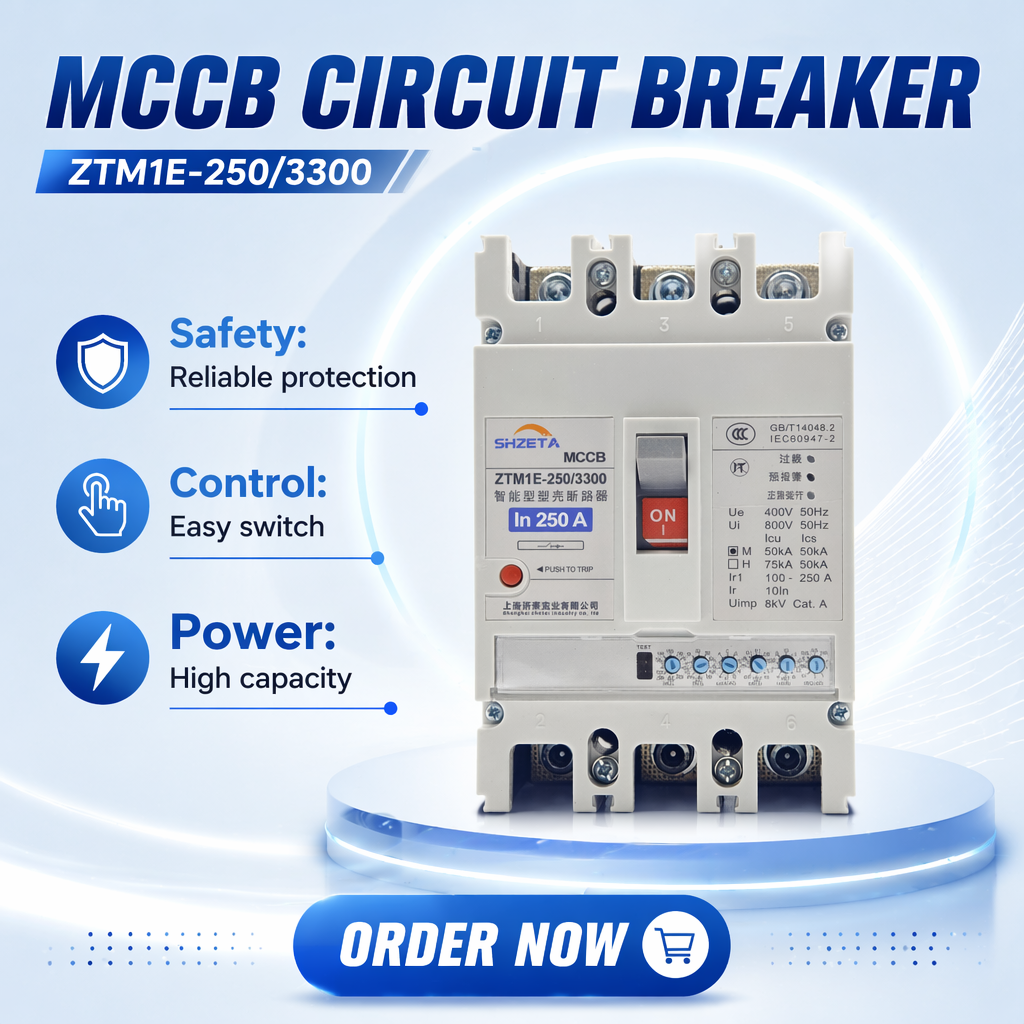
Thermal-Magnetic MCCB 50kA/100kA Breaking
- Capacity:50kA / 100kA Icu
- Conductor:Electrolytic Copper
- Rated Voltage:400VAC / 690VAC
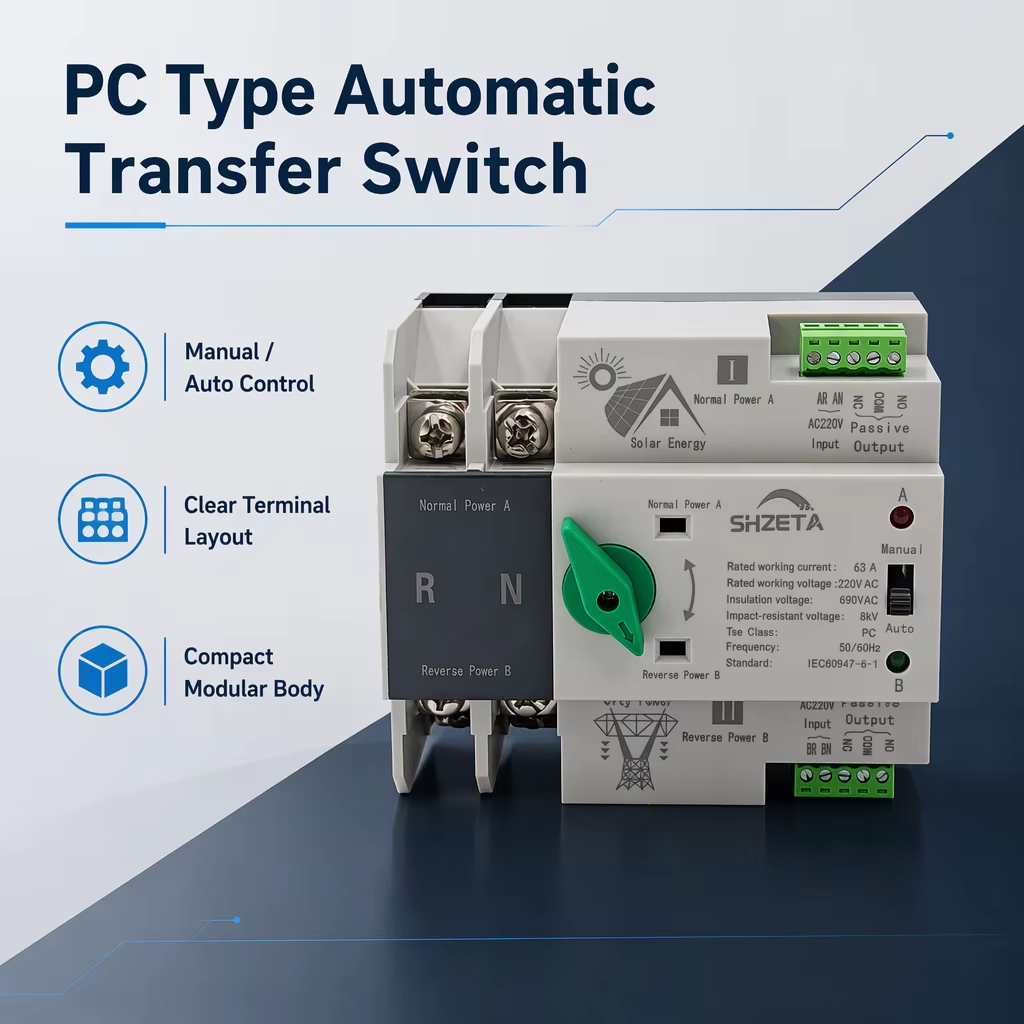
PC Type Automatic Transfer Switch 220V AC
- Class:PC Class Modular
- Application:PV Solar / Utility Grid
- Switching Speed:<50ms Fast Transfer
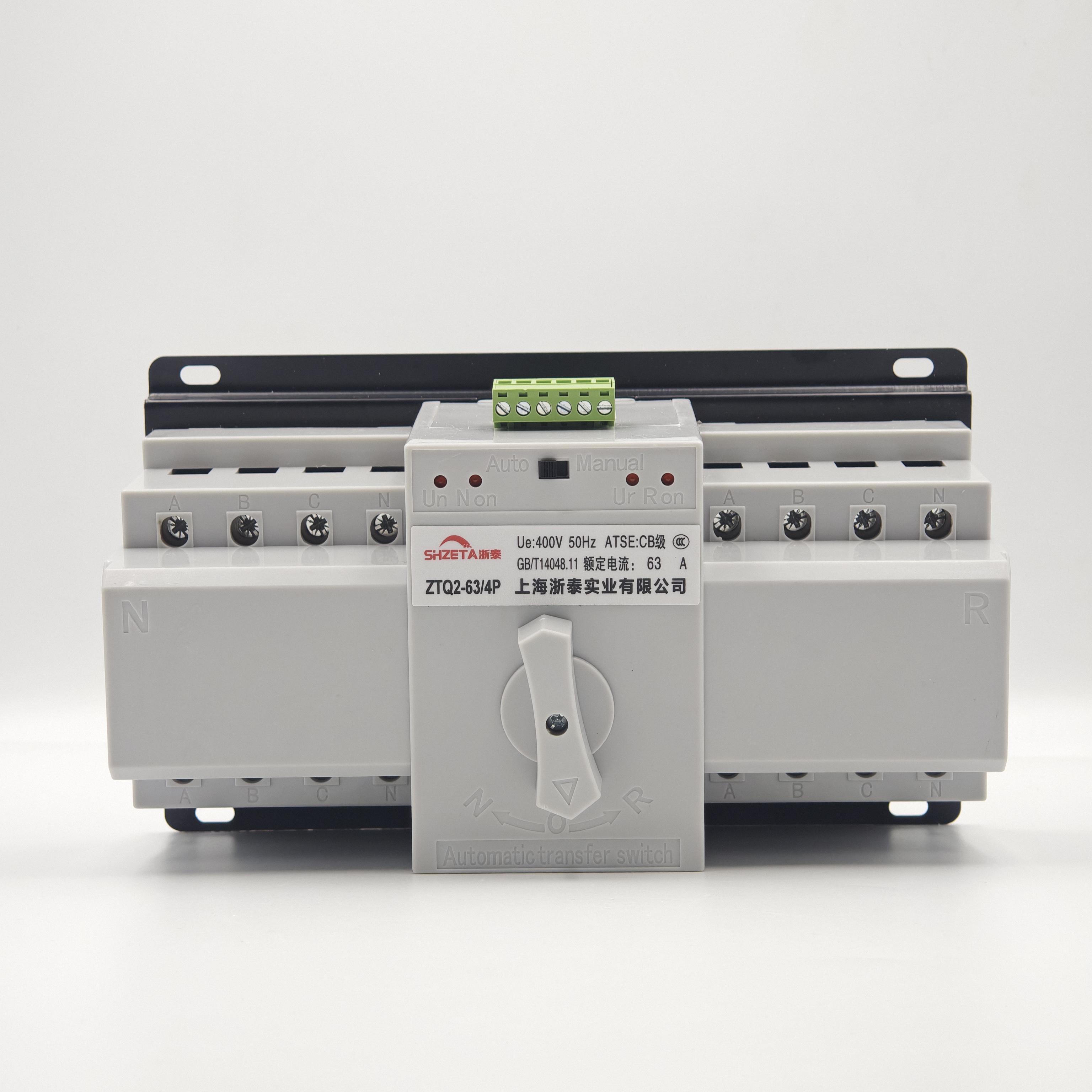
63A 4P Dual Power ATS 400V CB Class
- Current Rating:63A Continuous
- Poles:4-Pole Switched Neutral
- Integration:Integral MCB Mechanism
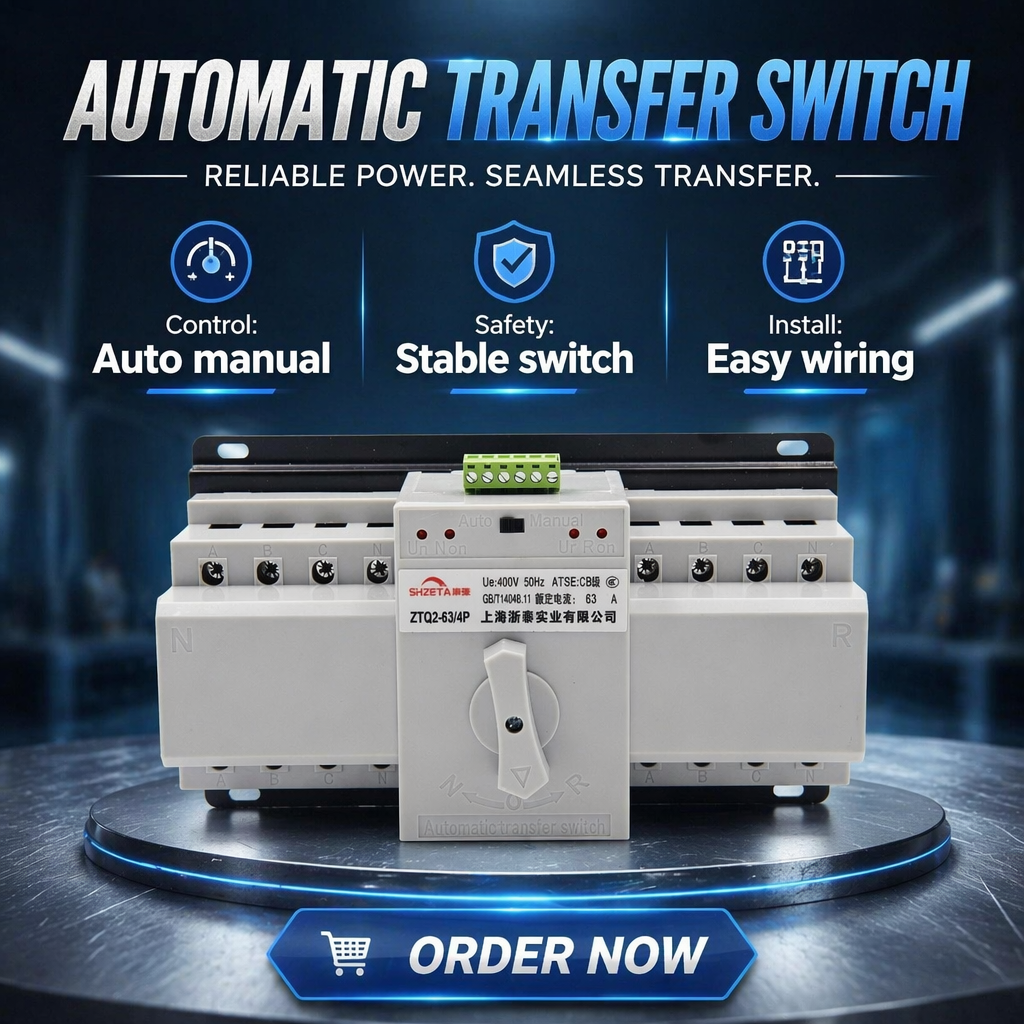
4P 63A Manual Changeover Dual Transfer Switch
- Operation:Manual Interlock Switch
- Thermal Rating:63A Tripping Block
- Application:Emergency Standby Isolation
Central Ohio Electrical Landscape: Why 63A MCB Specifications Demand Precision Engineering
The Columbus metropolitan area, extending across Franklin, Delaware, and Licking counties, has emerged as North America's premier hub for advanced semiconductor manufacturing, hyperscale data infrastructure, and precision automotive manufacturing. From the Intel Silicon Heartland development in New Albany to mega-scale cloud facilities operated by Amazon Web Services, Google, and Microsoft across Hilliard and Plain City, the demand for electrical circuit integrity has reached unprecedented tolerances. Within these high-density electrical architectures, the 63A miniature circuit breaker (MCB) serves as the definitive thermal-magnetic defense boundary between medium sub-distribution boards and sensitive terminal load apparatus.
Specifying a miniature circuit breaker rated at 63A involves navigating rigorous prospective short-circuit current calculations. In modern commercial switchboards and data center Power Distribution Units (PDUs), fault energy levels routinely exceed nominal domestic breaking thresholds. While residential branch circuits typically perform reliably under 4.5kA or 6kA interruption constraints, industrial infrastructure in the Columbus corridor demands 10kA (IEC 60898-1) and upwards of 15kA to 25kA ultimate breaking capacities (Icu) under IEC 60947-2 parameters. Sourcing directly from an established manufacturing plant ensures that bimetallic elements, arc-extinguishing splitter plates, and magnetic coils are engineered to handle repetitive thermal cycles without experiencing calibration drift.


Trip Curve Dynamics: Selecting Between Curve B, C, and D for Columbus Facilities
Electrical engineers, OEM panel builders, and procurement managers serving the Ohio River basin must rigorously differentiate trip characteristics when integrating 63A DIN rail breakers into sub-assemblies. A miscalculated trip curve induces catastrophic nuisance tripping during peak inrush or, conversely, causes delayed thermal clearing during sustained high-impedance faults:
Type B Trip Curve (3–5 In): Predominantly suited for resistive environments such as data facility resistive heating banks, resistive stage lighting, and long cable runs where fault loops exhibit relatively high impedance. In Columbus telecommunication centers, Type B ensures instantaneous tripping under low fault current conditions, preventing cable degradation.
Type C Trip Curve (5–10 In): The universal standard for mixed commercial applications, sub-panel boards, office server clusters, and fluorescent/LED lighting ballasts across Columbus corporate offices. Engineered to tolerate transient inductive loads without nuisance tripping while providing ultra-fast clearance under direct phase-to-neutral short circuits.
Type D Trip Curve (10–20 In): Critical for Central Ohio’s heavy industrial manufacturing sector, including stamping plants, automated sorting robotics, HVAC chillers, and high-frequency variable speed drive (VFD) inputs. A 63A Curve D breaker absorbs significant inductive switching surges—characteristic of industrial transformers and large electric motors—without tripping, while retaining precise thermal overload tracking via its bimetal strip.
Thermal Dissipation & Derating in High-Density Enclosures
A prevalent challenge encountered by switchgear integrators serving Central Ohio data halls is thermal accumulation within sealed NEMA 4, NEMA 12, or IP65 industrial enclosures. When multiple 63A circuit breakers are mounted side-by-side on a continuous 35mm DIN rail running at rated current, internal cabinet temperatures often surpass standard 30°C reference baselines. Under ambient temperatures reaching 50°C, a non-calibrated breaker experiences premature thermal tripping due to altered deflection characteristics of the bimetallic composite. Zhejiang Graybar Electric mitigates this by integrating optimized de-rating matrices, electrolytic copper contact bridges, and silver-graphite contact tips that drastically reduce internal contact resistance ($R_{cont} \le 1.2\text{ m}\Omega$), ensuring steady-state performance across ambient thermal extremes from -35°C to +70°C.
Engineered Applications Across Central Ohio
From the Scioto River valley logistics corridors to advanced smart-grid clusters, our 63A protection series delivers field-proven reliability across high-stakes industrial applications.
Hyperscale Data Center PDUs
Central Ohio serves as a major national data thoroughfare. Our 63A MCBs provide secondary power distribution protection inside row-based and floor-mounted PDUs, supplying uninterrupted 400V/230V sub-circuits feeding high-density server racks with zero tolerance for nuisance trips.
Semiconductor Cleanroom Auxiliary Power
In cleanroom manufacturing plants across the Licking County Silicon Heartland, ancillary gas delivery systems, exhaust scrubbers, and vacuum pumps require specialized Type C/D 63A circuit breakers configured for fast fault clearing without releasing ionized discharge gases into protected panels.
Automated Logistics & Distribution Hubs
Supporting major Columbus distribution nodes near Rickenbacker International Airport. Our breakers safeguard conveyor drives, optical sortation systems, automated storage and retrieval systems (ASRS), and commercial electric fleet charging banks from destructive short-circuit faults.
Regional Market Drivers: The Central Ohio Industrial Horizon
Analysis of regulatory, technological, and infrastructure shifts shaping circuit protection procurement in the Columbus market.
Onshoring of EV & Clean Energy Supply Chains
As battery gigafactories and solar component assembly facilities proliferate across Central Ohio, the requirement for dual-certified AC and DC circuit breakers rated up to 63A and 1000V DC has expanded exponentially. Modern facilities require selective protection capable of handling bidirectional regenerative currents without premature magnetic release.
Grid Modernization & Arc Flash Mitigation
With utility operators like AEP Ohio integrating renewable energy microgrids and localized battery storage (BESS), panel builders face stringent regional safety mandates. 63A MCBs are increasingly engineered with advanced arc-quenching chambers (12 to 14 de-ion plate segments) that drastically suppress total let-through energy ($I^2t$), minimizing arc-flash hazards.
Direct Factory Sourcing vs. Supply Chain Volatility
Supply chain constraints across traditional North American electrical distributors have prompted Columbus panel shops and EPC contractors to establish direct-from-factory procurement partnerships. By eliminating multi-tier brokerage markups, engineering teams secure custom-labeled, batch-tested breakers with guaranteed delivery schedules.
Factory Strength: Zhejiang Graybar Electric Co., Ltd.
Strategically headquartered in Liushi Town, Wenzhou—the world capital of low-voltage electrical apparatus—we provide seamless export execution for global switchgear fabricators.
Fully Integrated Liushi Manufacturing Hub
Direct proximity to high-grade raw material sources—such as thermo-resistant PA66 flame-retardant housings (UL94 V-0) and high-conductivity copper strip laminates. Complete stamping, molding, calibration, and packing operations are executed under one unified quality management umbrella.
Comprehensive Testing & Dielectric Validation
Every single 63A MCB undergoes 100% automated trip-time verification at $1.13\text{ In}$ (non-tripping) and $1.45\text{ In}$ (conventional thermal tripping), alongside instantaneous magnetic release checks and 2500V dielectric insulation verification prior to carton sealing.
Agile OEM/ODM & Low Minimum Order Quantities
Unlike massive conglomerates that demand rigid multi-thousand-unit initial orders, our standard starting MOQ is 5 pieces for MCBs, MCCBs, and SPDs (1 piece for ACBs). We support customized pad printing, custom rated currents, bespoke packaging, and comprehensive multi-lingual documentation.

Frequently Asked Questions: Columbus Sourcing & Procurement
Direct technical responses to common questions encountered by electrical contractors, systems engineers, and supply chain managers.
How do international IEC ratings correlate with North American UL panel standards?
While UL 489 branch breakers and UL 1077 supplementary protectors govern traditional domestic enclosures, international systems, OEM equipment exported globally, and specialized data centers frequently design around IEC 60898-1 and IEC 60947-2 standards. We offer comprehensive engineering cross-reference sheets and type-test reports to confirm breaking capacities, thermal thresholds, and physical clearances align with your sub-panel design.
What is the minimum order quantity (MOQ) for custom-branded 63A MCBs?
Our baseline factory MOQ for standard catalog 63A MCBs is 5 pieces per model, allowing electrical engineering teams to test samples and conduct independent laboratory evaluations. For customized OEM private labeling (laser-marked brand identities, tailored packaging, and custom trip calibration), typical production batches start as low as 100 to 500 units, scaling directly to full containerloads.
How does ambient temperature in Central Ohio switchboards impact the 63A rating?
Miniature circuit breakers are calibrated to a standard reference baseline (commonly 30°C or 40°C depending on specification). When enclosed inside dense distribution boards in non-climate-controlled logistics hubs or warm equipment rooms, a temperature de-rating factor must be applied. At 50°C, a standard 63A breaker operates with an effective thermal continuous threshold of approximately 56A to 58A. We provide detailed temperature de-rating charts for every curve family.
Can you provide coordinated cascade charts with upstream MCCBs and ACBs?
Yes. Zhejiang Graybar Electric manufactures the complete circuit hierarchy—from 6300A Air Circuit Breakers (ACB) and 250A Molded Case Circuit Breakers (MCCB) down to terminal 63A MCBs. Our engineering team can furnish short-circuit selectivity and cascading tables to ensure the 63A terminal breaker clears downstream faults without causing the main switchboard feeder to trip.
What are the transit lead times and export shipping options to Columbus, Ohio?
Evaluation samples and express pilot batches are shipped via air freight (DHL/FedEx/UPS), reaching Columbus regional facilities within 5 to 7 business days. Commercial production volume is routed via consolidated ocean shipping through West Coast ports (intermodal rail transfer to Columbus intermodal terminals) or East Coast gateways (Norfolk/New York), with door-to-door DDP (Delivered Duty Paid) shipping handling all customs clearance.