High-Performance Automatic Transfer Switches & Integrated Protection
Engineered in Liushi, Wenzhou—China's low-voltage capital. Featuring short transfer times, superior breaking capacities (6kA–40kA), dual-power redundancy, and intelligent Modbus energy monitoring.
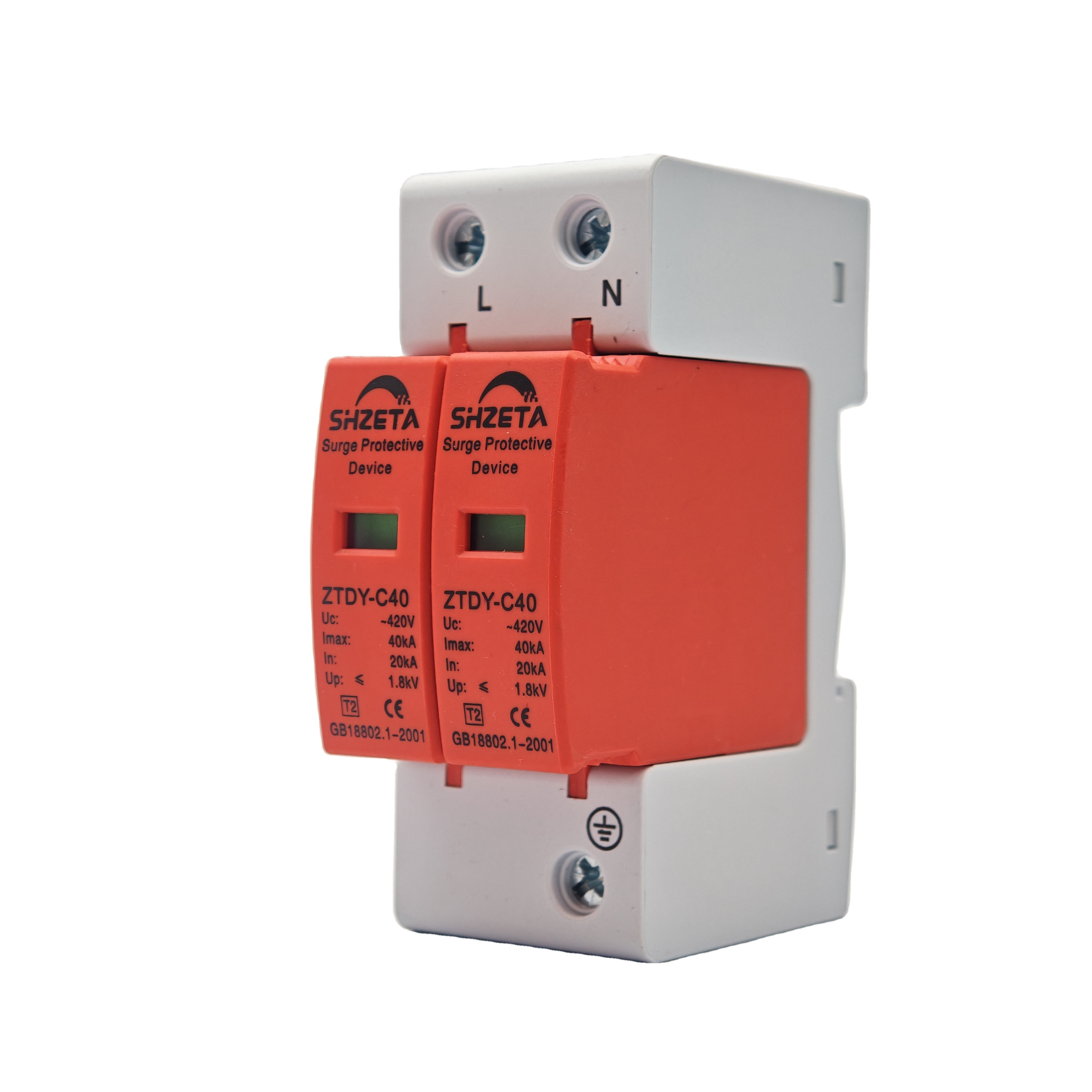
Din Rail Fireproof T1 PBT 800V DC SPD 2P 40KA Solar PV Arrester
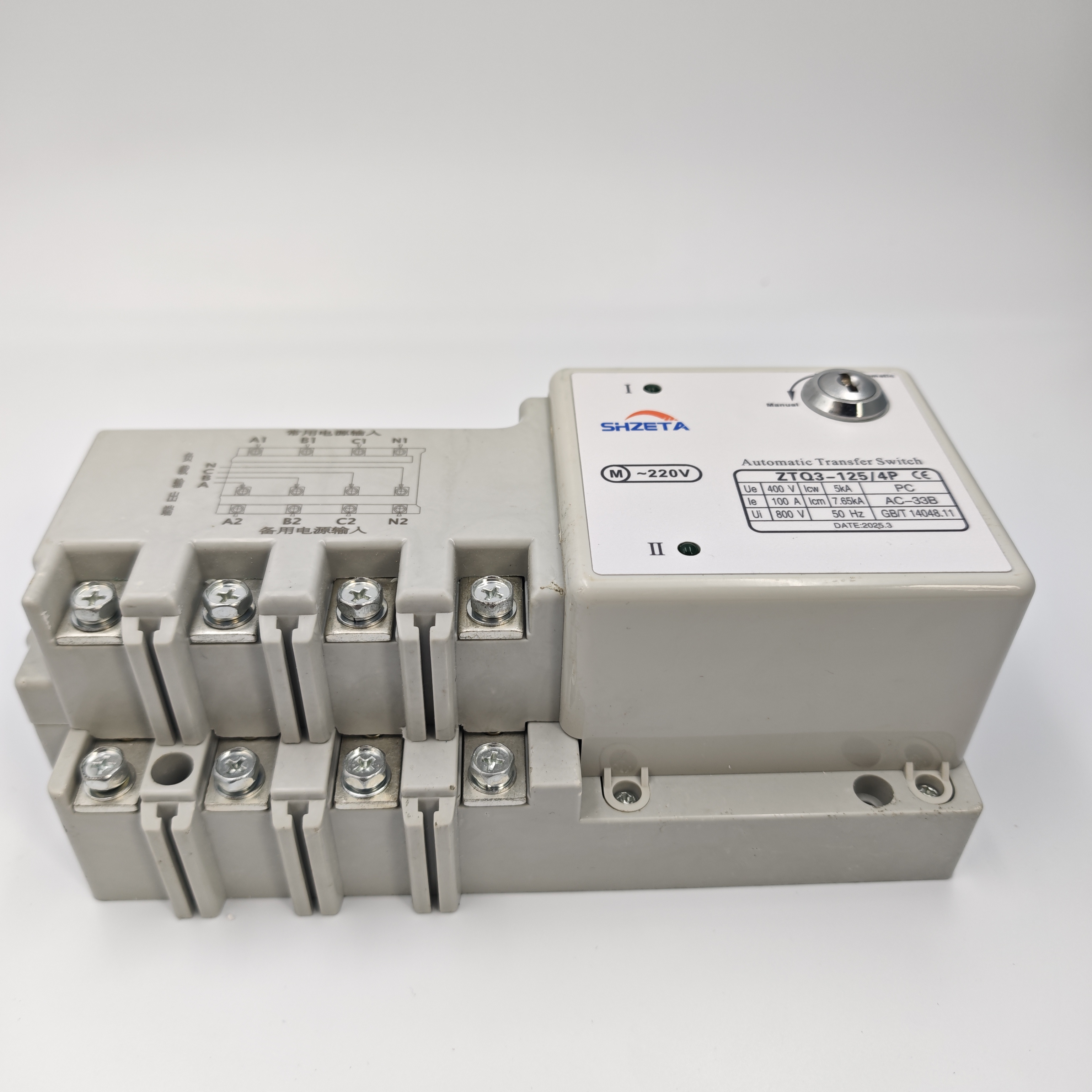
Dual Power Automatic Transfer Switch ZTQ3-100A/4P Dual Power Changeover
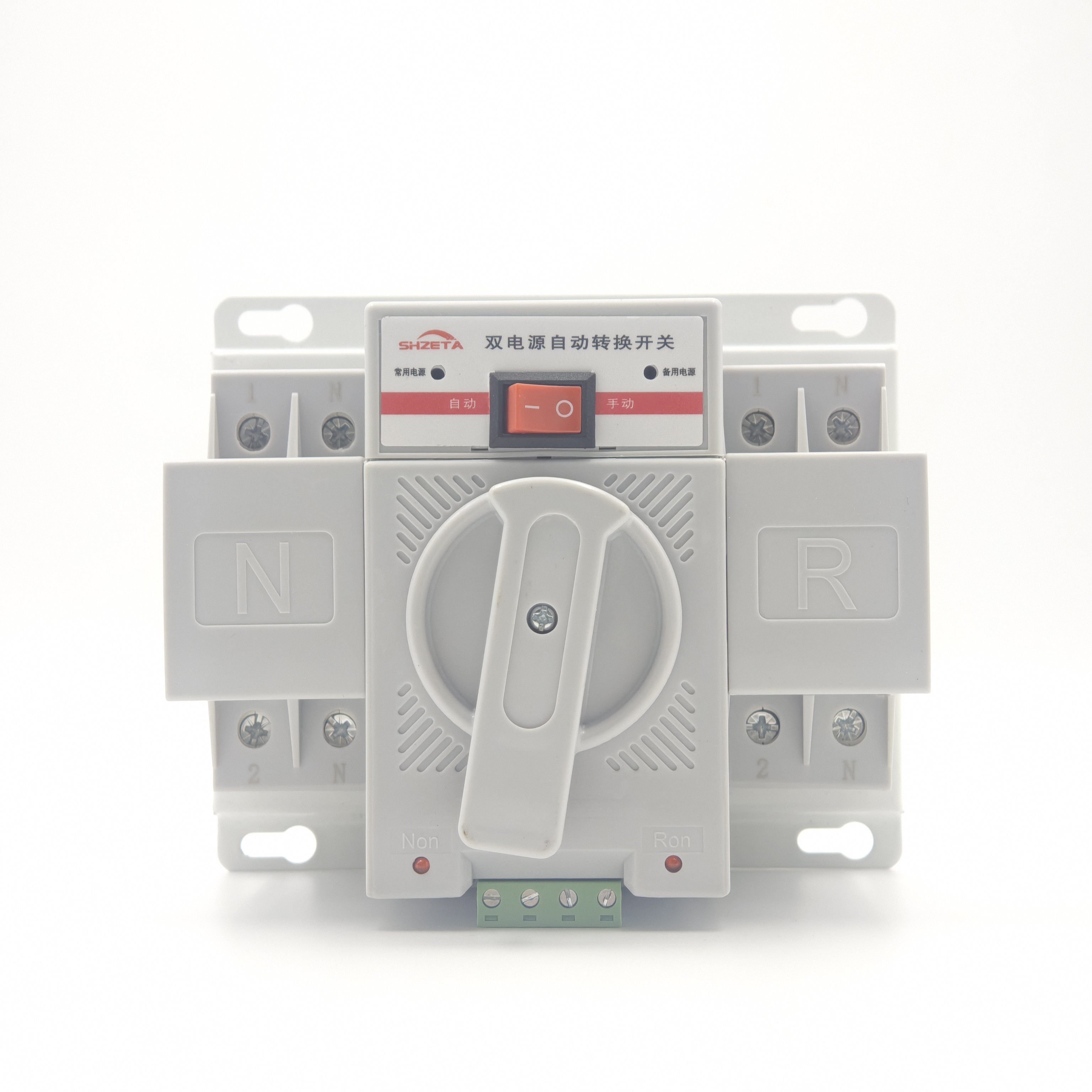
2P Single Phase Automatic Transfer Switch 220V 6kA 63A Frame
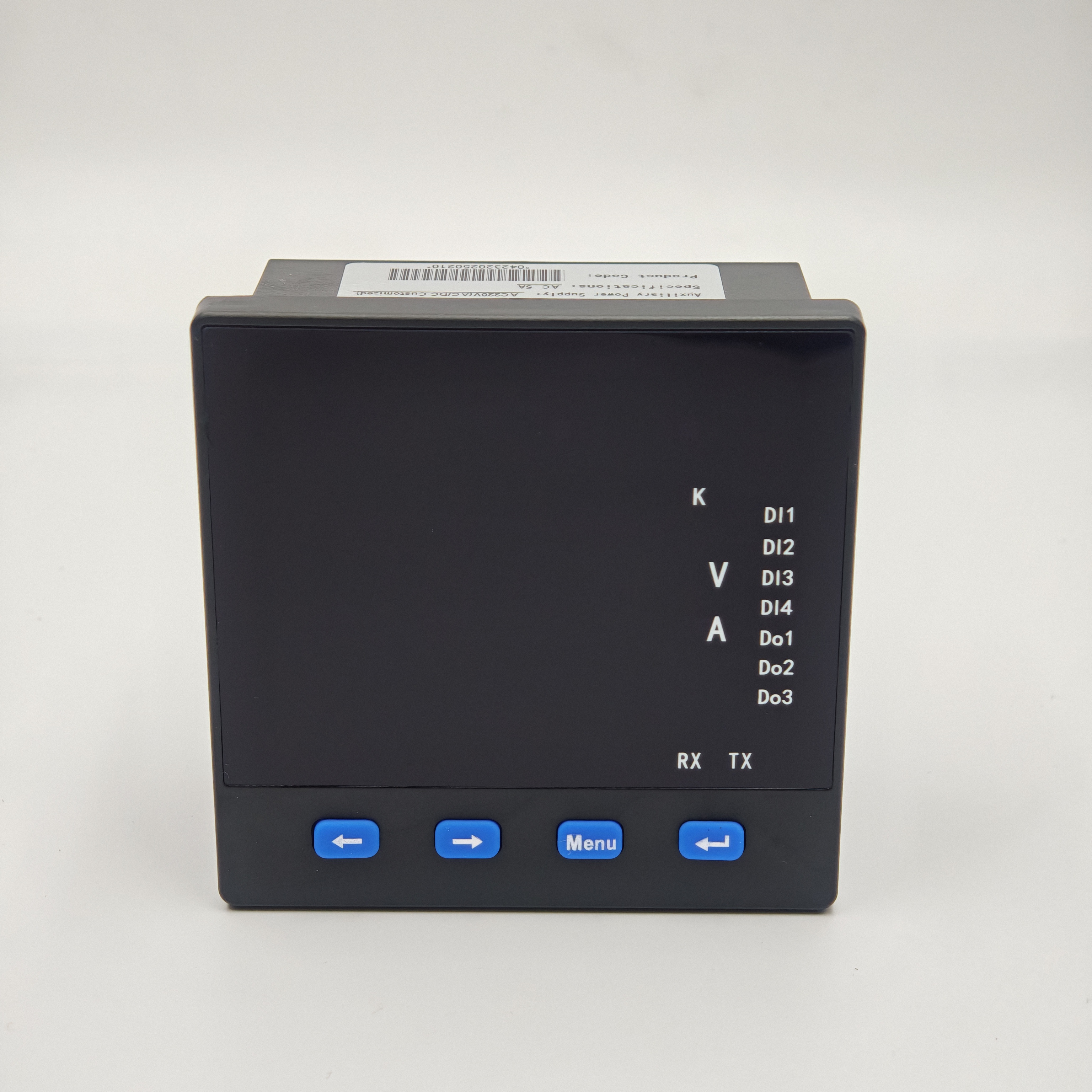
ZTDSI HY-311 Three-Phase Multifunction Energy Meter 0.5 Class
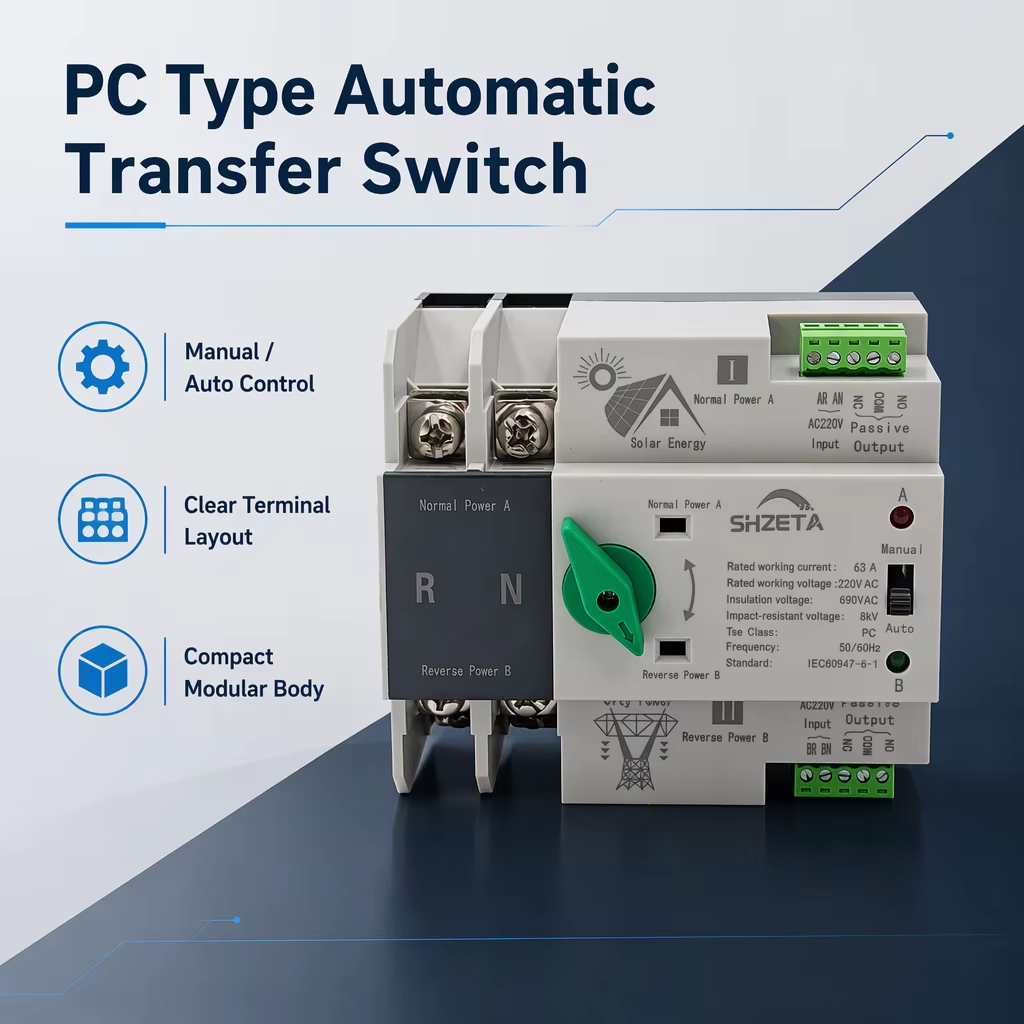
PC Type Automatic Transfer Switch 220V AC Modular Changeover
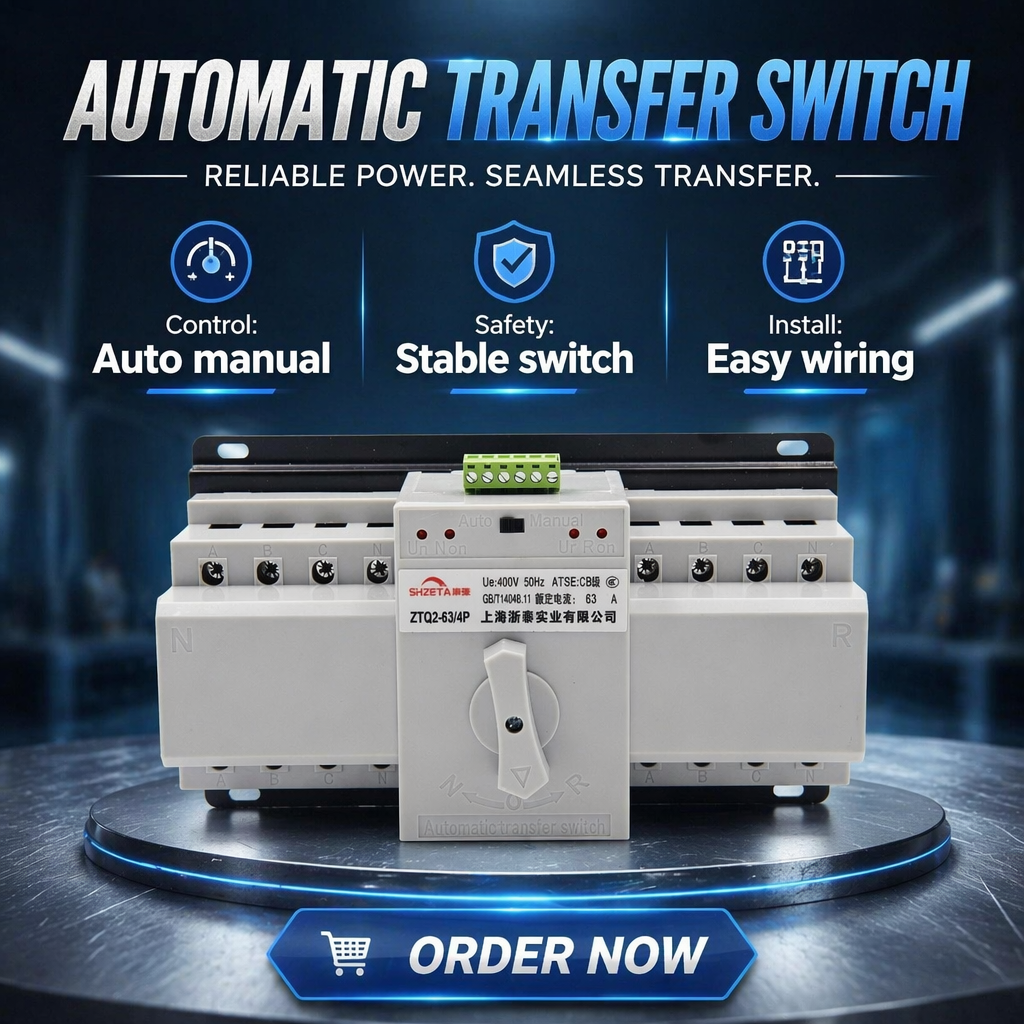
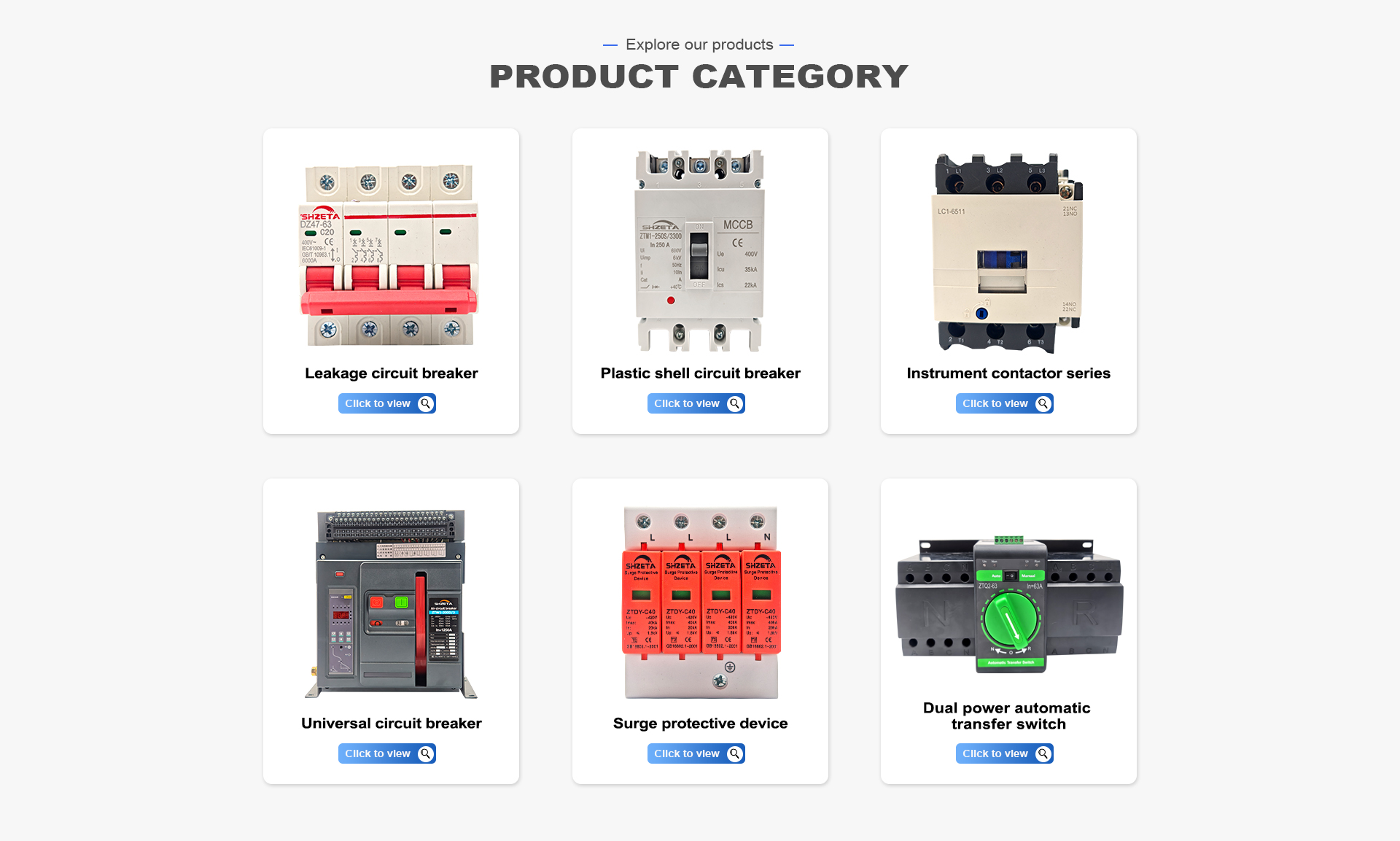
4P 63A Integrated Circuit Breaker Type Dual Power Transfer Switch
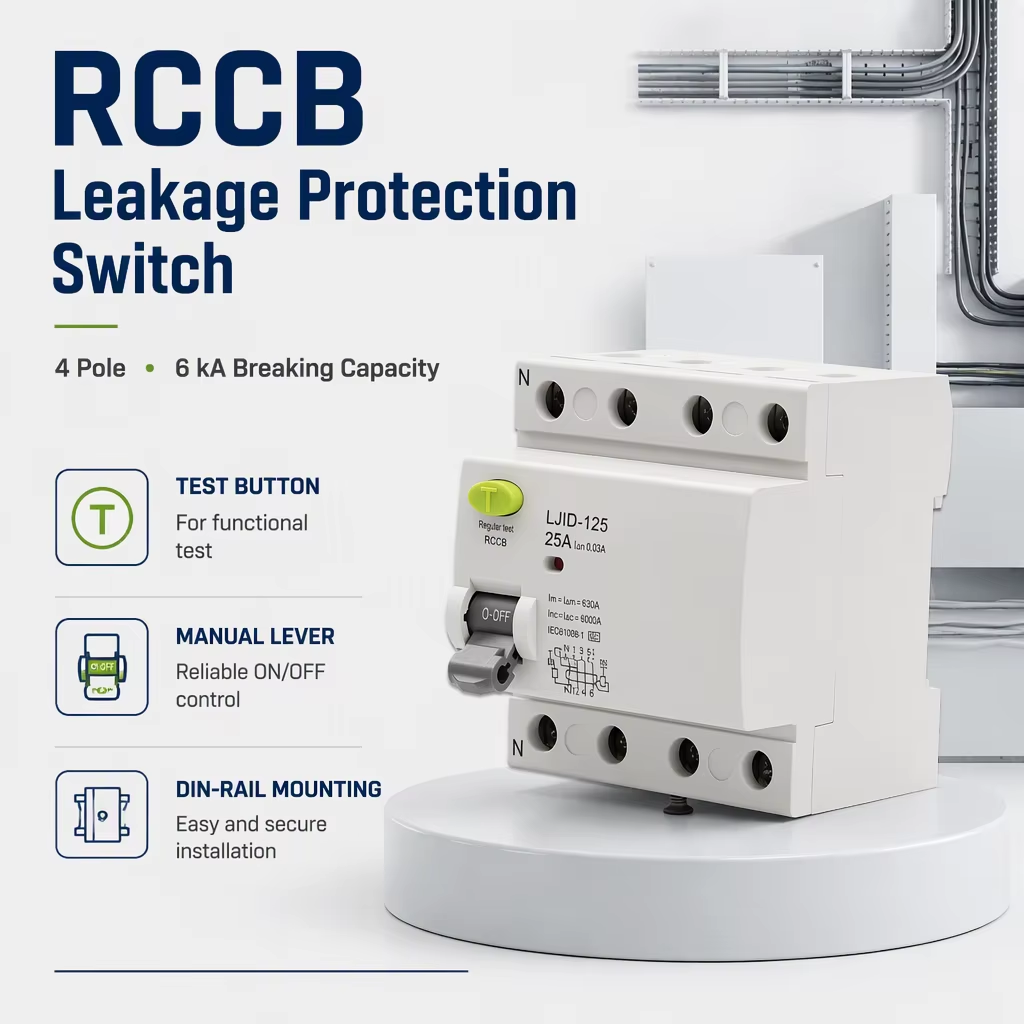
RCCB Residual Current Leakage Protection Switch 2P/4P 16A–63A
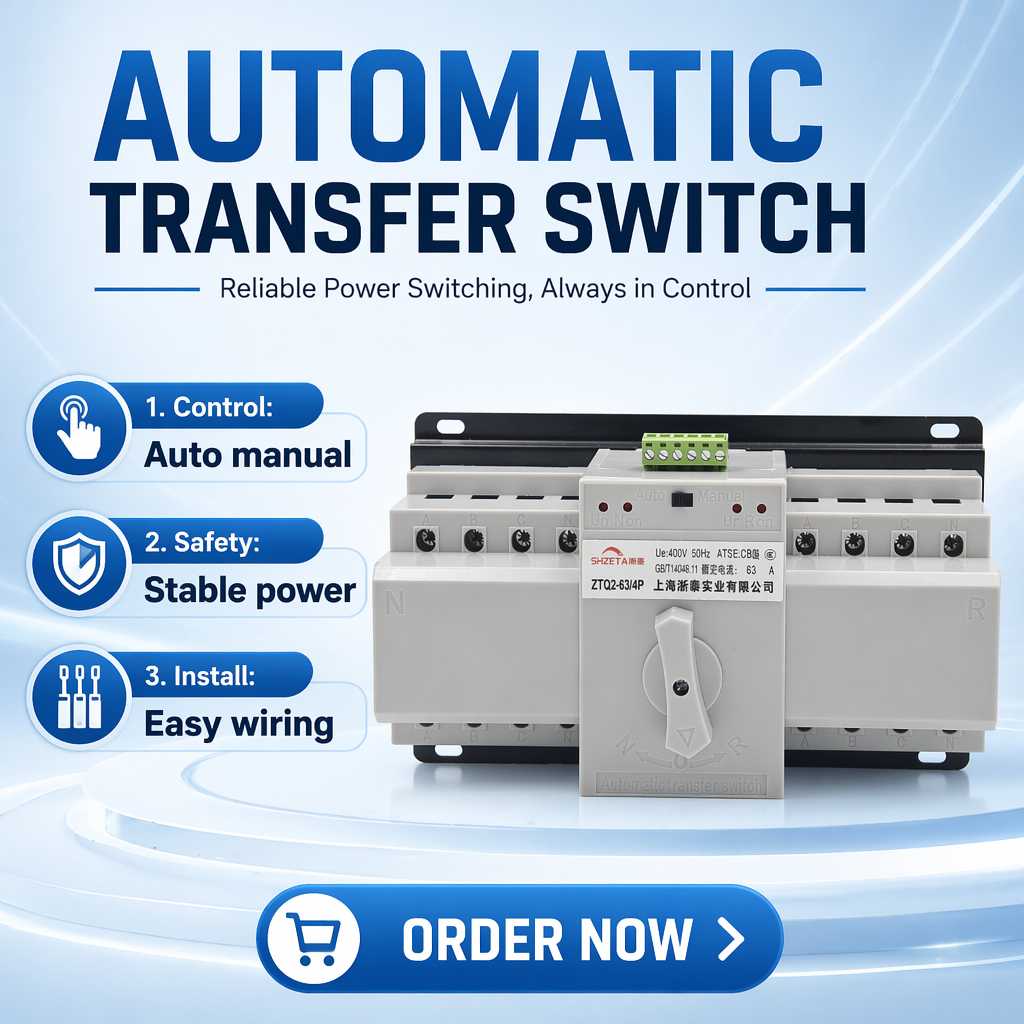
4P 63A Dual Power Changeover Switch with Breaker Protection
Ultra-rapid electromagnetic coil operation preventing sensitive PLC and server brownouts.
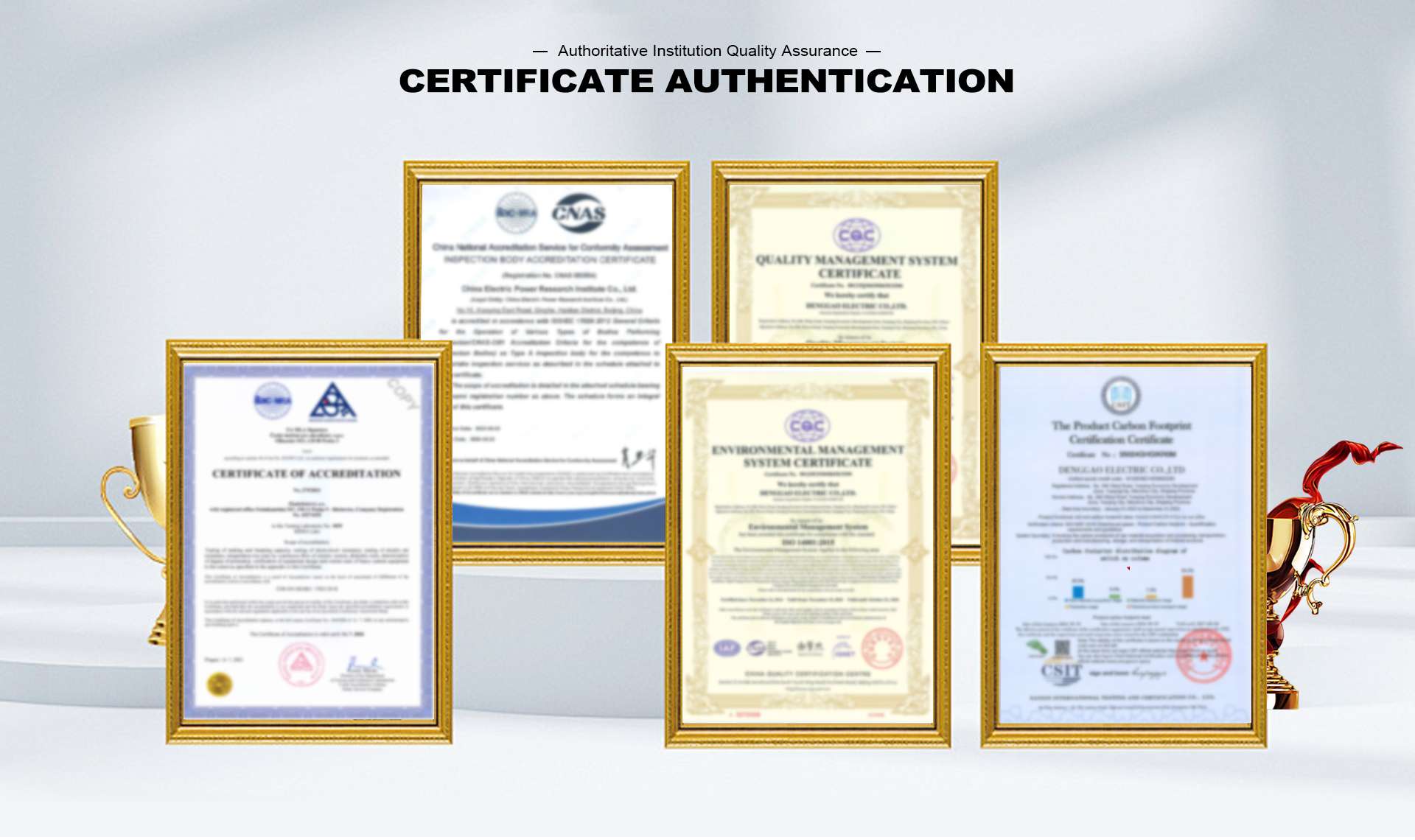
Full third-party compliance testing for dielectric endurance, short-time withstand current (Icw).
Fast-track pilot batch sampling for global panel builders, switchgear OEMs, and EPCs.
Direct factory logistics from China’s largest electrical manufacturing cluster to global seaports.
Automatic Transfer Switching Equipment (ATSE): Architecture & Selection Criteria
In contemporary electrical architecture, the Automatic Transfer Switch (ATS) is the frontline defender of power continuity. As global grids encounter higher penetration of intermittent renewable generation (Distributed PV, Wind) and microgrid storage (BESS), the choice of transfer mechanism directly impacts uptime, arc safety, and equipment longevity.
PC-Class vs. CB-Class vs. CC-Class ATS: Engineering Selection Matrix
Selecting an ATS requires an engineering analysis under standard IEC 60947-6-1. Specifiers must differentiate between switches designed purely to withstand fault currents (PC Class) and those providing autonomous overcurrent interruption (CB Class).
| Engineering Metric | PC-Class ATS (Solenoid Driven) | CB-Class ATS (Dual MCB / MCCB) | CC-Class ATS (Contactor Driven) |
|---|---|---|---|
| Primary Mechanism | Single electromagnetic drive or motorized mechanical contact mechanism. Built exclusively for switching. | Mechanically interlocked Miniature or Moulded Case Circuit Breakers with motor/solenoid actuators. | Mechanically and electrically interlocked AC Contactors with continuous coil energization. |
| Transfer Time (ms) | < 30 ms – 80 ms (Ultra-fast changeover suitable for IT & critical medical circuits). | 100 ms – 800 ms (Governed by motor charging and breaker trip/reset mechanisms). | 40 ms – 120 ms (Rapid, but vulnerable to voltage sags causing contact chatter). |
| Overcurrent Protection | None. Requires upstream coordinated SCPD (Fuses, MCCB, or ACB). | Integral thermal-magnetic or electronic trip units. Direct overcurrent protection. | None. Must rely on external upstream fuses or breakers. |
| Withstand Current (Icw) | Extremely High (Withstands massive short-circuit currents until upstream devices clear). | Moderate (Governed by breaker breaking capacity Icu/Ics). | Low (Contacts risk dynamic welding under heavy fault let-through energy). |
| Endurance & Reliability | High mechanical life (>10,000 cycles). Minimal moving parts, robust silver-nickel (AgNi) contacts. | Medium life (~6,000 cycles). Mechanical linkages and springs subject to fatigue over time. | Medium-low. Continuous coil power consumption creates thermal aging of coils. |
| Best Application Scenario | Data centers, hospitals, industrial critical lines, PV battery storage changeovers. | Residential secondary distribution, remote telecom base stations, basic commercial buildings. | Motor reversal circuits, lighting panels, non-critical sub-distribution boards. |
Arc Extinction & Zero-Crossing Interruption
Transferring inductive loads (transformers, motors) induces back-EMF, causing phase mismatch and severe arcing. Graybar ATS designs integrate magnetic blowout coils and multi-vane de-ion arc chutes to rapidly split, cool, and extinguish arcs during transfer, preventing cross-phase short circuits between asynchronous sources.
Fail-Safe Dual Mechanical & Electrical Interlocking
Dual power changeover requires an absolute physical impossibility of simultaneous conduction. Graybar incorporates hardened steel rocker arms and cam-driven mechanical interlocks complemented by auxiliary electrical cutoff switches, completely preventing utility back-feeding into portable or standby diesel generator sets.
Switched Neutral (4P) vs. Solid Neutral (3P) Engineering
In multi-source systems with separately derived sources or differential RCD/earth-fault relays, solid neutral connections create dangerous circulating ground currents and false tripping. Graybar 4-Pole ATS models feature overlapping or synchronous neutral poles, maintaining system referencing without line-to-neutral float.
Future Procurement & Technological Trends in Automatic Transfer Switches
Procurement directors and MEP consultants must forecast how energy transition dynamics will dictate ATS specifications over the next decade. Sourcing obsolete technology risks early decommissioning and safety liabilities.
1. Bidirectional DC & Hybrid Microgrid ATS
With widespread adoption of commercial battery storage (BESS) and rooftop solar, ATS devices are shifting from pure AC-AC (Grid vs. Genset) to hybrid AC-DC and bidirectional DC switching. Sourcing specifications now emphasize DC arc suppression at voltages up to 1000V/1500V DC.
2. Digital Native & IoT-Connected Controllers
Traditional blind ATS units are being rapidly displaced by intelligent ATSE featuring integrated RS-485 Modbus, Ethernet, and cloud-linked telemetries. Modern industrial purchasers require real-time logging of transfer cycles, phase voltage symmetry, harmonic distortion, and contact resistance wear.
3. Solid-State Hybrid (STS) Transition
While electromechanical switches dominate due to cost efficiency and low thermal losses, hybrid designs marrying solid-state SCRs (Silicon Controlled Rectifiers) with mechanical bypass contacts are emerging. They offer sub-5ms commutation without static heat accumulation during continuous operation.
4. Supply Chain Regionalization & Low MOQ Agility
B2B electrical importers are avoiding rigid high-volume MOQs in favor of modular sourcing. Suppliers located in specialized regional manufacturing ecosystems like Wenzhou, China, who offer rapid OEM private labeling, custom breaking capacities, and small-batch production, gain decisive market preference.
Why Global Buyers Partner with Zhejiang Graybar Electric
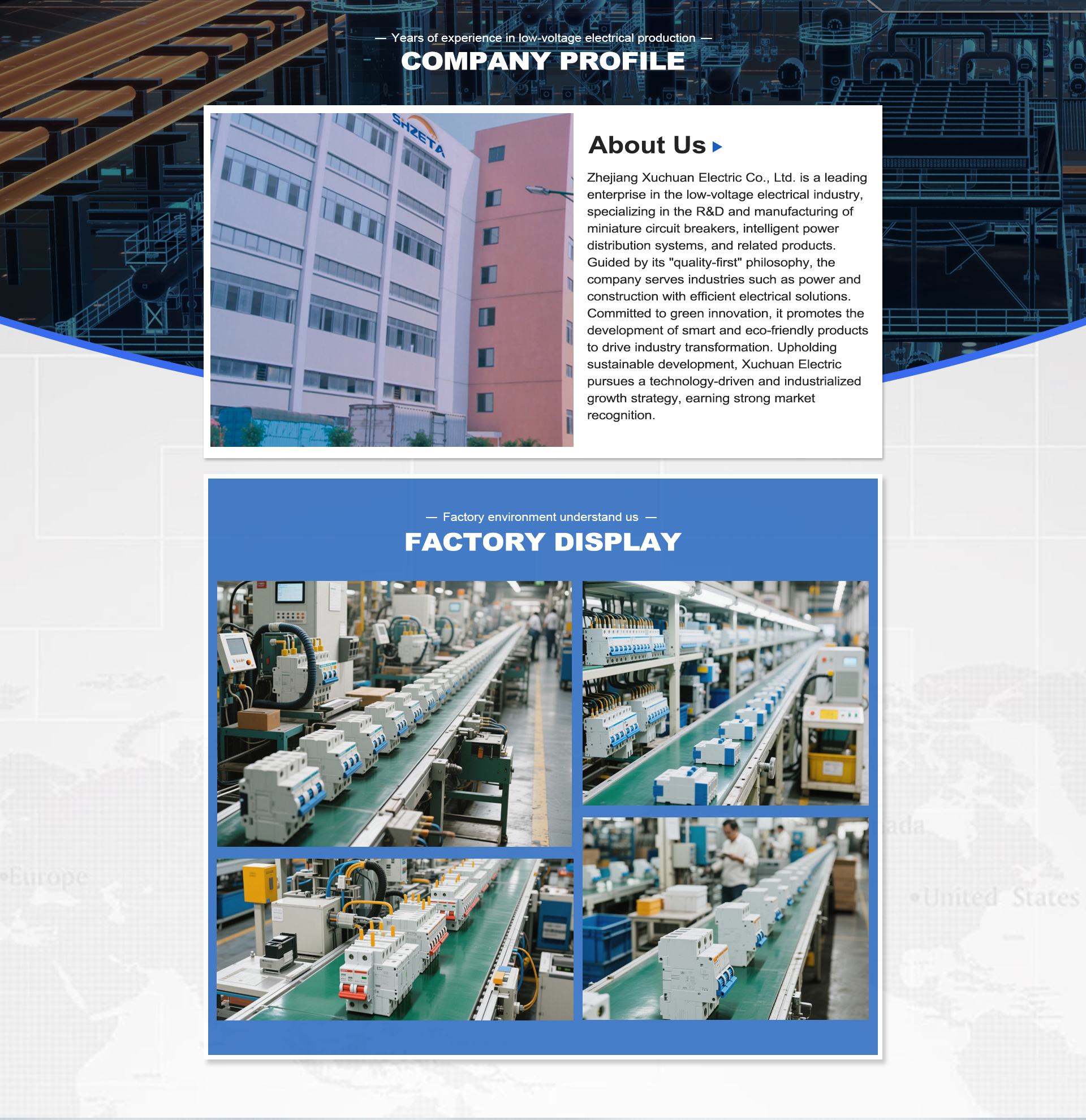
Headquartered in Huangyu Village, Liushi Town, Wenzhou, Zhejiang Graybar Electric Co., Ltd. operates at the center of the world's dense low-voltage component ecosystem. We integrate research, precision tooling, contact metallurgy, and automated testing under strict international standard guidelines.
- Cluster Supply Chain Advantage: Instant access to precision copper stampings, high-grade silver alloys, and UL94-V0 flame-retardant thermoplastics, slashing production lead times by up to 40%.
- Comprehensive IEC Rigor: All product portfolios reference IEC 60947-6-1 (ATS), IEC 60898-1 (MCB), IEC 60947-2 (MCCB/ACB), and IEC 61643-11 (SPD), complete with traceable test sheets.
- On-Site Verified Facility: Physical premises, production lines, and export capacity verified on-site by international third-party inspection agencies.
- Low-Risk Procurement Model: Standard ATS models start at an approachable MOQ of only 5 pieces, empowering switchboard builders to test prototypes without capital lock-in.

Frequently Asked Questions: Sourcing Automatic Transfer Switches
Expert engineering answers to critical purchasing, compliance, and installation questions compiled by Graybar's senior application engineers.