Engineered Low-Voltage Circuit Protection & Switching Systems
Explore our top-tier protective modular hardware engineered for international safety compliance, rapid arc extinguishment, and continuous operational durability across solar DC and residential/industrial AC infrastructure.
Navigating the Global Miniature Circuit Breaker (MCB) Market
Critical insights for procurement directors, panel builders, and electromechanical distributors managing safety regulations, supply security, and evolving technological demands.
The global low-voltage circuit protection sector has experienced a profound shift over the last decade. As electrified loads become increasingly non-linear and decentralized energy resources (DERs) such as rooftop solar photovoltaics, EV charging infrastructure, and commercial energy storage systems proliferate, the role of the humble miniature circuit breaker (MCB) has been elevated from a passive thermal disconnect to a frontline guardian of system reliability. Specifiers no longer evaluate MCBs purely on unit price; thermal stability across elevated ambient temperatures, verified short-circuit breaking capacity (Icn/Icu), arc extinction velocity, and compliance with harmonized international standards have taken precedence in commercial tenders.
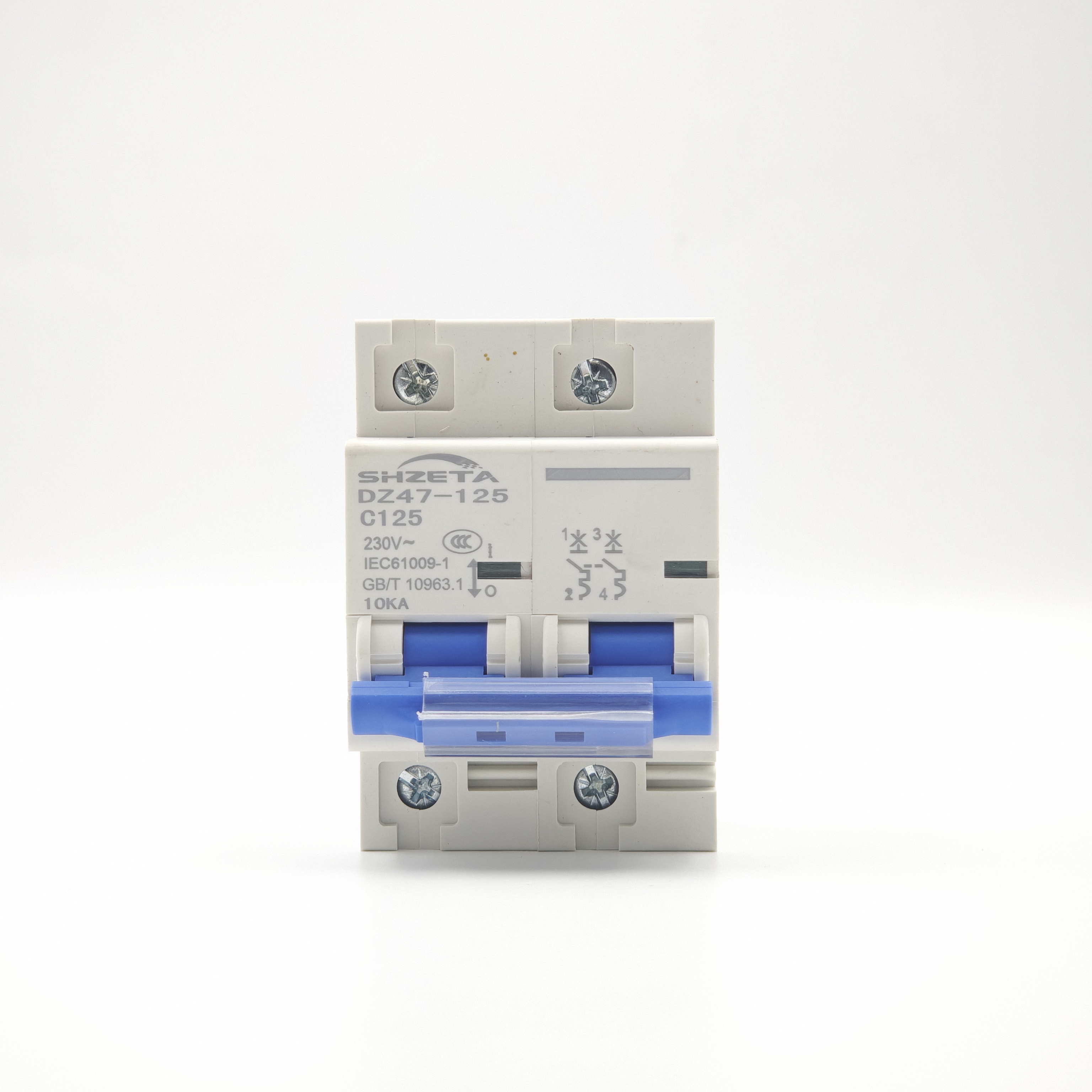
A critical distinction that modern procurement teams evaluate is between consumer-focused domestic breakers certified under IEC/EN 60898-1 (designed for non-technical users and fault currents typically rated at 4.5kA, 6kA, or 10kA) and industrial circuit breakers governed by IEC/EN 60947-2. The latter demands an operational breaking performance capable of handling prospective short circuits in close proximity to distribution transformers. With global urbanization and infrastructure upgrades advancing rapidly across EMEA, Southeast Asia, and the Americas, engineering teams require suppliers whose facilities maintain tight dimensional and material tolerances—specifically around silver-alloy contact pad thickness, thermal bimetallic composition, and housing flame retardancy.
The 2026–2030 Procurement Horizon: Emerging Industry Shifts
Looking forward, the global procurement landscape for miniature circuit protection will be defined by three distinct structural trends: the mainstream adoption of high-voltage direct current (DC) distribution, the regulatory integration of Arc Fault Detection Devices (AFDD), and the transition toward connected IoT modular switchgear.
Photovoltaic & BESS DC Specialization
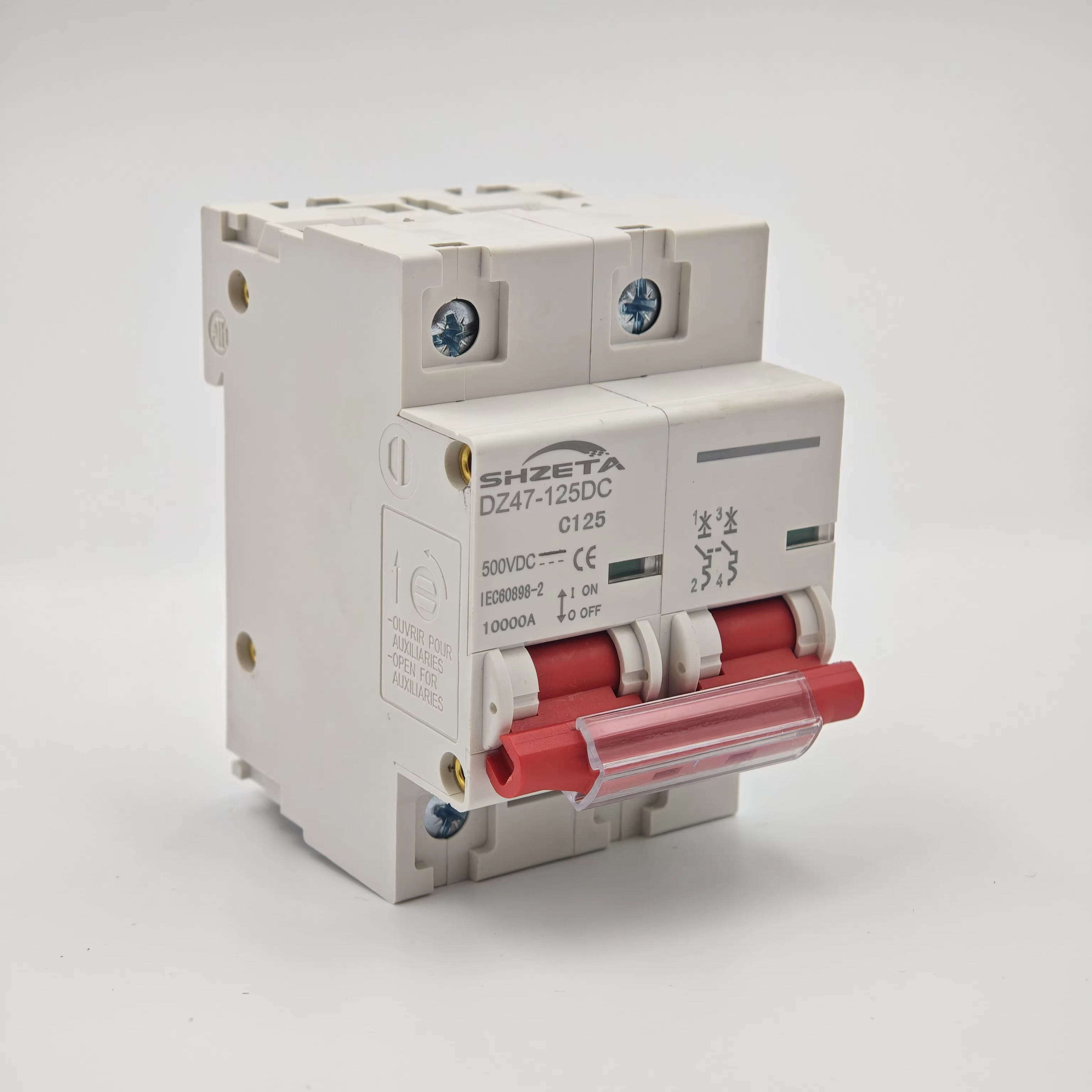
Traditional alternating current naturally facilitates arc dissipation during the sine wave zero-crossing. Direct current lacks this zero point, making DC arcs notoriously difficult to interrupt. High-performance DC MCBs now incorporate permanent magnetic arc blowouts and lengthened arc chutes to stretch and extinguish high-voltage DC faults up to 1000V DC safely.
Smart Sub-Metering & Remote Tripping
The convergence of Building Management Systems (BMS) with DIN-rail distribution has sparked rapid demand for smart MCBs featuring onboard RS485 (Modbus) or Zigbee interfaces. Facilities management teams are prioritizing real-time load telemetry, preventative degradation warnings, and remote reset capability to minimize operational downtime.
Circular Materials & Fire Standards
Global buyers are tightening material compliance parameters beyond basic RoHS. Polyamide PA66 casings reinforced with halogen-free flame retardants rated UL94-V0 are non-negotiable. Additionally, suppliers must substantiate silver contact alloy sourcing and lifecycle durability under extreme thermal cycling.
Tripping Curve Selection Matrix for System Designers
Selecting the appropriate instantaneous tripping characteristic prevents nuisance tripping while guaranteeing rapid isolation under true fault conditions.
| Curve Type | Magnetic Trip Threshold | Typical Response Time | Target Applications | System Integration Tip |
|---|---|---|---|---|
| Curve B | 3 In to 5 In | 0.04s - 0.1s | Resistive loads, domestic lighting, PLC control circuits | Ideal for long cable runs where fault loop impedance restricts short-circuit current. |
| Curve C | 5 In to 10 In | 0.04s - 0.1s | General commercial, fluorescent arrays, small AC motors | Standard industry baseline balancing moderate inrush withstand with rapid isolation. |
| Curve D | 10 In to 20 In | 0.04s - 0.1s | Heavy inductive loads, transformers, industrial welders | Check upstream coordination to ensure thermal dissipation doesn't damage feeder cabling. |
| Curve K | 8 In to 12 In | <0.05s | Motor circuits with high starting inrush, auxiliary transformers | Protects windings against persistent low-level overload without nuisance tripping during startup. |
| Curve Z | 2 In to 3 In | <0.04s | Semiconductor arrays, DC bus lines, instrumentation | High-sensitivity tripping safeguards sensitive power electronics and solid-state devices. |
Why Global Tier-1 Importers Partner With Zhejiang Graybar
Situated in Liushi, Wenzhou—the world's premier low-voltage electrical cluster—Zhejiang Graybar Electric Co., Ltd. combines raw-material proximity with rigorous multi-stage manufacturing oversight.
Precision Automated Assembly
Our automated production tracks internal sub-assemblies—from spot welding high-conductivity copper braid and positioning magnetic yokes to riveting arc chutes. This minimizes manual tolerance drift and guarantees uniform thermal-magnetic tripping tolerances across millions of units.
100% Routine Dielectric & Calibration Testing
Every individual breaker undergoes multi-point testing on automated calibration benches before packaging: continuous current thermal trip calibration at 1.13 In and 1.45 In, instantaneous magnetic release verification, and 2,500V dielectric voltage withstand checks.
Full-Spectrum OEM/ODM Customization
We support private label brands with laser-marked custom logos, specific handle colors, multi-lingual blister packaging, tailored tripping characteristics, and flexible starting MOQs (from 5 pieces for standard models to single units for ACBs), expediting your local market certification and expansion.
Frequently Asked Questions by Industrial Buyers
Answers to common technical, commercial, and quality assurance queries asked by switchboard assemblers and electrical importers.
What is the difference between breaking capacity (Icu/Icn) and service breaking capacity (Ics)?
Ics = 100% Icu.
Can standard AC miniature circuit breakers be deployed in photovoltaic DC circuits?
What certifications and testing reports should buyers verify before container-load imports?
How does ambient operating temperature influence MCB de-rating factors?
Optimize Your Low-Voltage Switchgear Supply Chain
Whether you are tendering for utility infrastructure projects, developing smart distribution panels, or seeking high-margin private label distribution, connect directly with our engineering specialists.