Top 10 ATS Manufacturer & Exporter Engineering Guide
An authoritative technical benchmark on Automatic Transfer Switches, dual-power synchronisation mechanisms, grid-to-generator resilience, and supply chain selection under IEC 60947-6-1.
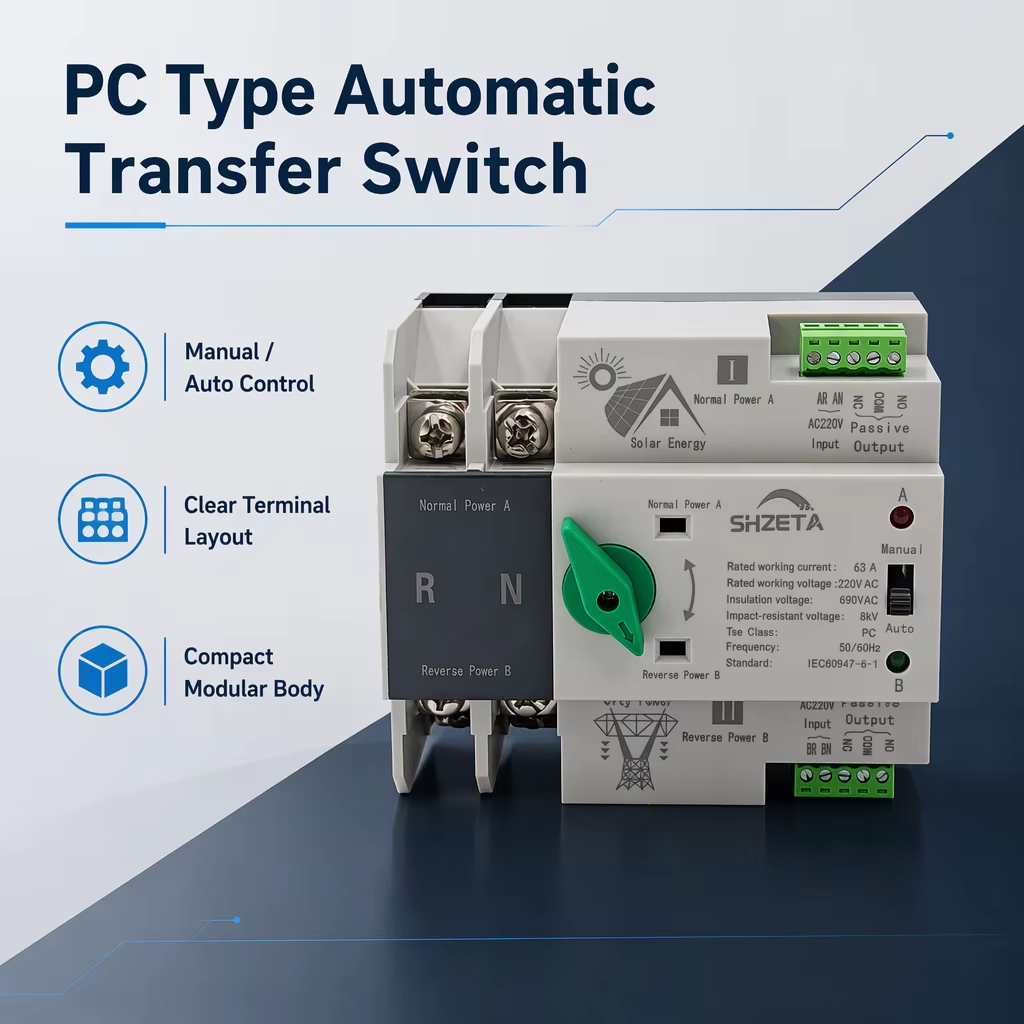
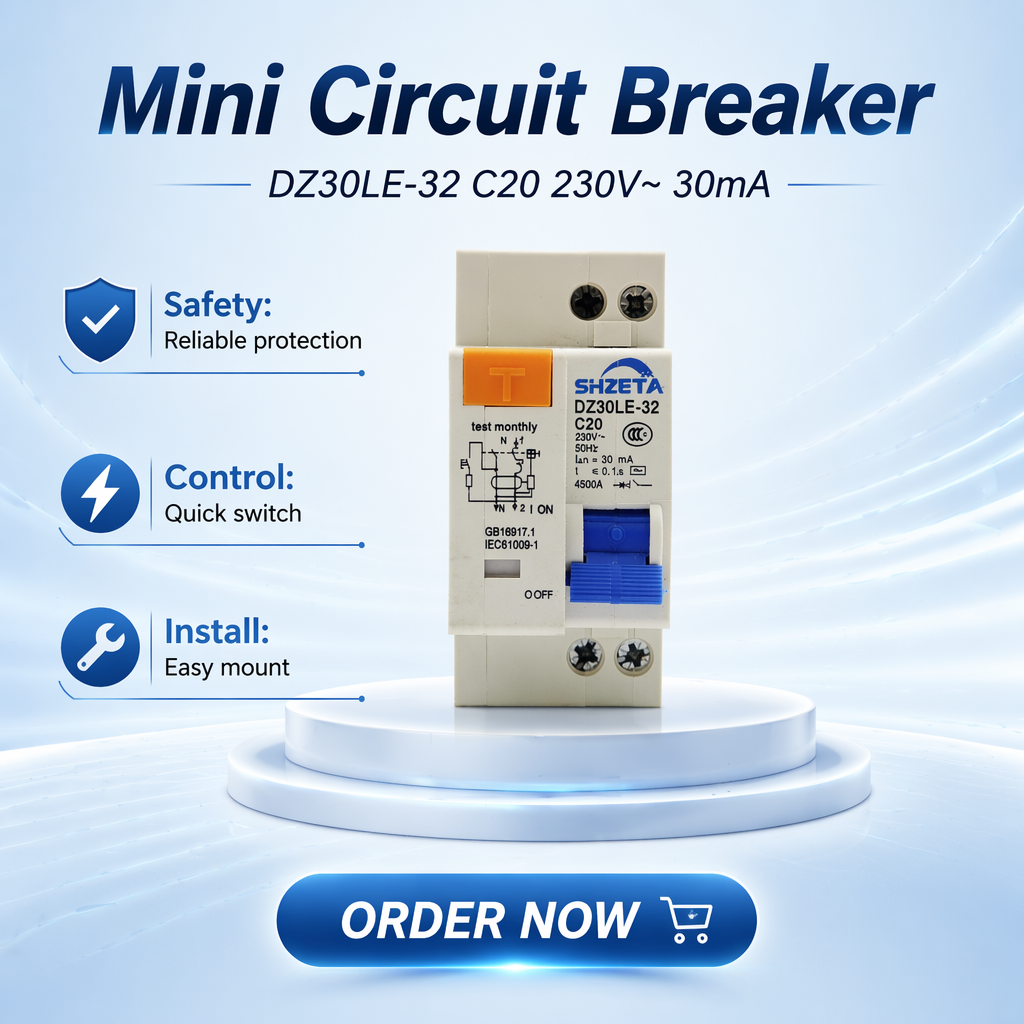
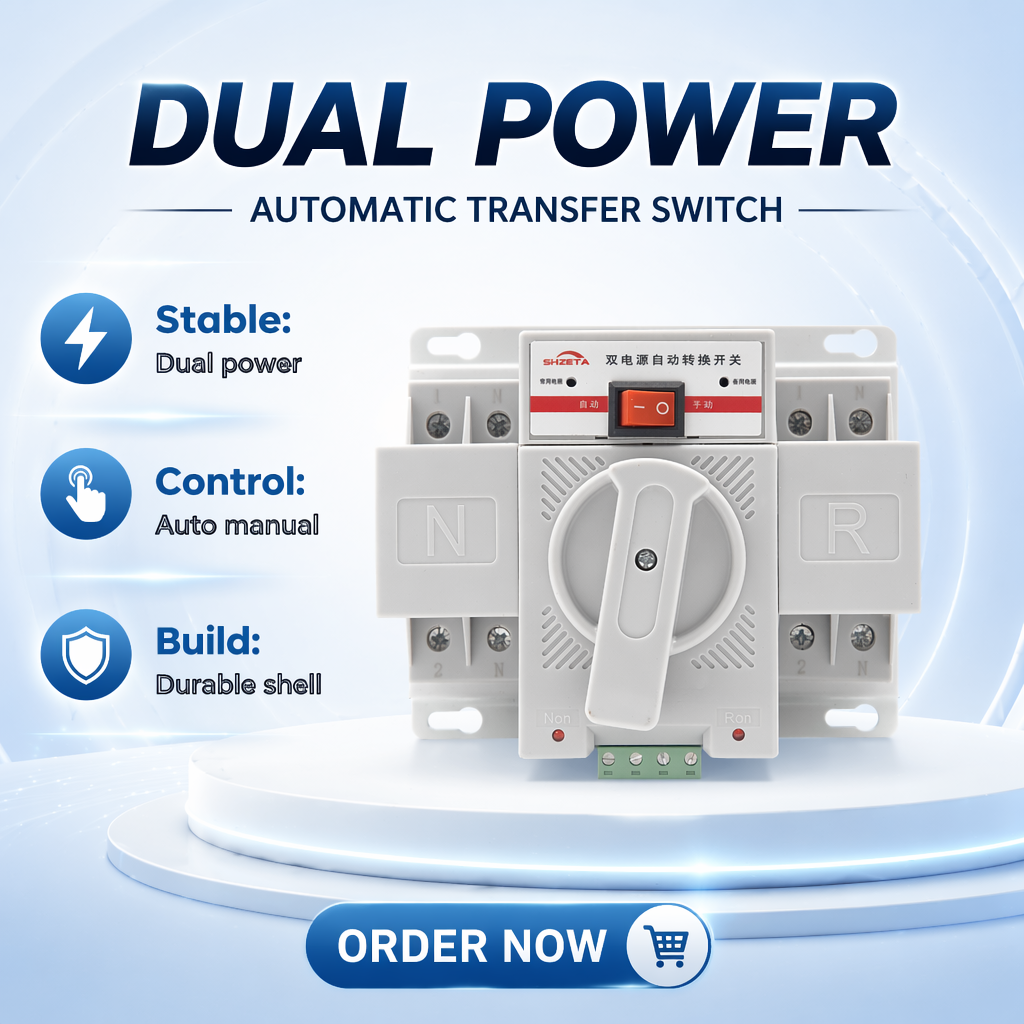
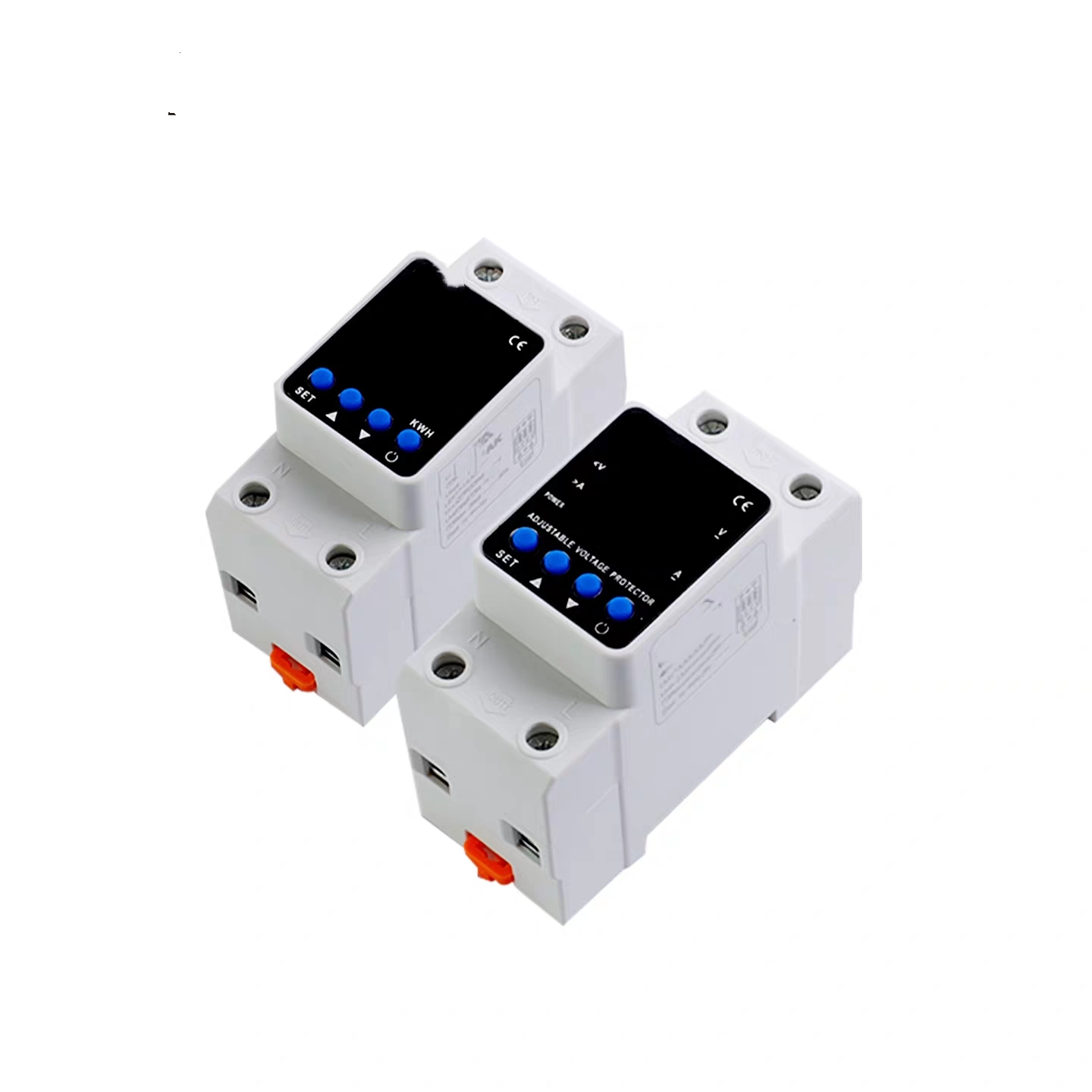
Dual Power & Circuit Protection Portfolio
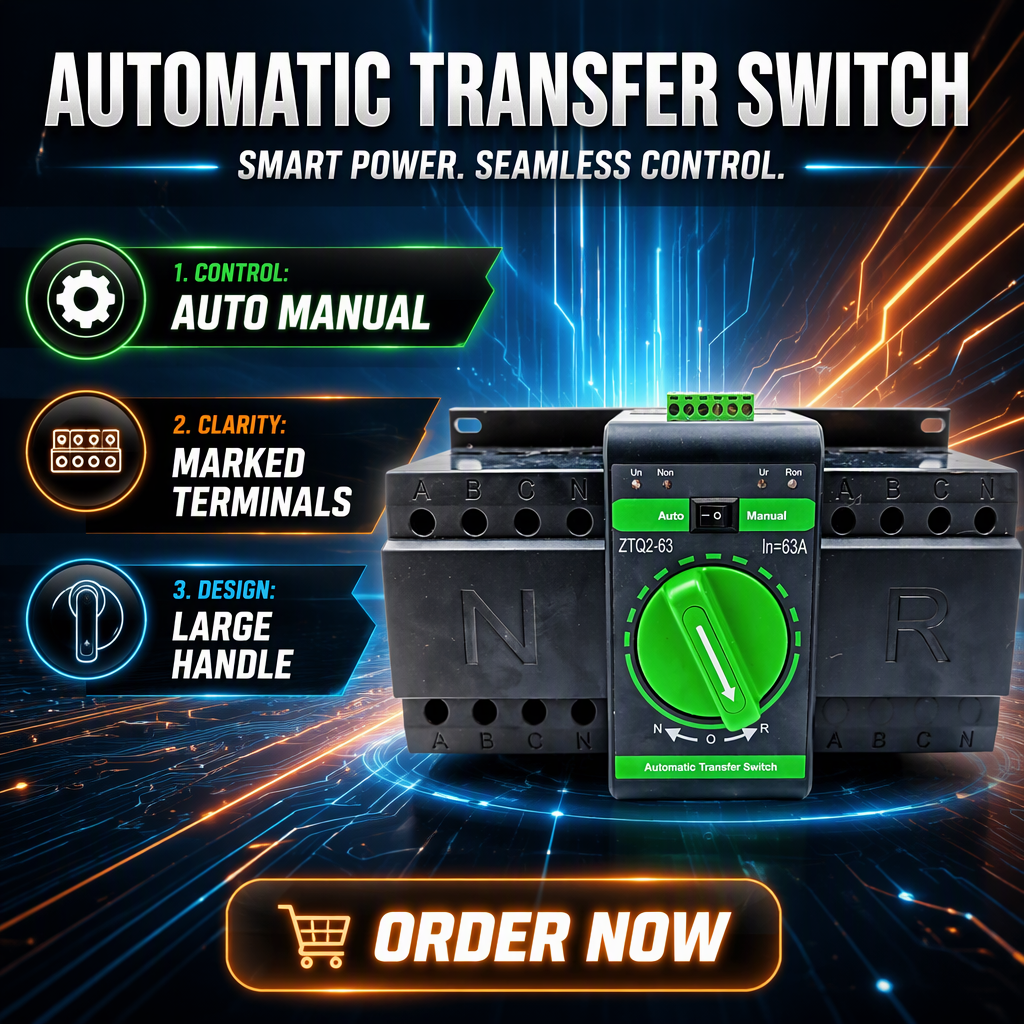
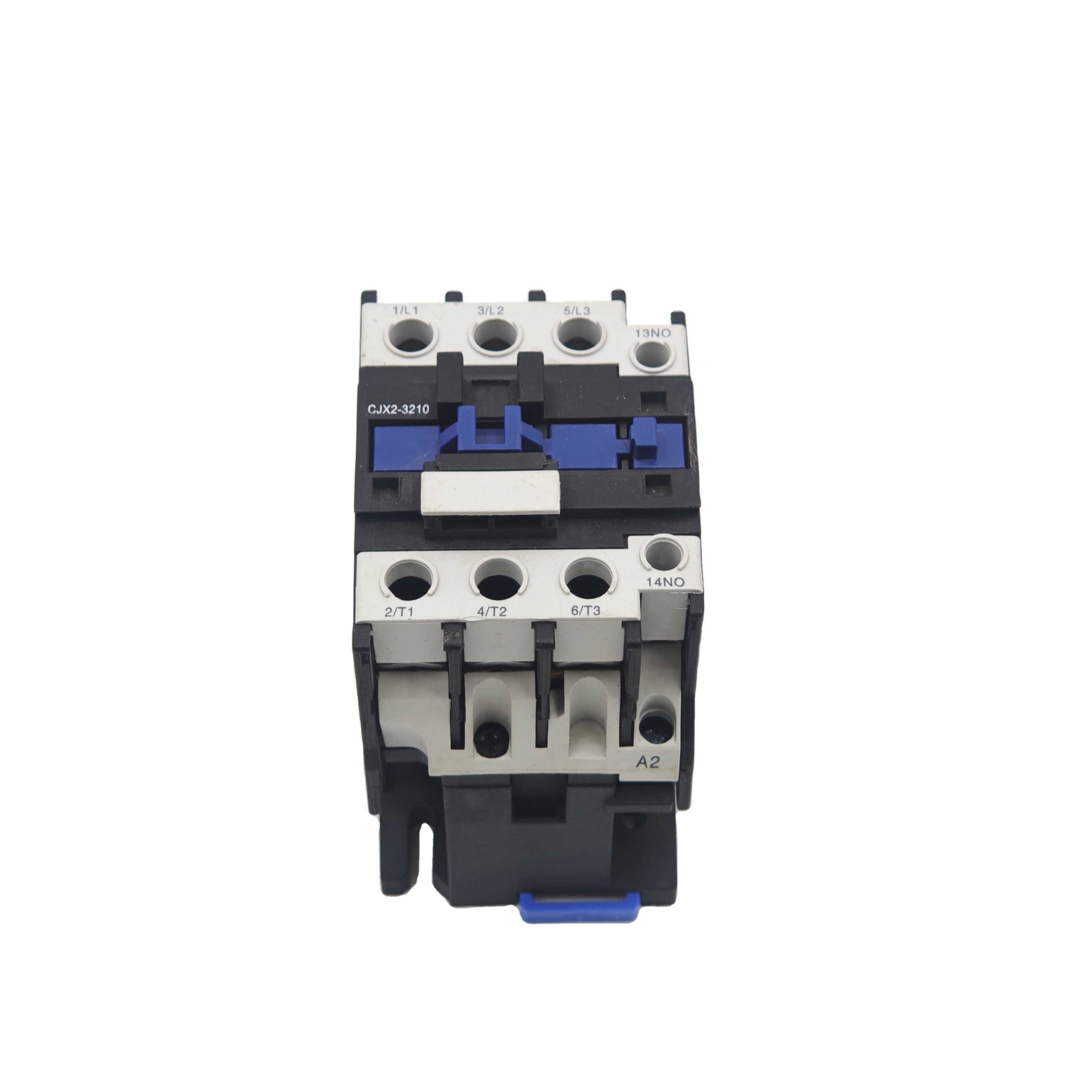
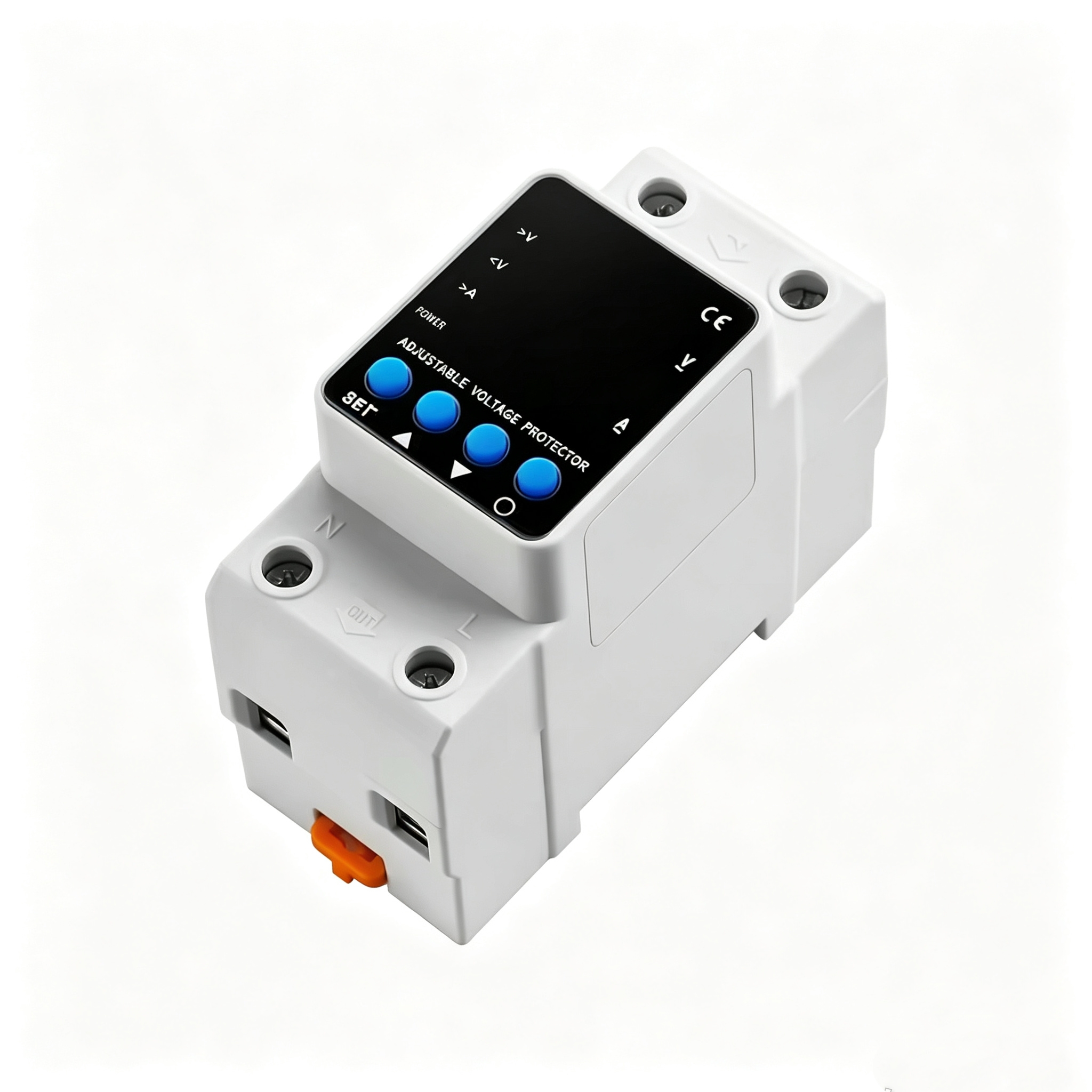
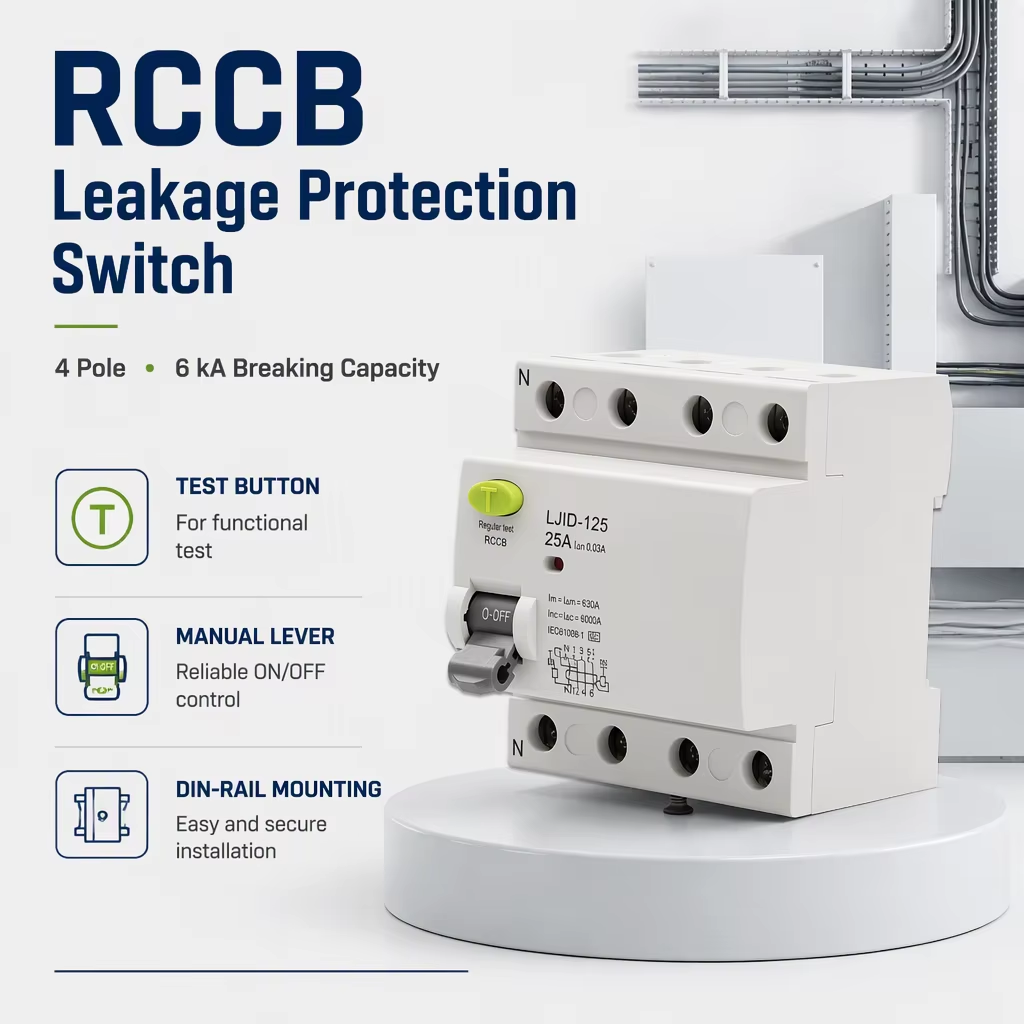
Featured Transfer Switches & Integrated Protection Units
Precision-engineered switching devices, DIN-rail dual power ATS, over/undervoltage protectors, and industrial contactors manufactured for zero-unplanned downtime in mission-critical facilities.
1. Engineering Classification: PC Class vs. CB Class vs. CC Class ATS
Automatic Transfer Switches (ATS) represent the definitive safety bridge between municipal utility feeds and auxiliary backup generators or off-grid photovoltaic-battery storage arrays. In low-voltage distribution topologies governed by IEC 60947-6-1 and UL 1008, engineers must differentiate between the three fundamental design architectures rather than treating transfer equipment as generic changeover switches:
ATS Class
Core Mechanism Architecture
Short-Circuit Handling Capability
Typical Transfer Speed
Ideal Application Environment
PC Class (Power Contact)
Dedicated mechanical switching device capable of making and withstanding, but not breaking fault currents. Incorporates silver-alloy contacts and heavy solenoid or motorized toggles.
High rated short-time withstand current (Icw). Upstream fuse or circuit breaker coordinates breaking protection.
High-speed transfer (15ms – 50ms), minimizing computational load disruption.
Solar PV-utility changeover, data center PDUs, healthcare critical branch panels, and telecommunication shelters.
CB Class (Circuit Breaker)
Engineered by mechanically interlocking two conventional Moulded Case Circuit Breakers (MCCB) or Miniature Circuit Breakers (MCB) equipped with an overcurrent release mechanism.
Capable of directly breaking prospective fault currents (Icu/Ics up to 65kA) via integrated thermal-magnetic or electronic trip units.
Moderate transfer duration (80ms – 250ms) due to mechanical interlock and breaker charging sequences.
Main power distribution boards (PDB), motor control centers (MCC), and utility-to-generator distribution switchgear.
CC Class (Contactor Based)
Utilizes magnetically held or mechanically latched contactors (such as CJX2 families) with electrical and mechanical cross-interlocking blocks.
Rapid switching (30ms – 60ms); high electrical endurance under continuous cycling.
HVAC automated sequencing, ventilation fan changeover, municipal pumping stations, and industrial machinery sub-circuits.
Selecting the wrong classification frequently leads to premature contact erosion, localized dielectric breakdown under high inrush currents, or catastrophic failure during upstream fault conditions. When procuring dual-power ATS devices, specifying the exact required Icw (Short-time withstand rating) and arc-chute de-ionization characteristics is critical to ensure that system selectivity and downstream breaker coordination curves remain uncompromised.
Market Intelligence & Vendor Tiering
Top 10 Global ATS Manufacturers & Exporters Benchmark
An objective industrial assessment comparing manufacturing heritage, technological specialization, pole versatility, and international market penetration across the world's leading power transfer switch builders.
Tier 1 · Europe
Schneider Electric
France / Global
Pioneer of TransferPact and MasterPact MTZ integration. Specializes in digitized open and delayed transition switchboards with native EcoStruxure IoT cloud analytics.
Tier 1 · Europe
ABB Ltd.
Switzerland / Global
Renowned for TruONE ATS units integrating sensors, controllers, and bypass logic into a single modular frame. Dominates heavy industrial and commercial infrastructure.
Tier 1 · North America
ASCO Power (Schneider)
United States
The benchmark for UL 1008 mission-critical transfer switches, leading closed-transition and bypass-isolation systems for tertiary hospitals and cloud hyperscalers.
Tier 1 · Europe
Socomec
France
Specialist in ATyS motorized and automatic transfer switches. Highly regarded across EMEA for robust manual override mechanics and modular plug-and-play communication modules.
Tier 1 · Europe
Siemens AG
Germany / Global
Manufacturer of the SENTRON 3KC family. Combines high thermal resilience, compact DIN/base mounting footprints, and rigorous compliance with European grid codes.
Tier 1 · North America
Eaton Corporation
United States / Global
Offers comprehensive Magnum and contactor-based transfer switchboards, featuring advanced ATC-300+ controllers engineered for peak shaving and utility backup sync.
Tier 1 · North America
Cummins Power
United States / Global
Specialized in complete genset-to-switchboard integration. Delivers PowerCommand microprocessor controllers with patented high-speed blow-on contact designs.
Tier 1 · Asia Pacific
Zhejiang Graybar Electric
Wenzhou, China
Industrial supply powerhouse located in Liushi. Delivers DIN-rail modular PC-class switches, customizable 125A–250A frames, low sample MOQs, and agile OEM/ODM private labeling.
Tier 1 · Asia Pacific
Chint Electrics
China / Global
Massive automated production lines supplying high-volume residential modular ATS and CB-class transfer switches across Southeast Asia, the Middle East, and Latin America.
Tier 1 · Europe
Lovato Electric
Italy
Recognized for compact ATL series intelligent transfer switch controllers and motorized switch disconnectors tailored for genset monitoring and light industrial automation.
Headquartered in Huangyu Village, Liushi Town, Wenzhou—the acknowledged global capital of low-voltage electrical apparatus—Zhejiang Graybar Electric Co., Ltd. offers procurement departments, panel builders, and electrical wholesalers distinct structural advantages over traditional export middlemen:
Supply Chain Proximity
Direct geographic access to raw copper drawing, thermoset moulding, and silver-nickel contact metallurgy eliminates multi-tier logistics markups and compresses standard production lead times down to 10–15 business days.
Dual-Bench Quality Assurance
Every ATS assembly undergoes 100% automated transfer cycling under load, dielectric withstand tests, and micro-ohmmeter contact resistance screening before packing, backed by on-site third-party authenticated production verification.
Agile OEM / ODM Customization
From custom 1P, 2P, 3P, to 4P pole arrangements (overlapping switched neutrals) to tailor-made UV-resistant laser marking, multi-lingual installation guides, and client-specified coil voltages (110V, 220V, 380V AC/DC).
Furthermore, Graybar solves a classic barrier in international electrical distribution: order volume flexibility. While legacy European manufacturers enforce high minimum container quotas, our modular assembly allows sample orders starting at just 5 pieces for DIN-rail ATS and standard circuit protectors, and 1 piece for intelligent Air Circuit Breakers (ACB), enabling rigorous lab validation before commercial ramp-up.
3. Global Procurement Trends: 2025–2030 Transformation
B2B supply chain directors and electrical engineering procurement managers are steering away from basic mechanical changeover hardware. Current procurement tenders for commercial, residential, and renewable microgrid infrastructures reflect four overarching technological imperatives:
Solar PV & Storage Prioritization
Procurement volumes for specialized modular PC-class switches designed for bidirectional current handling and fast inverter synchronization have surged 42% year-on-year, replacing mechanical generator-only changeovers.
Embedded Smart Microprocessors
Modern tenders mandate integrated 6-in-1 auto-reconnect logic, phase angle monitoring, programmable transfer delay timers (0–60s), and undervoltage/surge self-healing directly onboard DIN-rail units.
IoT & Modbus-RTU Connectivity
Transfer switch units are no longer isolated field nodes. Facility managers require RS-485 Modbus or Ethernet connectivity to transmit real-time contact temperature, load status, and cycle count data to central BMS networks.
4. Technological & Engineering Evolution of Transfer Switches
The core physics of electrical transfer switching are evolving rapidly in response to solid-state power conversion, localized distributed generation, and higher fault energy levels:
1. Solid-State Hybrid Commutation: While traditional mechanical contacts provide galvanic isolation, mechanical arcs during inductive motor load switching generate harmonic transient spikes. Next-generation ATS prototypes leverage anti-parallel thyristors (SCR) in parallel with physical contacts, achieving sub-cycle (<5ms) zero-crossing transfer before closing the mechanical bypass, entirely eliminating arcing degradation.
2. De-Ionizing Arc-Chute Geometries: Modern 10kA–50kA breaking capacity devices utilize narrow-slot ceramic de-ionizing plates and specialized permanent-magnet blowout fields that drive the electrical arc away from main silver-cadmium contacts into quenching matrices within 3 milliseconds of separation.
3. Dynamic In-Phase Transfer Algorithms: Microprocessor-governed controllers monitor the frequency, voltage, and phase angle difference between Source I (Grid) and Source II (Auxiliary Inverter or Genset). Transfer is triggered strictly when the phase displacement approaches zero degrees, preventing catastrophic motor winding torque transients and tripping of sensitive VFD systems downstream.
Procurement Technical Advisory
Frequently Asked Questions by Global Buyers & EPCs
Clear, unvarnished answers addressing critical engineering trade-offs, standard certifications, and distribution logistics when ordering from Chinese manufacturing centers.
What is the critical engineering difference between a 3-Pole and 4-Pole ATS in three-phase systems?
The selection depends strictly on the system earthing topology (TN-S, TN-C, TT, or IT) and whether the backup source is a separately derived system (SDS). In a 3-pole ATS, the neutral conductor is solid and unbroken between the grid, generator, and distribution bus. If ground fault relays are installed on both utility and generator incomers, an unbroken neutral creates parallel circulating paths for neutral currents, causing false residual current tripping. A 4-pole ATS physically switches the neutral conductor. To avoid catastrophic floating neutral overvoltages during transfer, high-quality units employ an "overlapping switched neutral" mechanism where the neutral pole makes before and breaks after the active phase contacts.
Why is PC-Class switching preferred over CB-Class for residential solar PV changeovers?
PC-Class transfer switches operate via direct solenoid or compact high-speed motorized mechanisms with minimal mechanical linkage inertia. This yields total switching durations under 50ms (and down to 20ms in optimized modular designs). When an off-grid hybrid solar inverter takes over from an interrupted grid connection, this transfer speed prevents home automation systems, desktop PCs, and sensitive smart IoT controllers from dropping off or rebooting. CB-Class systems, relying on tripping mechanisms and motor operators, typically require 100ms–300ms, causing noticeable brownouts and load reset.
How does Zhejiang Graybar verify IEC 60947-6-1 compliance for container-scale exports?
Compliance is validated through a two-stage regime: First, representative frame families undergo comprehensive type testing at accredited third-party laboratories to substantiate rated making and breaking capacity, temperature rise limits, dielectric withstand voltage, and rated conditional short-circuit current (Iq). Second, every production batch is subjected to routine factory tests: 10 cycles of manual and automatic transfer under full mechanical interlock, coil pick-up/drop-out voltage calibration, and 2.5kV insulation dielectric verification before custom export crating.
What thermal and altitude derating factors must be applied in tropical or high-elevation installations?
Standard ATS equipment is calibrated for ambient operational temperatures of 40°C and altitudes up to 2000 meters above sea level. In installations exceeding 40°C (e.g., Middle Eastern outdoor desert distribution kiosks), thermal derating of approximately 1% per °C above 40°C must be factored into frame sizing, or forced ventilation must be specified. For installations above 2000m (e.g., Andean or Central Asian mining complexes), thinner air diminishes dielectric withstand and convective cooling efficiency; rated operational current (Ie) must be derated by 2% to 4% per 1000m, and operational voltage withstand ratings must be verified with our engineering team.
Can custom coil voltages, auxiliary signaling, and private labeling be integrated on trial orders?
Yes. Zhejiang Graybar maintains dedicated flexible assembly lines specifically for OEM and distributor private labeling. Buyers can specify alternative actuation coil voltages (such as 12V/24V DC for mobile telecommunication sites or 110V AC for North American/Japanese control cabinets), integrate specialized volt-free dry auxiliary contacts for remote SCADA feedback, and request customized front-panel pad printing, colorways, barcode labeling, and multi-lingual instruction manuals with minimum order quantities beginning at just 5 to 50 pieces depending on the frame class.
Accelerate Your Switchgear & ATS Procurement
Request the complete 2025/2026 Zhejiang Graybar Low-Voltage Protection & Dual-Power Transfer Technical Catalog. Receive full single-line wiring diagrams, Icw test sheets, and wholesale pricing tables within 24 hours.