Featured Changeover Switches & Auxiliary Switchgear
Explore our primary export lineup of PC-class and CB-class automatic transfer switches (ATS), modular manual changeovers, AC magnetic contactors, and high-capacity surge protection systems manufactured in Liushi, Wenzhou.
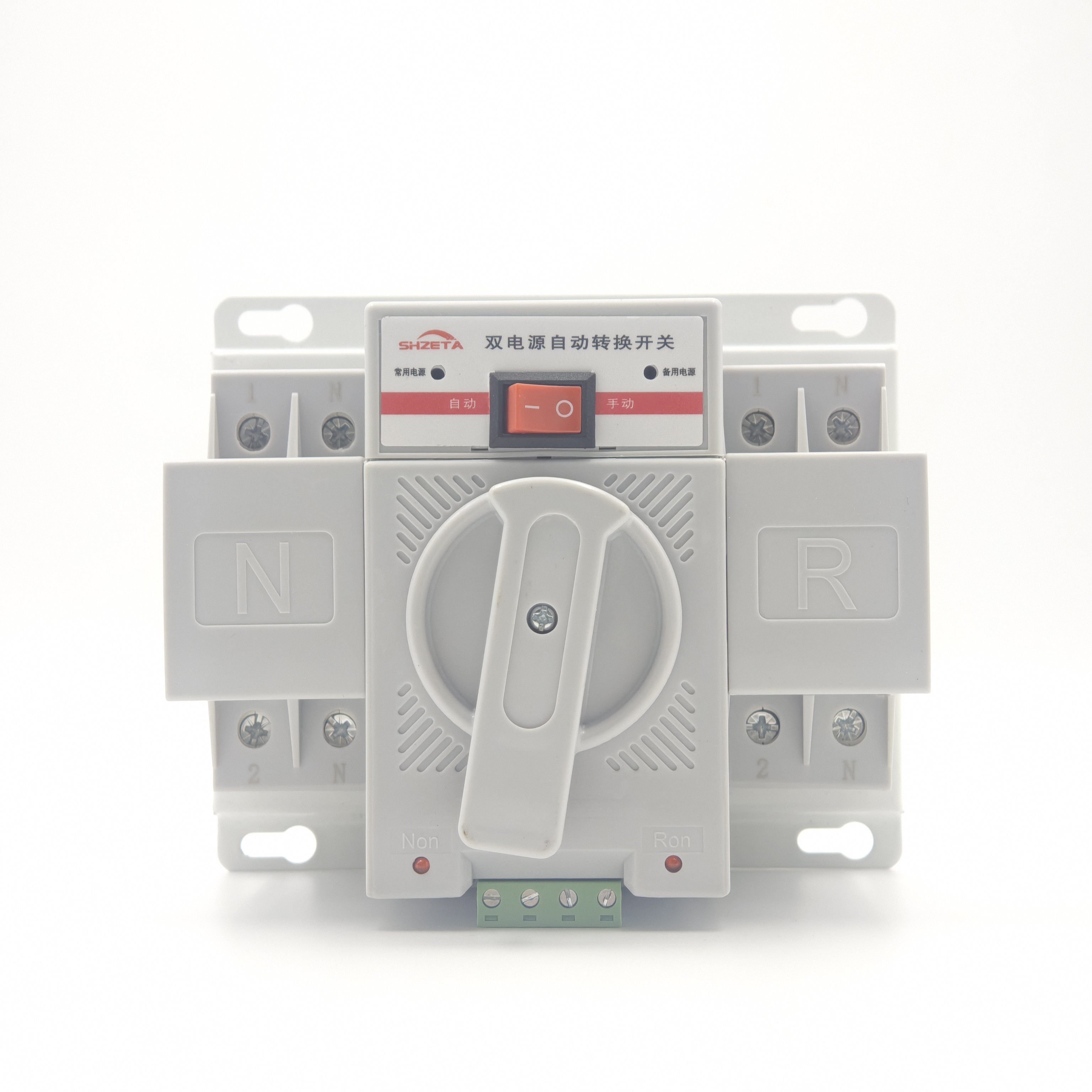
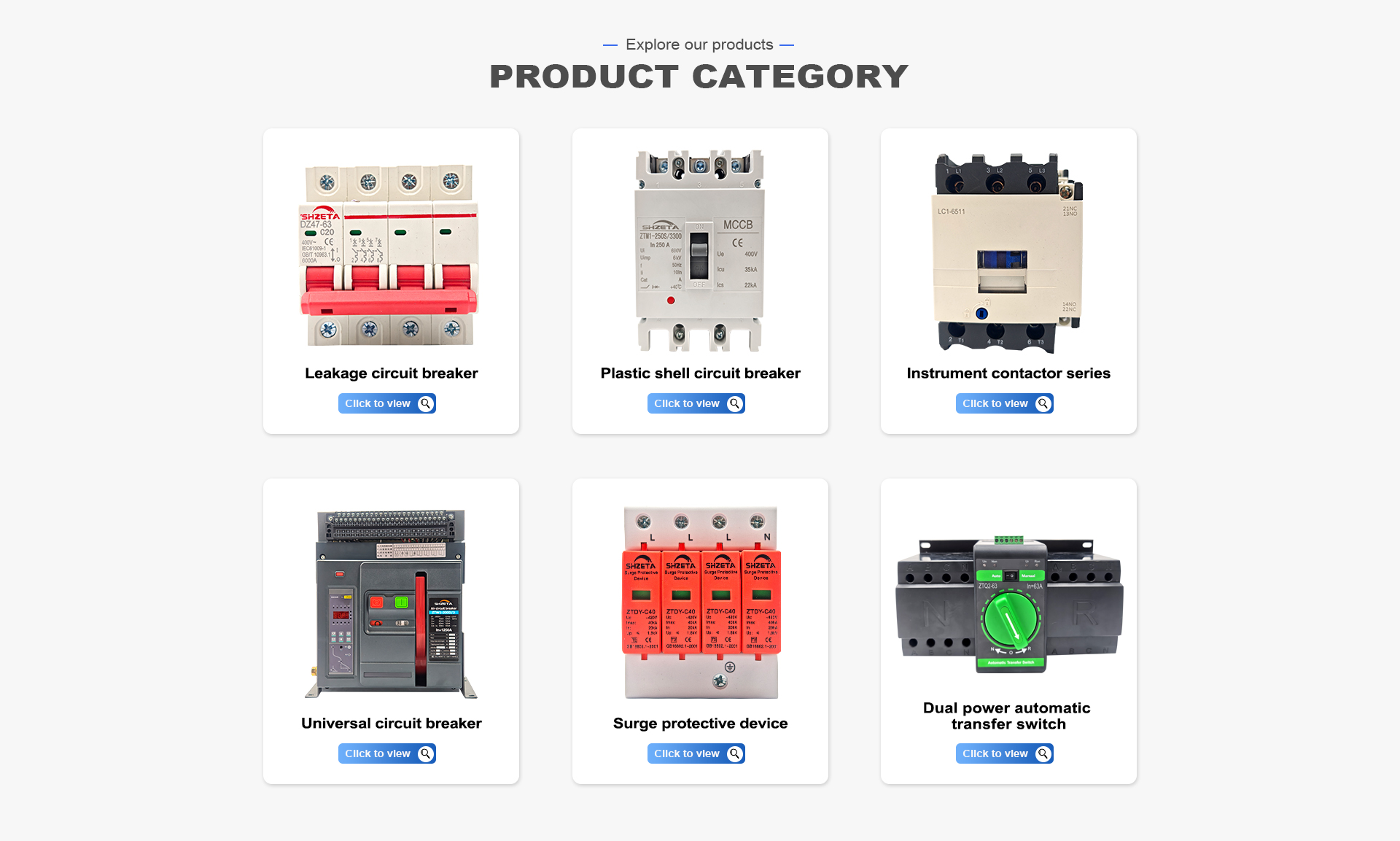
2P Single Phase Automatic Transfer Switch 220V 6kA 63A Frame Current
- Poles2P (1P+N)
- Rated Voltage220V / 230V AC
- Breaking Capacity6kA (Icn)
- Transition Speed< 50ms Seamless
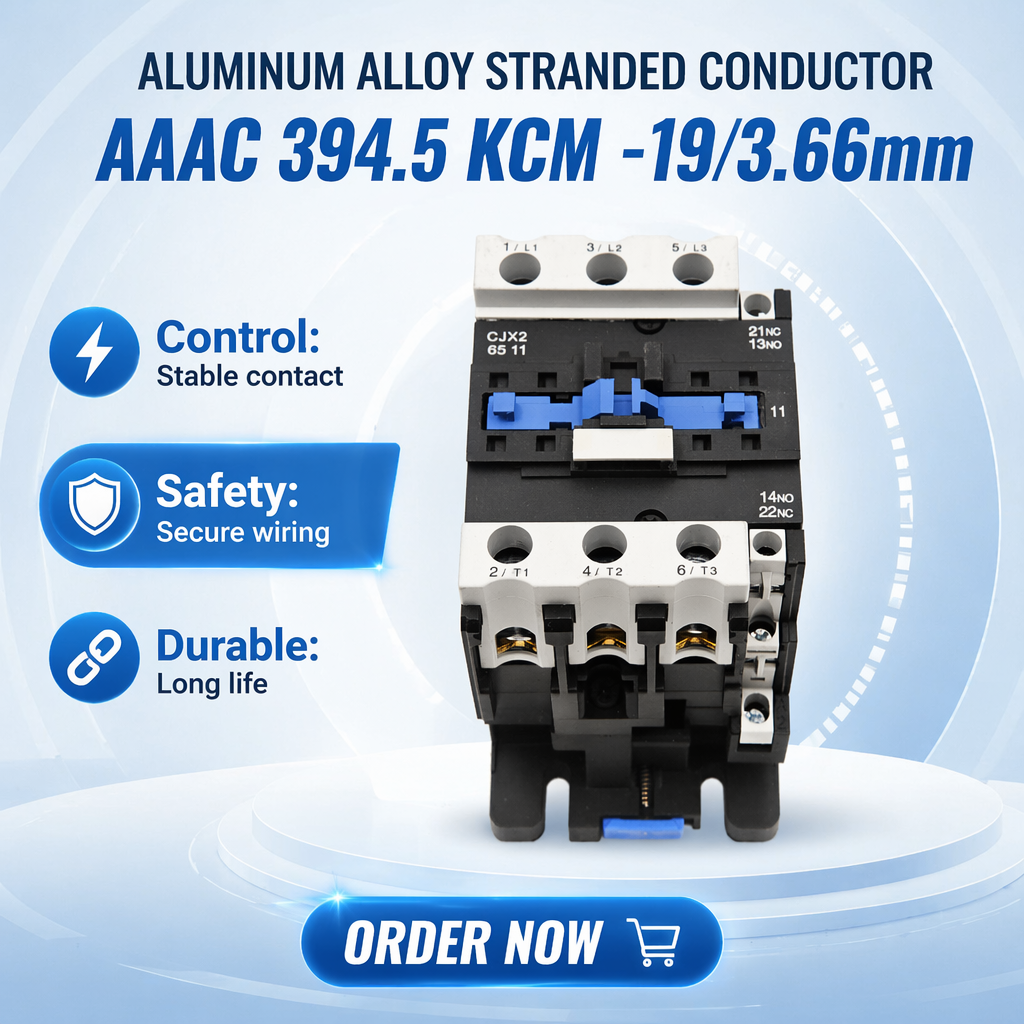
Electrical AC Magnetic Contactor 50Hz 3 Phase 3 Poles DIN Rail CJX2-8011
- Rated Current80A (AC-3)
- Coil Voltage24V–415V Options
- MountingStandard 35mm DIN Rail
- Aux Contacts1NO + 1NC Built-in
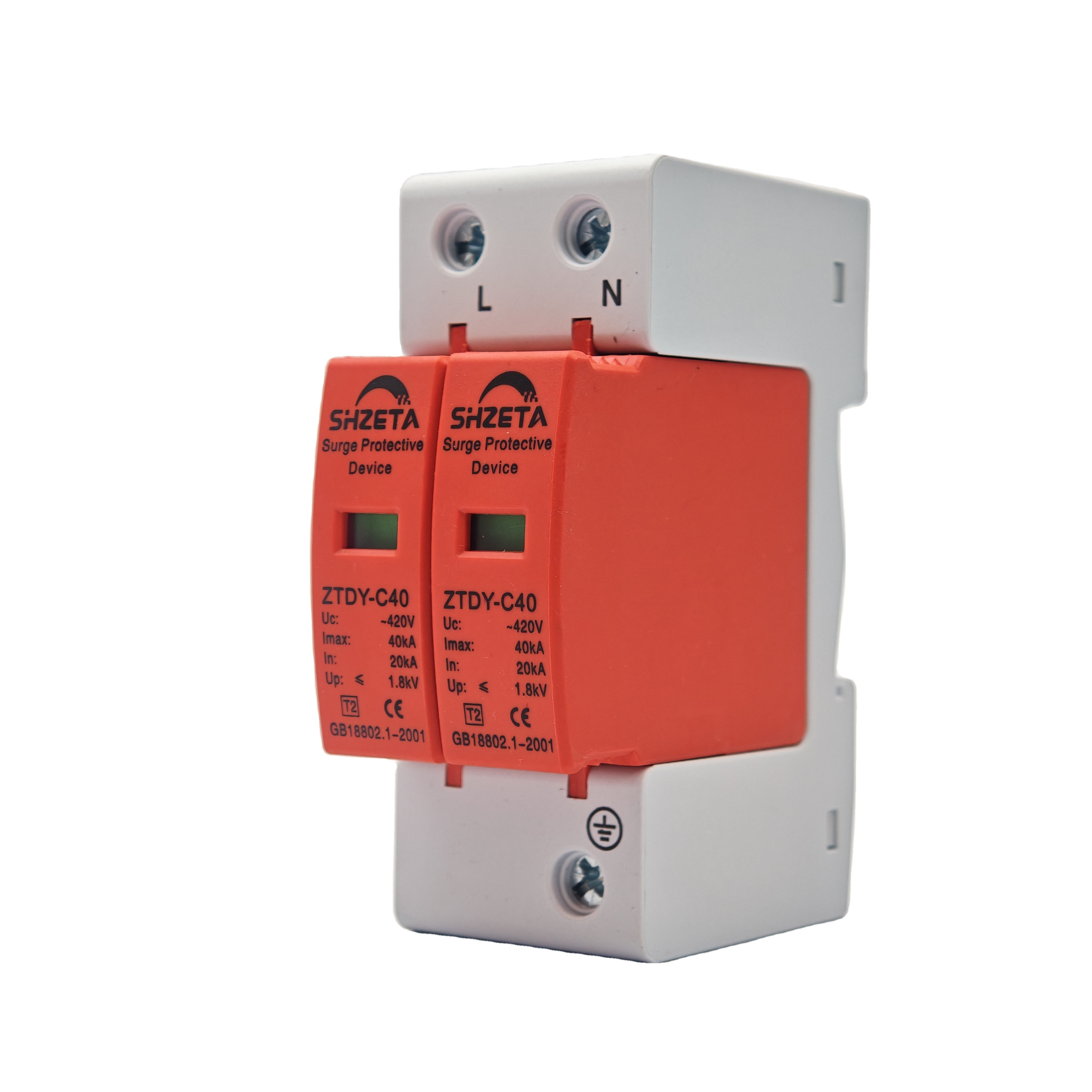
Fireproof T1 PBT 800V DC SPD 2P 40kA Solar PV Lightning Arrester
- Rated DC Voltage800V DC
- Max Discharge (Imax)40kA (8/20µs)
- Enclosure BaseFlame Retardant PBT
- Response Time< 25ns High-Speed
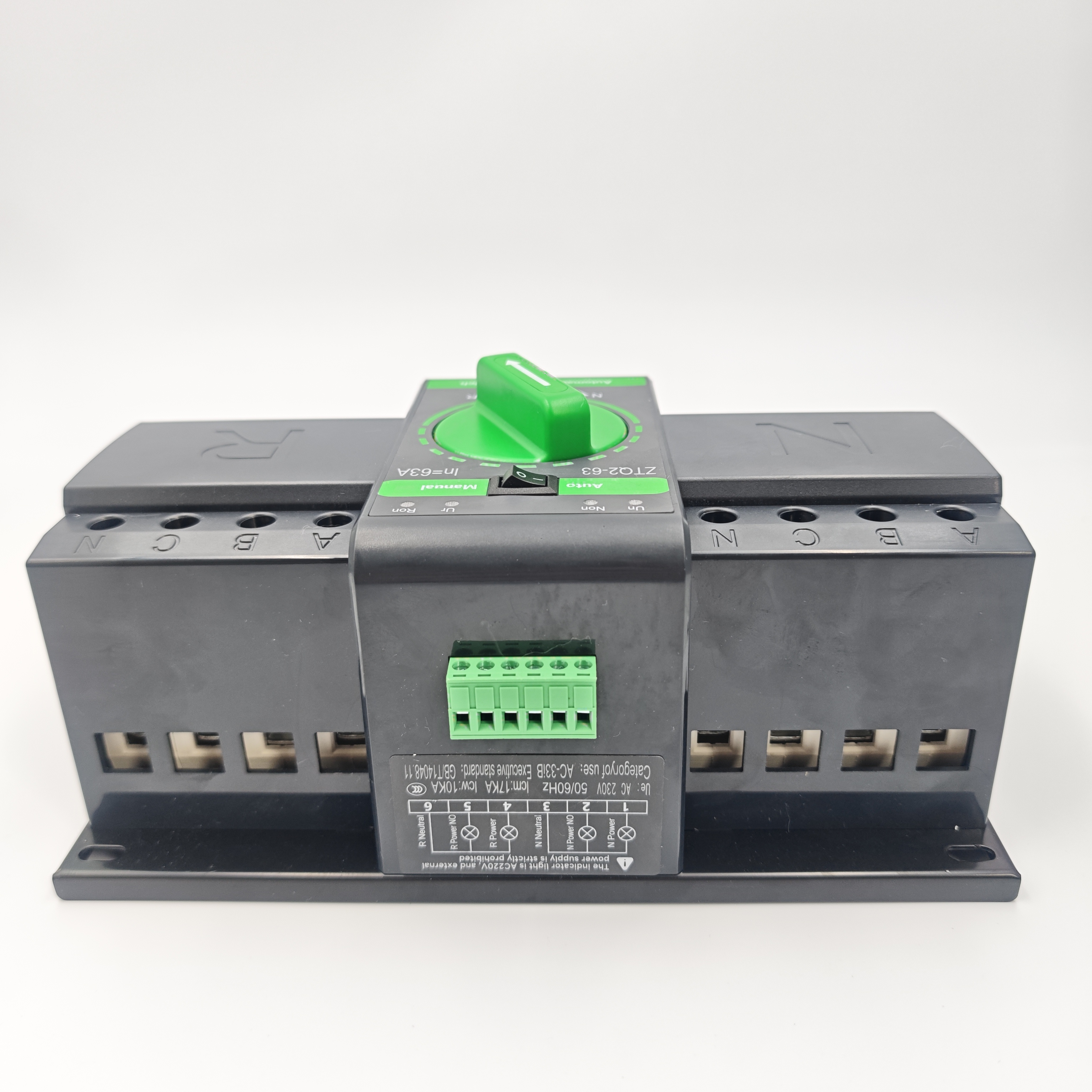
Dual Power Transfer Switch Circuit Automatic ATS PC Three Phase 63A–125A
- ClassificationPC Class Dual-Power
- Current Rating63A to 125A Adjustable
- Operating Poles3P / 4P Switched Neutral
- Mechanical InterlockFail-Safe Physical Lock
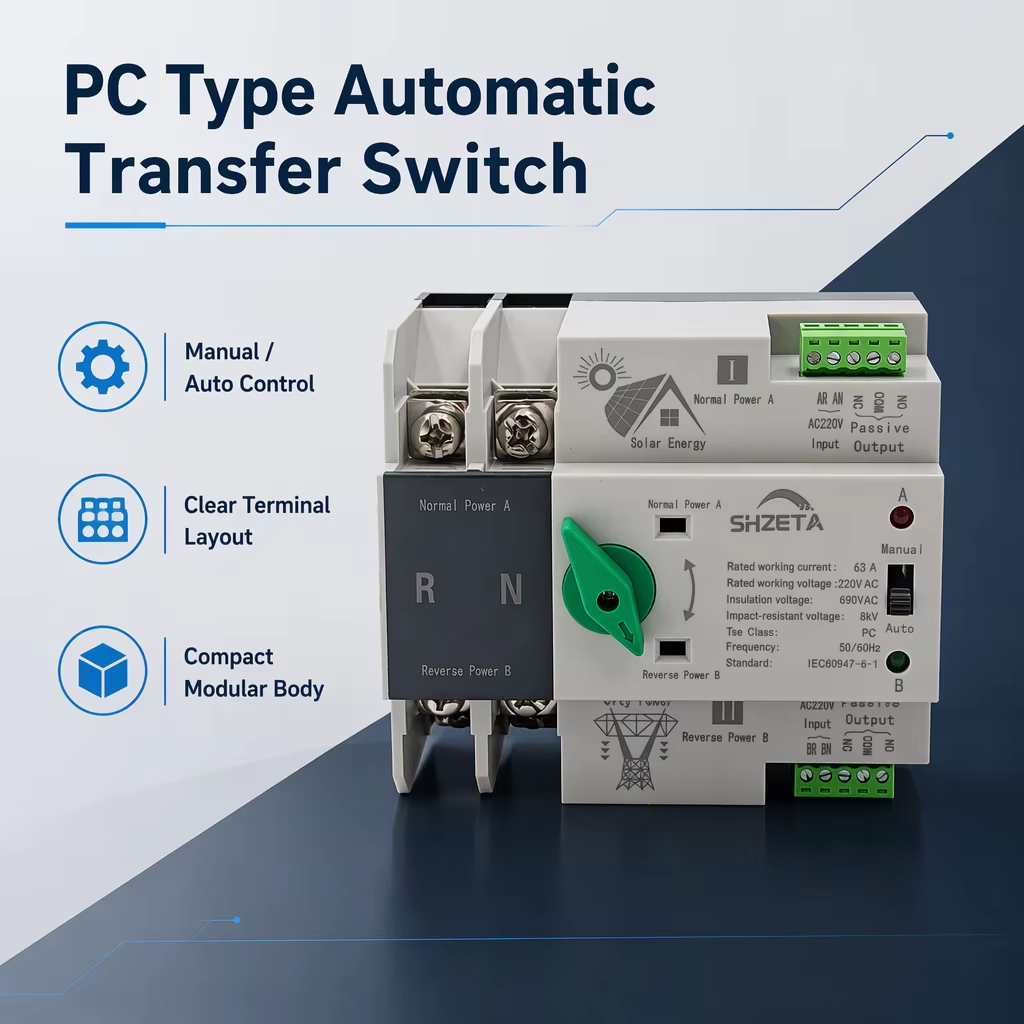
PC Type Automatic Transfer Switch 220V AC Modular Solar Changeover
- ApplicationInverter / Grid Dual Feed
- Operating Voltage220V / 240V AC
- Control ModesAuto & Manual Override
- Form FactorCompact Modular Width
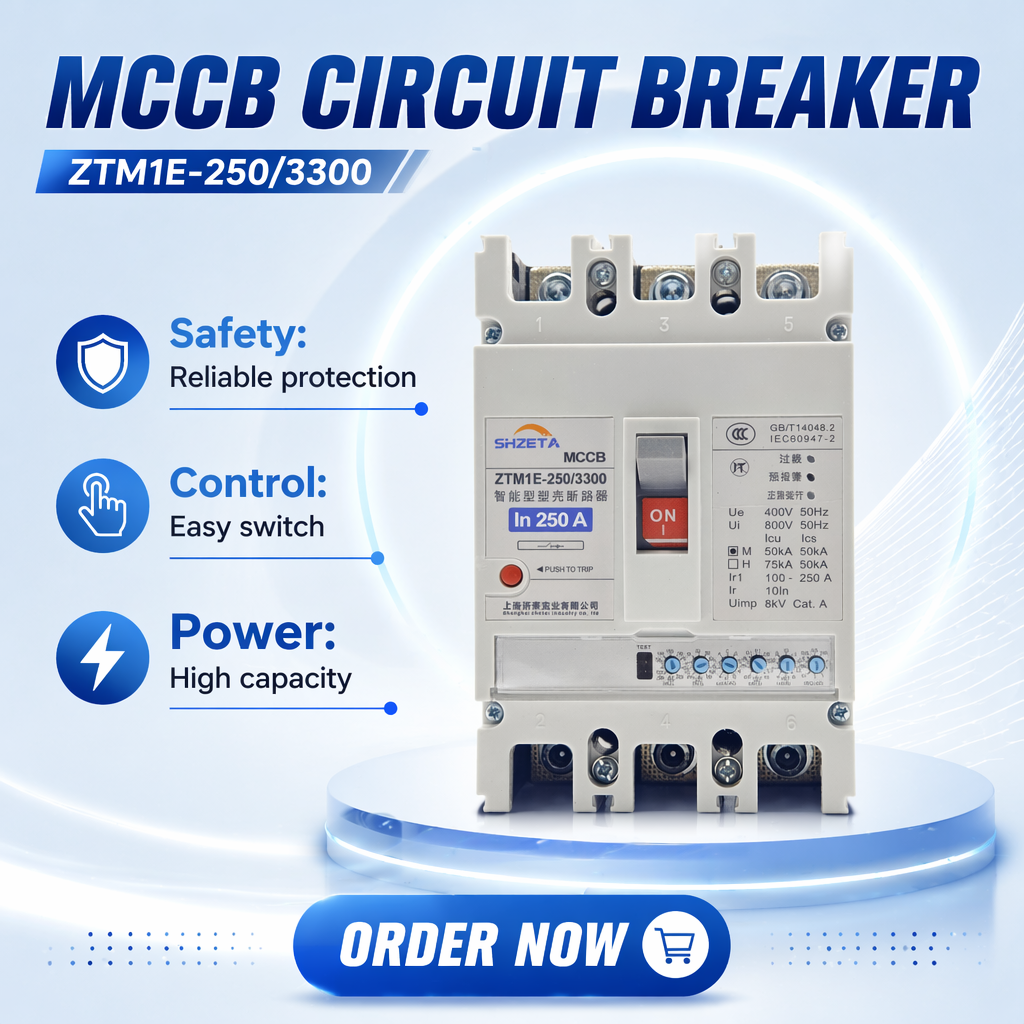
Thermal-Magnetic MCCB 50kA/100kA Breaking Capacity 690VAC/400VAC
- Trip TechnologyThermal-Magnetic Element
- Breaking Capacity50kA / 100kA (Icu)
- Rated Voltage400V / 690V AC
- Internal CoreElectrolytic Copper Terminals
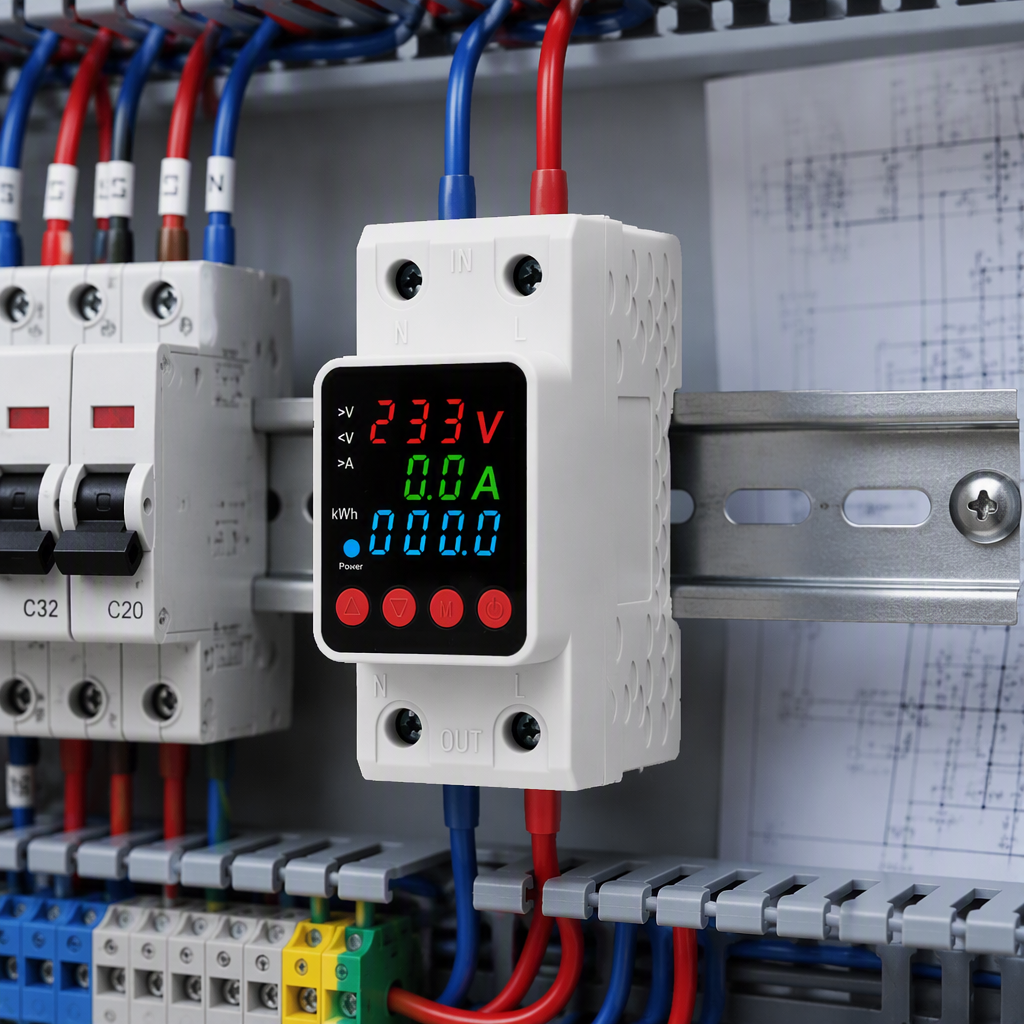
SHZETA Single Phase AC Voltage Meter & Energy Protection Relaying
- FunctionOver/Under Voltage Cutoff
- TelemetryActive kWh & True RMS V/A
- DisplayHigh-Contrast Digital LED
- Auto ResetAdjustable Recovery Delay
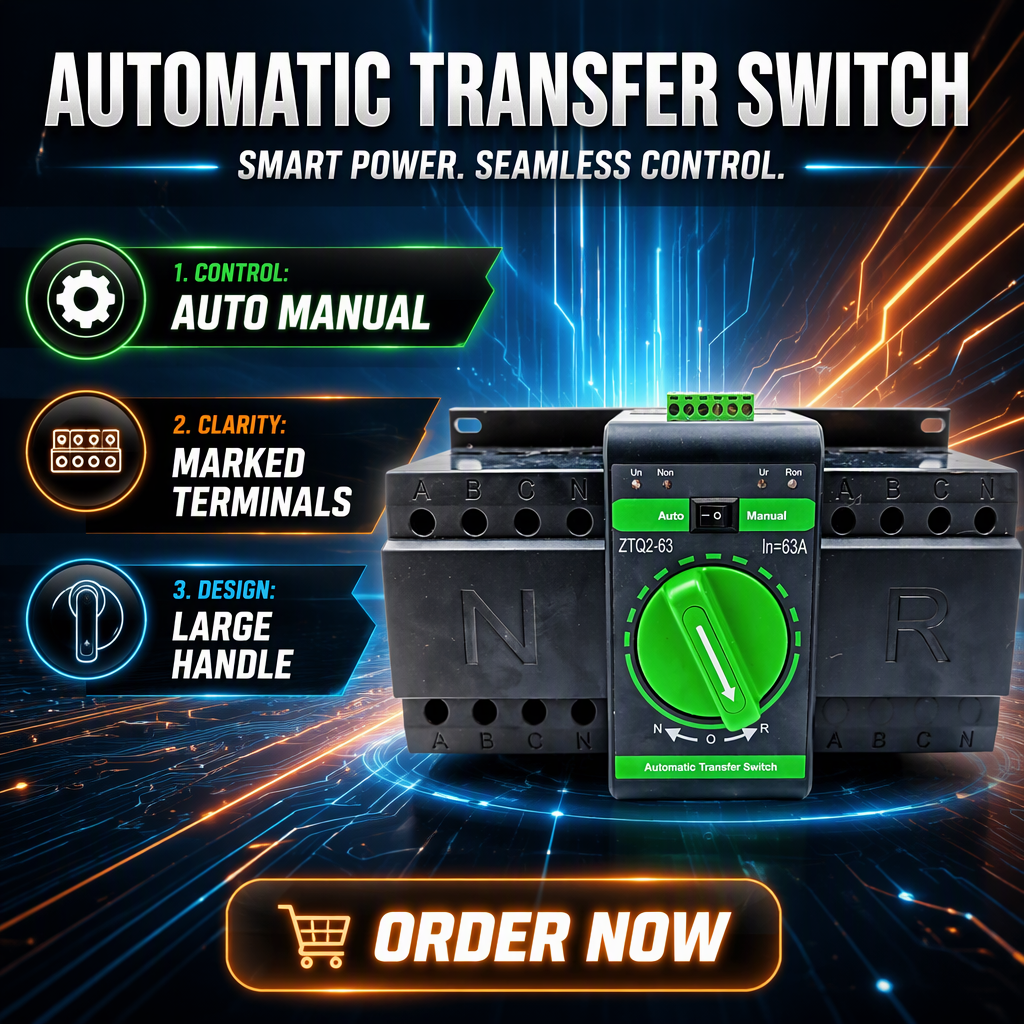
Customizable 2-Pole/4P Manual Conversion ATS 10kA 125A Frame Current
- Poles Available2P Single / 4P Three-Phase
- Frame Rating125A Heavy Industrial
- Breaking Capacity10kA Robust Interruption
- Isolation ClassPositive Break Indication
Engineering Whitepaper: Changeover Switch Technology & Physics
An authoritative analysis of Transfer Switching Equipment (TSE) design matrices, contact metallurgy under severe inductive stress, arc-extinguishing chute dynamics, and transition phase mechanics.
PC-Class vs. CB-Class Topology
Transfer switches fall under two distinct fundamental architectures defined by IEC 60947-6-1. PC-Class equipment is capable of making, carrying, and withstanding severe short-circuit currents without incorporating integral overcurrent release mechanisms. It relies on dedicated high-speed solenoid or electromagnetic double-throw mechanisms designed for extreme electrical endurance, delivering exceptionally high short-time withstand current ratings ($I_{cw}$). In contrast, CB-Class switches incorporate overcurrent releases (derived from standard molded-case or miniature circuit breakers), meaning the contacts might trip open during downstream faults rather than prioritizing emergency power continuity.
Transition Dynamics & Phase Angles
When transferring high-inertia inductive motor loads between asynchronous AC power sources, improper timing causes severe magnetic transient surges up to 15× full-load current, shearing motor couplings. Zhejiang Graybar engineers three precise transition sequences: Open Transition (Break-Before-Make) with programmable neutral dwell timers allowing residual rotor back-EMF decay; In-Phase Transition utilizing microprocessor-driven synchrocheck relays to execute transfers when sources drift within 5° electrical phase coincidence; and Closed Transition (Make-Before-Break) for zero-interruption parallel transfers under 100ms.
Contact Metallurgy & De-Ion Arc Chutes
Severe switching arcs reach localized temperatures exceeding 6,000 Kelvin. Graybar’s contact assemblies employ a sintered Silver Tin Oxide ($AgSnO_2$) or Silver Cadmium Oxide ($AgCdO$) matrix bonded to electrolytic copper backings. $AgSnO_2$ offers superior anti-welding properties and migration resistance under high-frequency direct current and inductive AC-33B switching duties. Our switches incorporate multi-plate steel de-ionizing arc chutes that rapidly divide, cool, and stretch breaking arcs into non-conducting ionic fractions within 8 milliseconds.
Switched Neutral vs. Overlapping Neutral Architecture
In three-phase four-wire distribution infrastructure, improper neutral handling during changeover operations can create dangerous floating neutral conditions, subjecting single-phase 230V appliances to catastrophic 400V line-to-line overvoltages.
Zhejiang Graybar provides fully isolated 4-Pole configurations engineered with overlapping neutral contacts (make-before-break neutral design) or synchronized 4-pole breaks to maintain continuous system reference earth.
- Prevents Ground Fault Sensing Errors: Eliminates erroneous dual-fed ground current loops that trip upstream residual current devices (RCDs/GFIs).
- Overlapping Neutral Mechanics: The neutral pole closes milliseconds before the three phase conductors connect, and opens milliseconds after phase interruption.
- High Dielectric Isolation: Minimum insulation voltage $U_i$ rated at 800V–1000V AC across open contact gaps under severe Pollution Degree 3 conditions.
Industrial Changeover Switch Engineering Matrix
Compare mechanical architectures, operational parameters, and standard compliance frameworks across critical electrical distribution segments.
| Equipment Type | IEC / UL Standards | Utilization Category | Transfer Mechanism | Breaking Capacity / $I_{cw}$ | Primary Industrial Use Case |
|---|---|---|---|---|---|
| Modular Din-Rail ATS (PC Class) | IEC 60947-6-1 | AC-31B / AC-32A | High-Speed Solenoid Drive | 6kA – 10kA conditional ($I_q$) | Residential PV Inverters, Telecom Base Stations, Server Racks |
| Industrial Double-Throw ATS | IEC 60947-6-1 / UL 1008 | AC-33B / AC-35A | Motorized Gearbox & Cam Interlock | 18kA – 50kA short-time withstand ($I_{cw}$) | Hospital Facilities, Tier III Data Centers, Water Treatment |
| Heavy Rotary Manual Changeover | IEC 60947-3 | AC-21A / AC-23A | Rotary Cam / Dead-Center Spring | Up to 125A–630A Continuous Frame | Industrial Isolation, Factory Generator Backups, Cold Storage |
| CB-Class Transfer System (Dual MCCB) | IEC 60947-2 | Category A / B | Mechanical Walking-Beam & Motor Base | 35kA – 100kA breaking ($I_{cu}$) | Sub-station Distribution, Heavy Motor Centers, Marine Switchboards |
| DC High-Voltage Solar ATS | IEC 60947-3 Annex D | DC-PV2 / DC-21B | Permanent Magnetic Blowout Coils | Up to 1500V DC / 400A | Utility Scale ESS Container, Solar Inverter Array Switching |
Future Procurement Trends in Transfer Switchgear (2025–2030)
How decarbonization, distributed microgrids, and IoT edge sensing are transforming international purchasing criteria for OEM panel builders and electrical wholesalers.
Grid-Forming Inverter & Microgrid Integration
As distributed photovoltaic systems paired with Battery Energy Storage Systems (BESS) proliferate globally, changeover switches are evolving from basic grid-diesel devices into sophisticated three-way hybrid routing hubs. Sourcing departments are shifting specifications toward transfer switches featuring built-in microsecond frequency tracking relays that safely isolate from utility mains before initiating islanded solar-battery backup without phase clipping.
Smart IoT Telemetry & Cloud Relaying
Standard passive mechanical switches are rapidly being replaced in commercial contracts by intelligent ATS platforms integrating native RS-485 Modbus-RTU, BACnet, or Ethernet/IP protocols. Procurement managers increasingly mandate remote real-time logging of active harmonic distortion, contact wear cycle counters, thermal IR sensors at lug connections, and automated weekly self-test generator exercise regimens without disruption to sensitive loads.
DC 1500V Transition Architecture
With modern utility-scale solar generation and commercial ESS standardizing on 1500V DC architectures, changeover switch engineering faces non-zero-crossing DC breaking arc challenges. Leading international exporters are delivering high-efficiency DC changeovers utilizing dual-break contact sets and intense neodymium permanent magnet blowout fields that divert and extinguish stubborn DC arcs within milliseconds without explosive degradation.
Circular Materials & Low-Carbon Footprint
European and North American regulatory mandates (such as CBAM, RoHS 3, and REACH) now penalize switchgear manufactured with toxic flame retardants or high-emission metallurgy. Procurement teams evaluate Tier-1 suppliers on the integration of halogen-free UL94-V0 recyclable thermoplastics, lead-free silver alloy contacts, and validated ISO 14067 product carbon footprint (PCF) declarations across the manufacturing lifecycle.
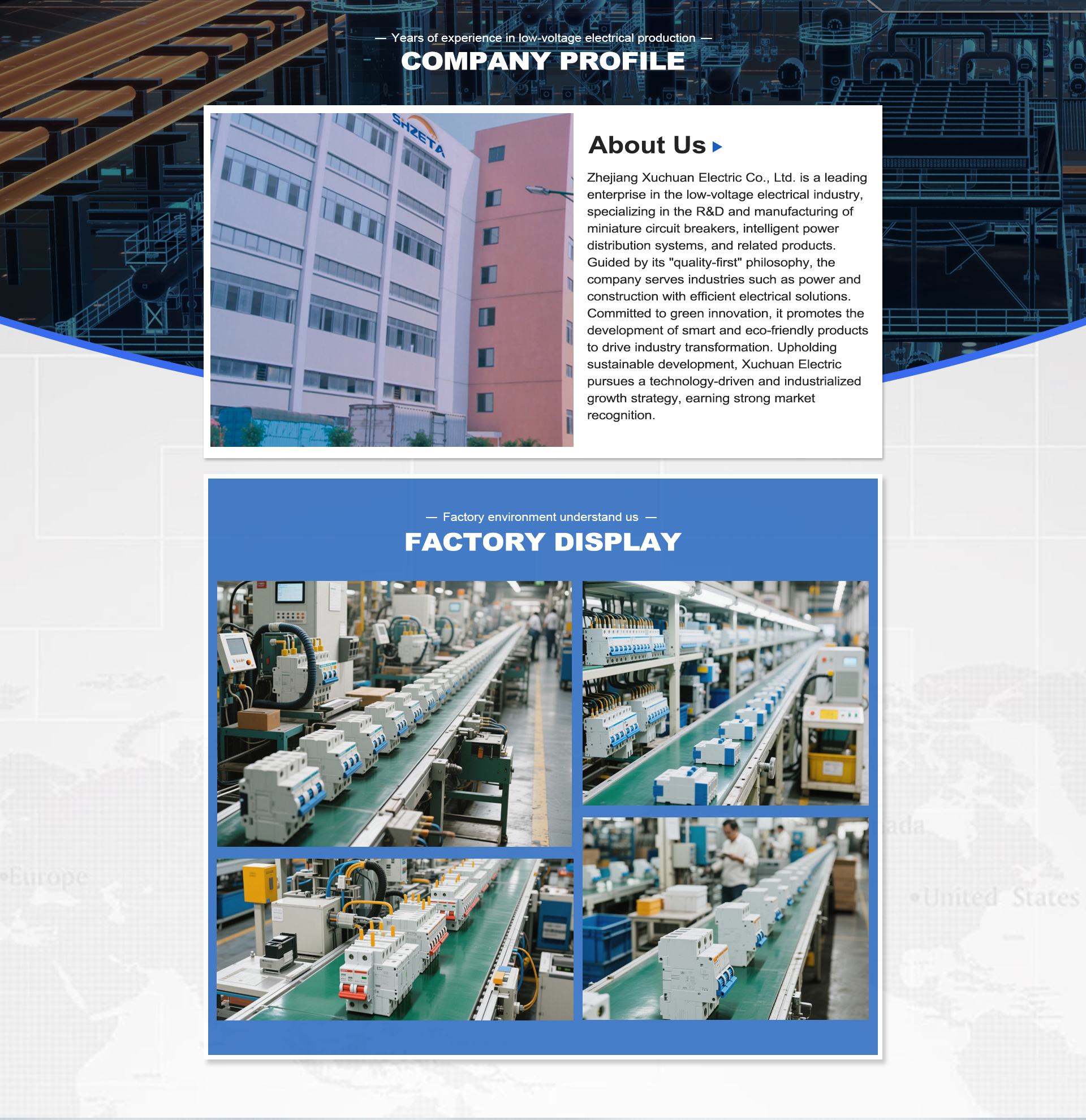
End-to-End OEM & ODM Manufacturing Ecosystem
Located in Huangyu Village, Liushi Town, Wenzhou—the globally acknowledged capital of low-voltage electrical apparatus—Zhejiang Graybar Electric Co., Ltd. integrates mold engineering, high-precision metal stamping, thermoplastic injection molding, automated surface mount electronic assembly (SMT), and high-voltage calibration testing within a tightly integrated supply radius.
Our dedicated technical teams partner directly with private-label distributor brands, panel builders, and EPC switchboard builders to transform custom single-line electrical diagrams into internationally certified electrical apparatus.
- Private Label Customization: High-resolution UV laser marking for buyer brand logos, customized rated currents, bespoke QR codes linked to client user manuals, and customized terminal shroud colors.
- Tailored Coil & Motor Electronics: Custom control voltages from 12V DC, 24V DC, 48V DC to 110V/230V/415V AC accommodating naval, railway, telecom, and utility requirements.
- Low Prototype MOQs: Rapid functional prototypes dispatched within 7–10 days with test reports before initiating scalable container-scale mass production.
Strict Quality Control & Testing Benchmark Protocol
1. Material Spectrometry
Incoming electrolytic copper sheets, silver contact tips, and PBT thermoplastics undergo spectroscopic and glow-wire thermal flammability verification ($850^\circ\text{C}$ compliance) to eliminate counterfeit compositions.
2. High-Pot Dielectric Check
100% of finished switches undergo 50Hz/60Hz AC dielectric withstand tests ($2,500\text{V}$ for 60 seconds) between phase-to-phase, phase-to-neutral, and live terminals to frame ground with zero leakage breakdown.
3. Mechanical Endurance Test
Sample units from every manufacturing lot undergo automated pneumatic robotic endurance testing cycling past 10,000 to 50,000 full-stroke operations under variable environmental temperatures.
4. Millivolt Drop & Temperature Rise
Contact resistance is verified at nominal continuous current to guarantee contact voltage drop remains strictly below $10\text{mV}$, mitigating thermal degradation under heavy continuous industrial loads.
Frequently Asked Questions by Electrical Engineers & Buyers
Key engineering calculations, installation guidelines, certification queries, and international shipping parameters for industrial transfer switchgear.
What is the fundamental difference between PC-Class and CB-Class Automatic Transfer Switches?
How do I correctly size the rated short-time withstand current ($I_{cw}$) for an ATS?
When is a 4-Pole (4P) ATS strictly required instead of a 3-Pole (3P) ATS?
What utilization category should be specified for heavy motor and transformer loads?
Can Zhejiang Graybar provide full OEM private branding and custom voltage modifications?
What is the typical production lead time and minimum order quantity (MOQ) for international orders?
Optimize Your Switchgear Supply Chain with Factory-Direct Engineering
Partner directly with Zhejiang Graybar Electric Co., Ltd. for certified changeover switchgear, competitive OEM manufacturing margins, and comprehensive technical documentation for your upcoming commercial tender or distribution inventory.