1. Custom OEM & ODM Manufacturing Capabilities: Engineering Excellence
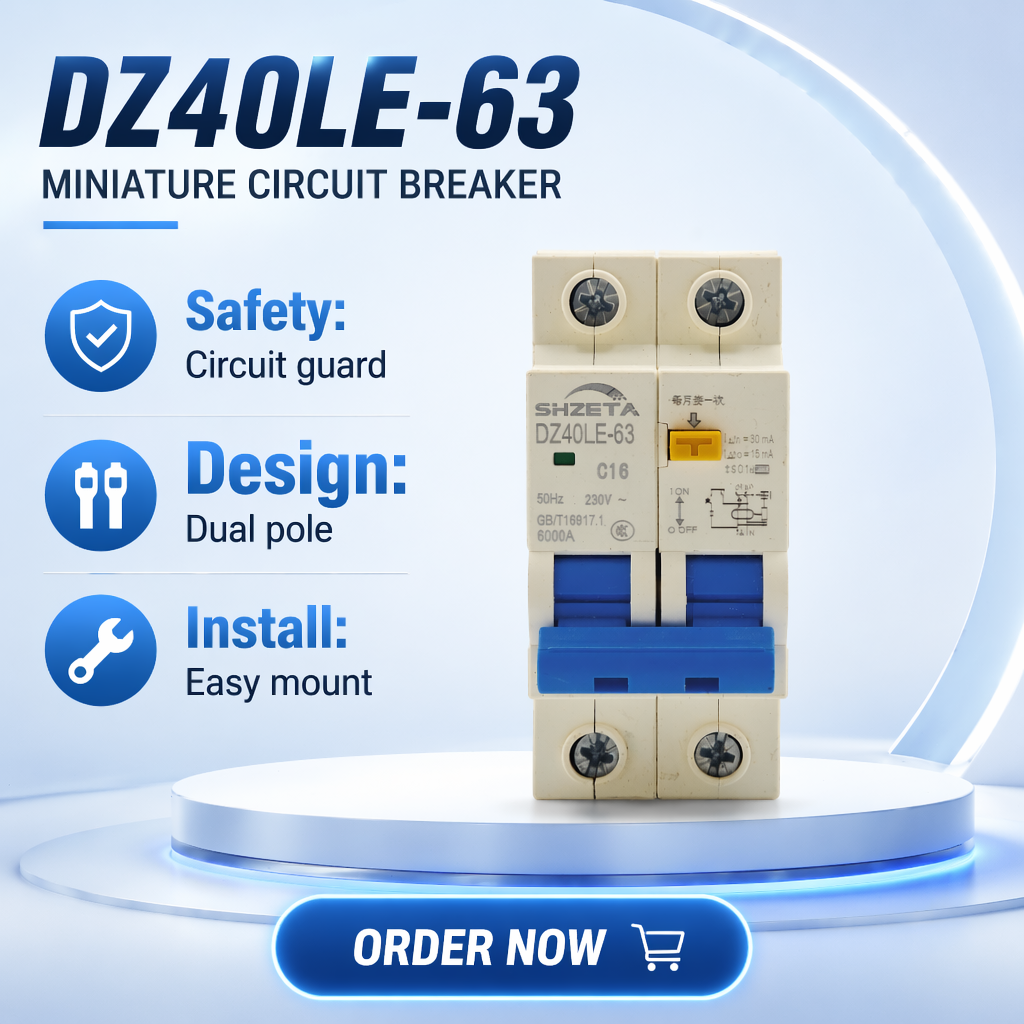
In the highly regulated low-voltage protection industry, electrical engineering distributors, EPC contractors, and switchgear assemblers require high component reliability and production agility. Operating directly out of Liushi, Wenzhou—China's electrical manufacturing capital—our custom OEM MCB factory bridges standard mass assembly with application-tailored technical specifications. We provide end-to-end bespoke circuit breaker production covering raw compound compounding, magnetic-hydraulic and bimetallic thermal design, mold precision tooling, and customized high-speed multi-pole assembly.
Unlike trading intermediaries, our on-site verified production facilities maintain complete control over the internal switch mechanism bill of materials (BOM). Contact point integrity represents the cornerstone of our breaking performance: our production utilizes cold-formed solid silver alloy contacts (AgNi10 or AgSnO2In2O3), preventing contact welding during high short-circuit arc discharges. Arc chutes are precision-engineered with 9 to 13 de-ionizing splitter plates constructed from cold-rolled steel coated in nickel or zinc, engineered to extinguish transient electric arcs in less than 2.5 milliseconds. Housing enclosures utilize genuine, unadulterated virgin Polyamide 66 (PA66) and Polybutylene Terephthalate (PBT) modified with halogen-free flame retardants to achieve strict UL94 V-0 ratings, with glow-wire flammability indices (GWFI) tested up to 960°C.
Tailored Magnetic & Thermal Calibration
Complete OEM customization of operational trip points across standard B (3–5In), C (5–10In), and D (10–14In) curves, alongside specialized K, Z, and high-inrush DC curves for energy storage units.
Branding, Shells & Pad-Printing
Custom-colored handles, bespoke enclosure designs, tamper-evident laser marking, buyer trademark pad-printing, and multi-language packaging designed for regional distributor market compliance.
Traceable Quality Testing
Every single circuit breaker undergoes automated calibration testing: thermal delay trip verification at 1.13In and 1.45In, instantaneous magnetic shot impulses, and 2,500V dielectric insulation barriers.
2. Future Procurement Trends in the Global Low-Voltage Circuit Breaker Market
Procurement workflows for low-voltage switchgear are experiencing a structural transformation driven by distributed energy resources (DERs), commercial solar expansion, and stricter international carbon directives. Sourcing directors are evolving beyond simple unit-cost procurement, focusing instead on Total Cost of Ownership (TCO), supply chain resiliency, and technical flexibility.
1. Decoupling and Regional Risk Mitigation: Global importers across Europe, South America, and the Middle East are optimizing their vendor networks away from single-source tier-1 monopolies. They actively partner directly with agile, verified OEM factories that provide identical IEC compliance data, transparent factory audits, and significantly lower Minimum Order Quantities (starting from 5 units for MCB/MCCB and 1 unit for ACB frames), allowing flexible inventory management without capital overextension.
2. Stringent Circular Economy and RoHS/REACH Enforcement: Environmental mandates such as the EU RoHS Directive (2011/65/EU) and REACH (EC 1907/2006) dictate that all exported circuit breakers maintain complete chemical traceability. Procurement managers require verified lab documentation proving the complete absence of hazardous plasticizers, hexavalent chromium, and brominated flame retardants in all molded enclosures and contact surface platings.
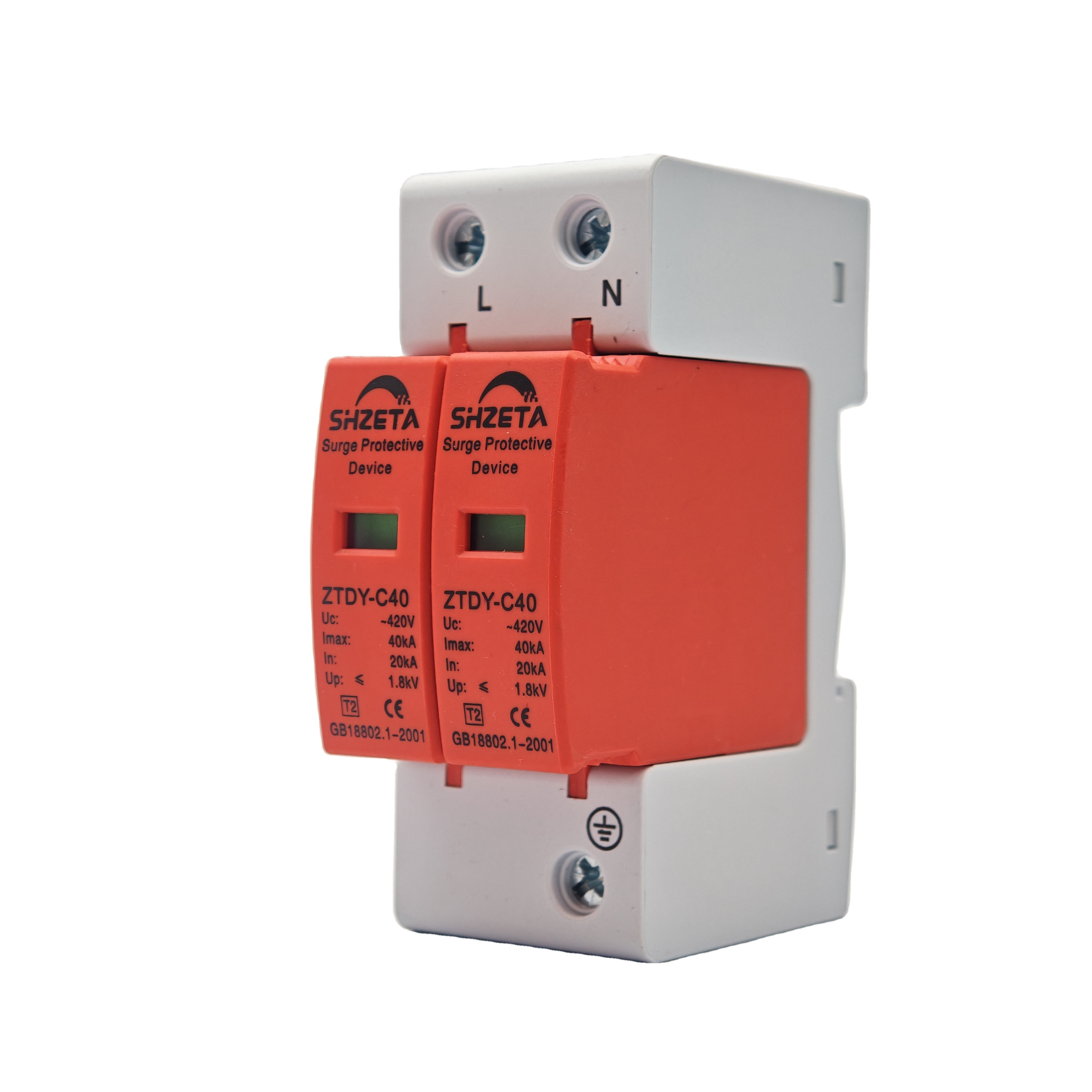
3. Demand for Integrated Microgrid Protection Suites: Sourcing schedules increasingly prioritize consolidated product families. Rather than issuing fragmented purchase orders to separate vendors, modern procurement models favor single-source suppliers capable of bundling primary AC incomers (ACB), secondary distribution units (MCCB), terminal DIN-rail protection (MCB), renewable surge suppression (SPD), and dual-power ATS units into unified shipping containers.
| Procurement Parameter |
Traditional Procurement Model |
Next-Generation OEM Partnership Model |
| Inventory Strategy |
High MOQ requirements (1,000+ units), high inventory holding cost |
Agile tier-based orders (MOQ 5 pcs), rapid batch replenishment |
| Supply Chain Origin |
Multi-tiered trading intermediaries with obscure factory origins |
Direct, on-site verified Liushi manufacturing and direct engineering access |
| Product Integration |
Discrete component orders from disparate manufacturers |
Unified BOM: Coordinated MCB + MCCB + ATS + SPD systems |
| Customization Scope |
Standard stock catalogs with fixed markings and ratings |
Full OEM/ODM: Laser engraving, custom trip curves, bespoke packaging |
3. Technological Evolution & Future Development Trends
The traditional thermal-magnetic miniature circuit breaker is evolving from a passive electro-mechanical fuse replacement into an active, intelligent node within digital power distribution architectures. As smart grids, EV superchargers, and residential energy storage systems proliferate, modern circuit breaker design is driven by four core engineering shifts:
Bi-Directional High-Voltage DC Interruption: The rise of 800V to 1500V solar arrays and battery energy storage systems (BESS) creates demanding arc quenching requirements. Traditional AC breakers rely on natural zero-crossing current points to collapse electric arcs; DC circuits lack this behavior. Advanced DC MCBs integrate powerful permanent neodymium magnets within the arc chamber to physically force DC arcs into cooling splitter stacks, ensuring rapid extinguish times without polarity constraints.
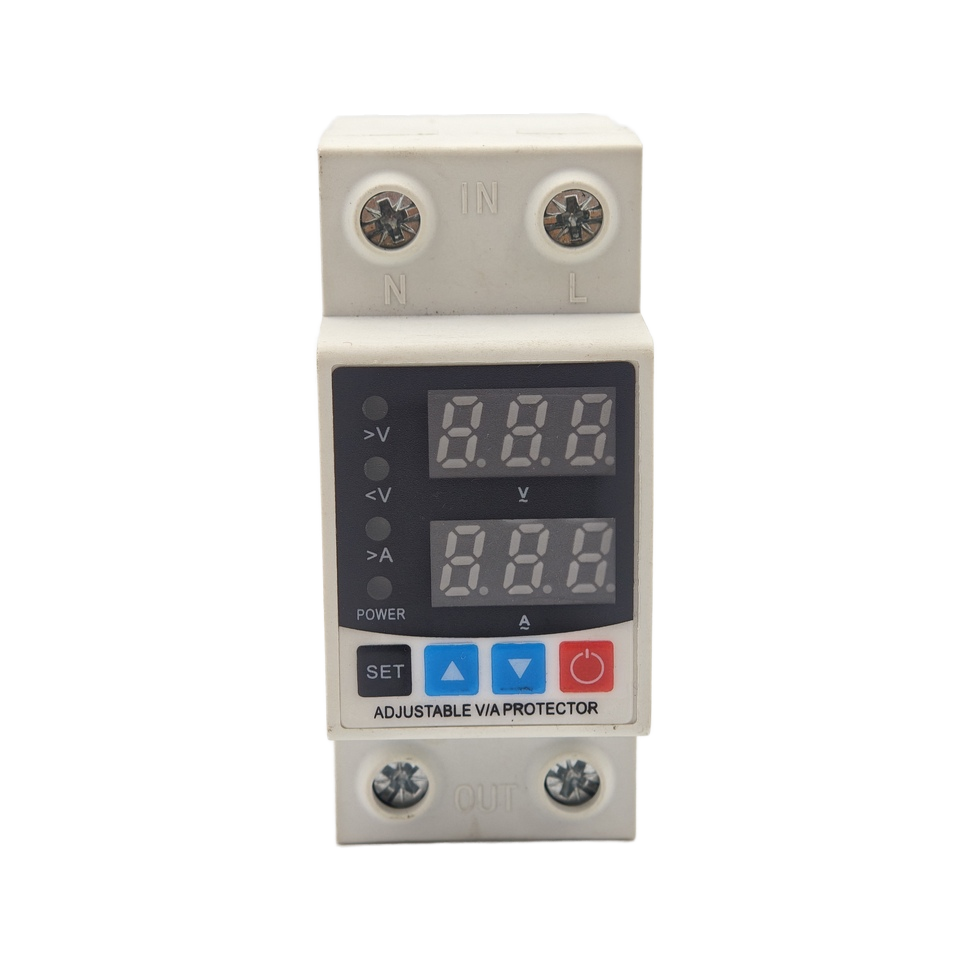
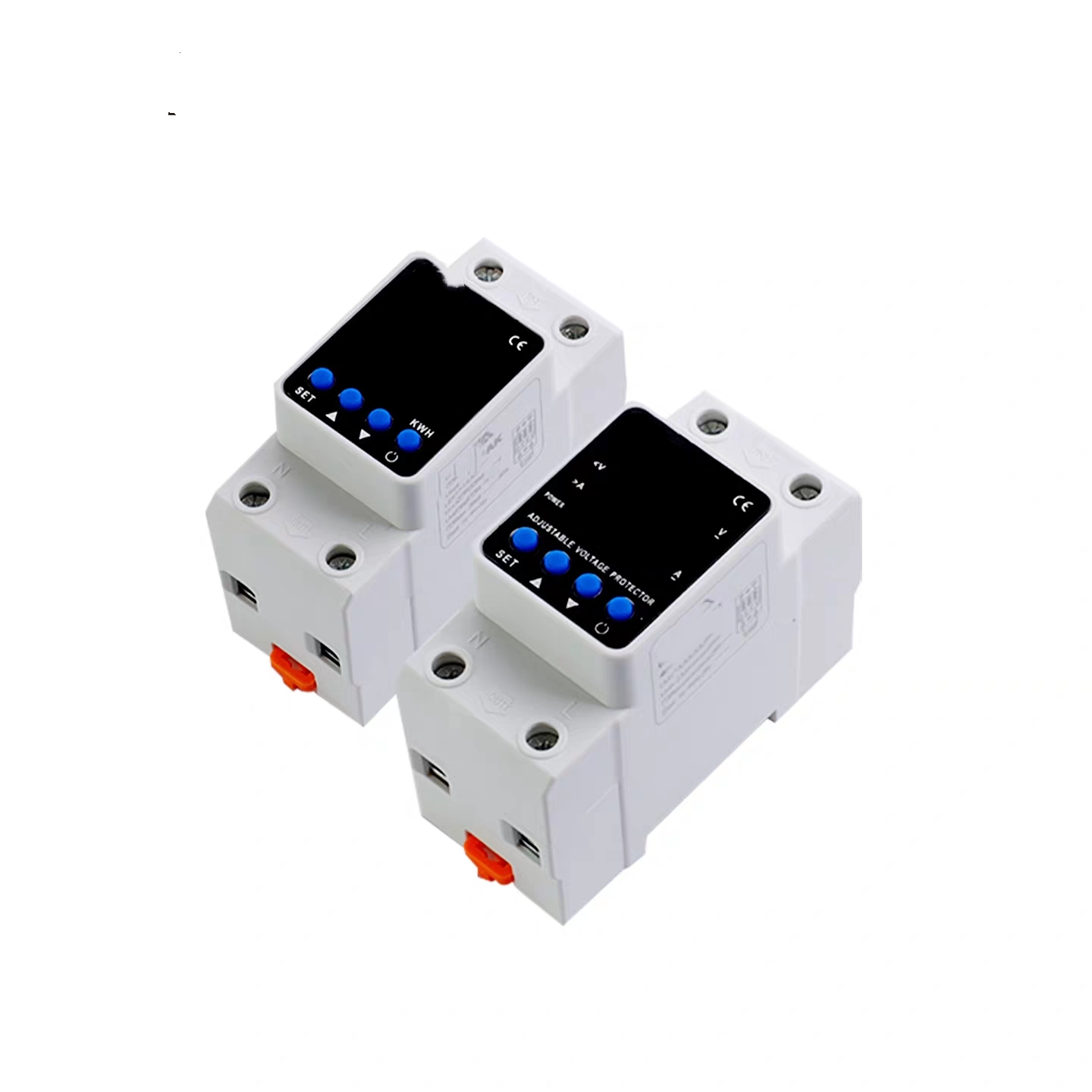
Smart IoT Telemetry and Remote Actuation: Future circuit breaker installations merge solid-state metering with communication bus integration. Modern DIN-rail breakers feature built-in current sensing, voltage regulation relays, and RS485 Modbus or Wi-Fi/Zigbee transceivers. These developments enable real-time sub-metering, automated under/over-voltage cutoff, predictive maintenance alerts based on contact temperature rises, and remote cloud-triggered reset actuation.
Hybrid Solid-State Interruption (SSCB): Moving beyond traditional mechanics, hybrid solid-state topologies combine mechanical air-gaps with high-power semiconductor switches (IGBTs and SiC MOSFETs). These advanced configurations interrupt prospective short circuits in microseconds—orders of magnitude faster than mechanical linkages—virtually eliminating physical arcing, terminal erosion, and component degradation.
4. Factory Advantages: Zhejiang Graybar Electric Co., Ltd.
Headquartered in Huangyu Village, Liushi Town, Wenzhou, Zhejiang Graybar Electric Co., Ltd. is positioned at the heart of the world's most concentrated electrical hardware and switchgear industrial cluster. This physical location provides our global buyers with unmatched competitive advantages across material acquisition, specialized assembly, and containerized logistics.
Integrated Liushi Supply Chain
Instant proximity to primary raw material extruders, precision silver-plating facilities, and precision injection molders allows rapid prototype development cycles and immediate volume production turnaround.
Independently Audited & Authenticated
Our operational premises, tooling equipment, assembly workshops, and transactional records are rigorously verified and authenticated on-site by premier third-party international testing authorities.
Multilingual Global Export Team
Our sales engineering division provides native technical support across English, German, Portuguese, Spanish, French, Russian, and Arabic, ensuring error-free translation of detailed engineering specifications.
5. Low-Voltage Switchgear Procurement: Comprehensive FAQ
What is the minimum order quantity (MOQ) for custom OEM breaker production?
To support distributors during market testing and pilot plant validation, our standard baseline MOQ is set at only 5 pieces for standard MCB, MCCB, and SPD series. Heavy-duty industrial air circuit breakers (ACB) can be ordered starting from 1 unit. For fully customized branding, custom handle injection colors, and bespoke printed packaging, private-label MOQs typically begin at 500 to 1,000 units depending on the complexity of the casing.
What international testing standards and certifications govern your production?
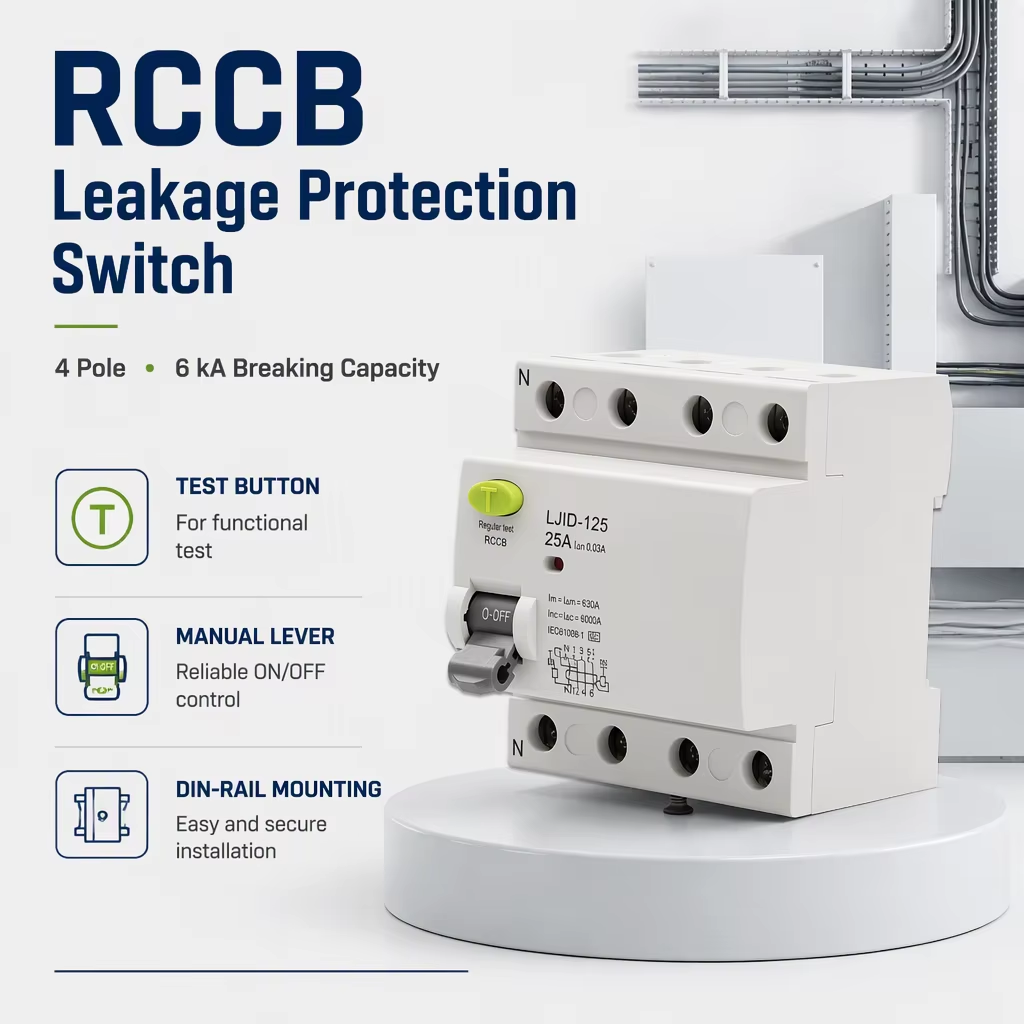
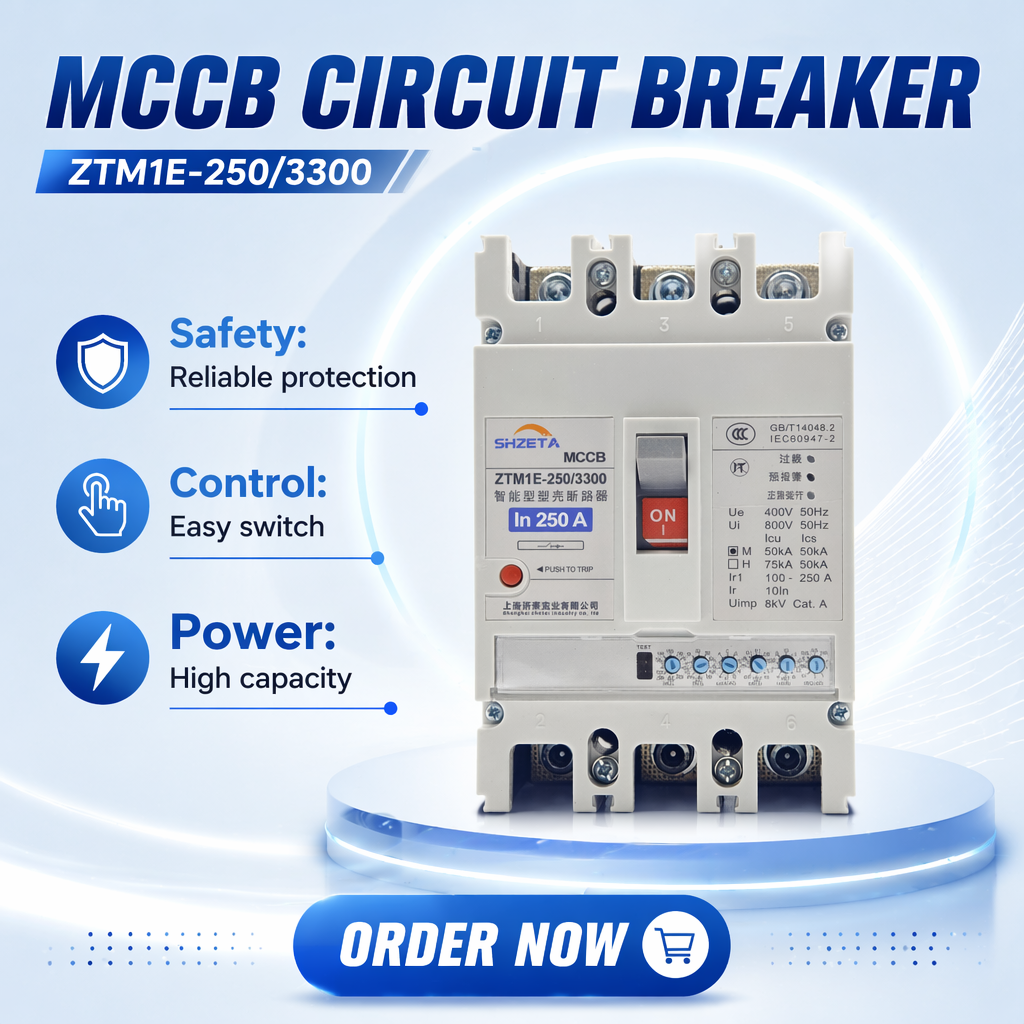
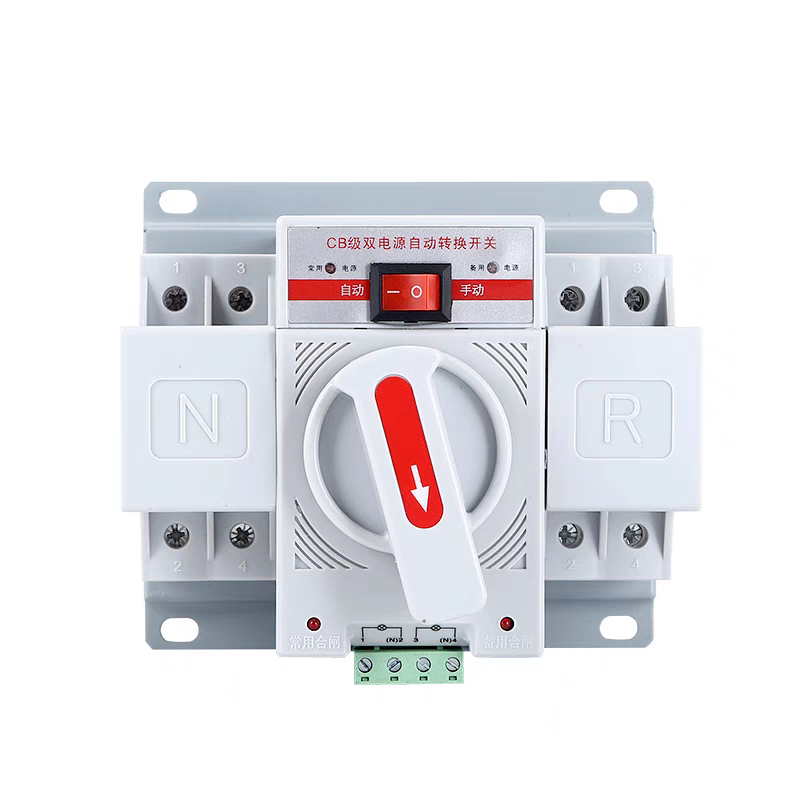
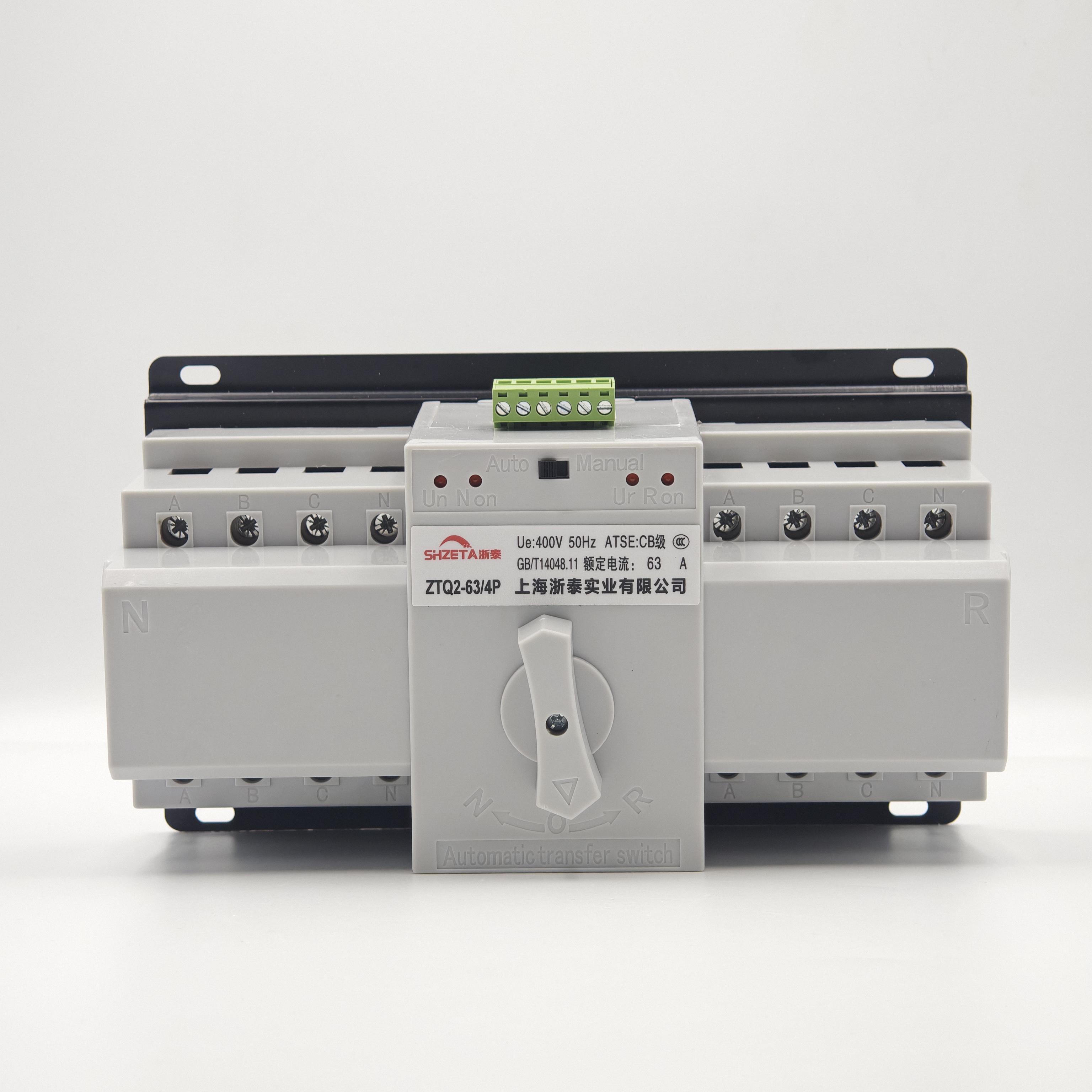
All manufactured products are designed, assembled, and verified in strict accordance with relevant International Electrotechnical Commission (IEC) standards: IEC 60898-1 for household and commercial DIN-rail MCBs; IEC 60947-2 for industrial moulded case breakers (MCCB) and air circuit breakers (ACB); IEC 61643-11 for low-voltage surge protective devices (SPD); IEC 60947-6-1 for automatic transfer switching equipment (ATS); and IEC 60947-4-1 for electromechanical contactors. Type-test certificates and formal compliance declarations are available on project request.
How do I select the appropriate MCB trip curve (B, C, or D) for commercial installations?
Trip curves define the instantaneous magnetic tripping threshold designed to accommodate varying circuit inrush currents. Type B curves trip between 3In and 5In, engineered for resistive loads without significant startup surges (such as electric heating or residential lighting). Type C curves trip between 5In and 10In, serving as the universal commercial standard for mixed residential/office circuits, small appliances, and fluorescent lighting. Type D curves trip between 10In and 14In (or higher), designed specifically to avoid nuisance tripping under high inductive inrush conditions such as industrial induction motors, large transformers, and switch-mode industrial power supplies.
What is the difference between Ultimate Breaking Capacity (Icu) and Service Breaking Capacity (Ics)?
Defined under IEC 60947-2, Ultimate Breaking Capacity (Icu) is the maximum short-circuit current the breaker can safely clear under test conditions (O - t - CO sequence), after which the device may suffer physical degradation and must be decommissioned. Service Breaking Capacity (Ics) represents the fault level the breaker can interrupt repeatedly without losing its operational capability to carry continuous rated load current. High-tier industrial breakers offer Ics ratings of 75% to 100% of Icu, ensuring operational resilience and reduced maintenance overhead.
Can standard AC circuit breakers be installed in DC solar photovoltaic systems?
No. Standard AC circuit breakers should never be substituted into DC photovoltaic arrays. Alternating current inherently provides a natural voltage and current zero-crossing point 100 or 120 times per second, which aids in quenching electric arcs. Direct current sustains a steady voltage without natural zero-crossings, resulting in continuous arcing that will rapidly melt standard contacts and destroy typical AC arc chutes. Dedicated DC MCBs, such as our DZ47-63 DC series, utilize specialized internal permanent magnets to deflect the arc and deeper cooling splitters to extinguish DC fault energies safely.
What parameters are needed to issue a quotation for customized OEM private label manufacturing?
To provide a precise technical specification review and price matrix, please furnish: 1) Required rated current (In) and operational voltage (Ue); 2) Pole configuration (1P, 2P, 3P, 4P); 3) Desired breaking capacity (e.g., 4.5kA, 6kA, 10kA, 50kA); 4) Target trip curve (B, C, D); 5) Customization details (custom laser engraving, private packaging, colored toggles); and 6) Projected order volumes and export shipping terms (FOB Ningbo/Shanghai or CIF).
Ready to Optimize Your Circuit Protection Supply Chain?
Contact our Liushi application engineering department for comprehensive component datasheets, factory compliance files, and fast sample fulfillment.