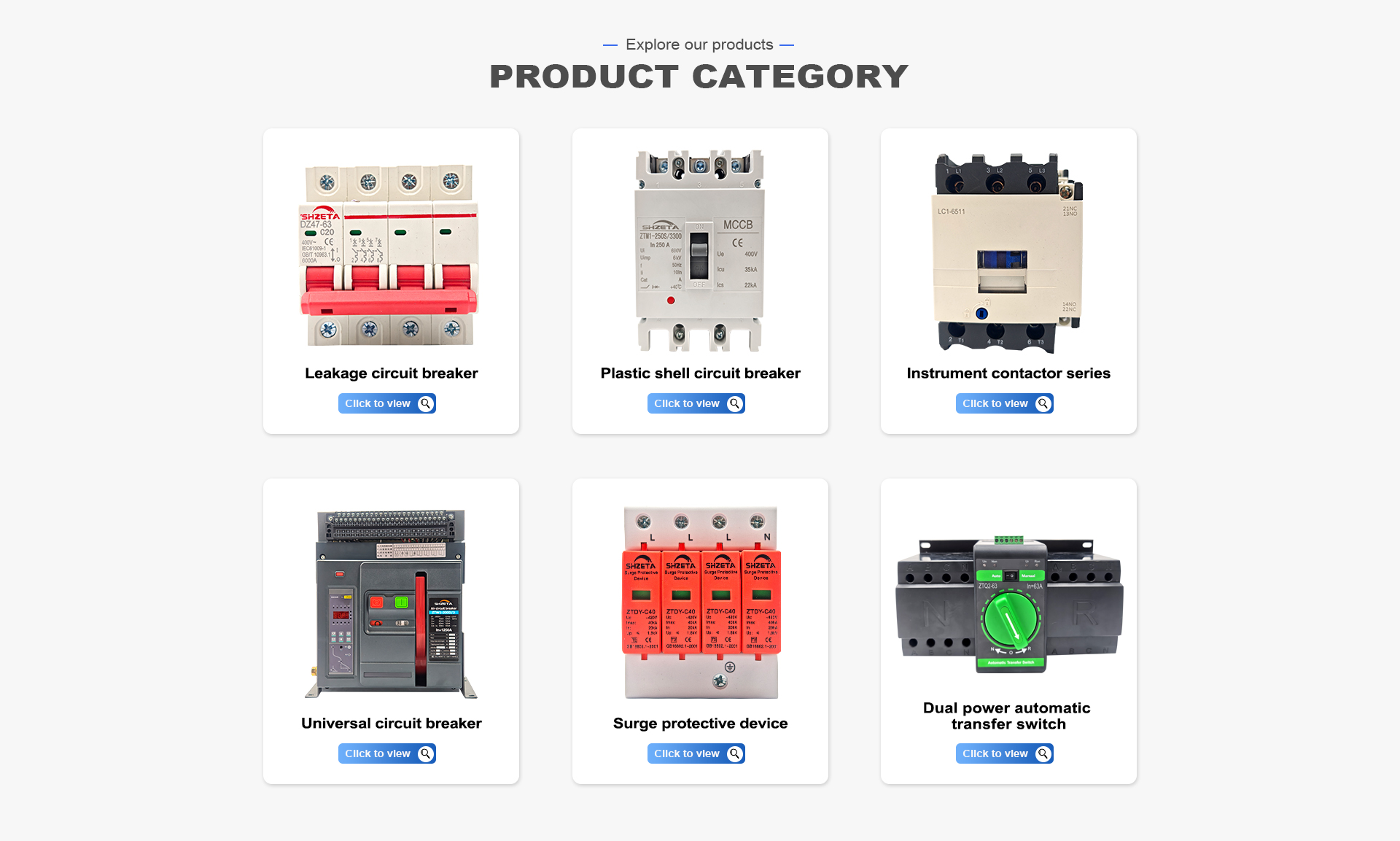
Featured Dual Power ATS & Integrated Protection Components
Engineered for commercial switchboards, microgrid synchronization, and mission-critical backup power transfers. Built with flame-retardant PA66 housings and high-conductivity silver alloy contacts.
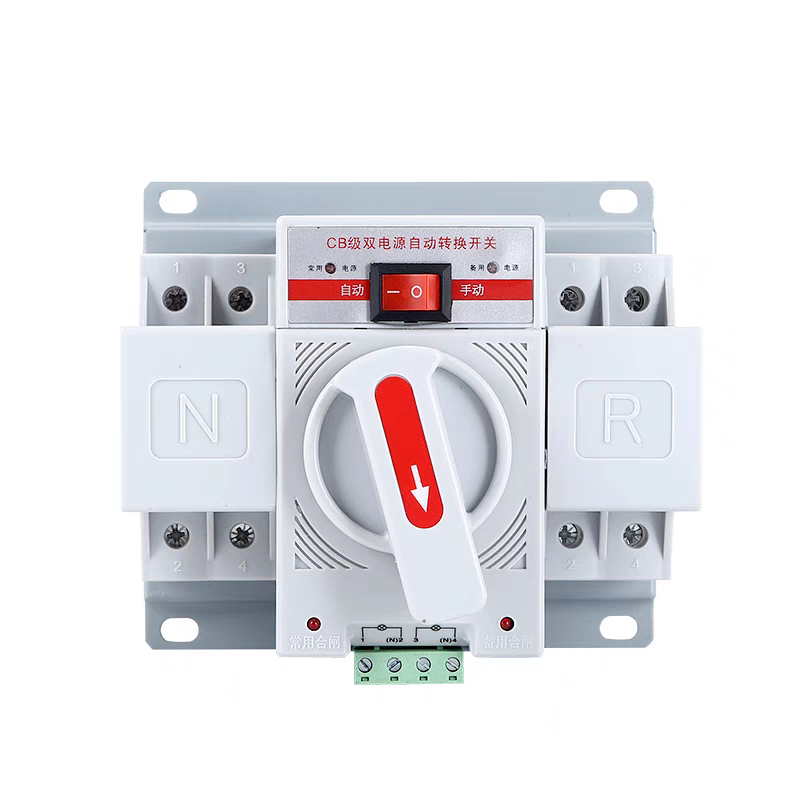
Dual Power Automatic Transfer Electrical Selector Switches 63A/100A Din Rail ATS 2P 3P 4P 10-125A Uninterrupted Power
- Frame Rating10A - 125A / 400V
- Poles Available2P / 3P / 4P Modular
- Transfer Time≤ 50 ms Seamless
- StandardIEC 60947-6-1
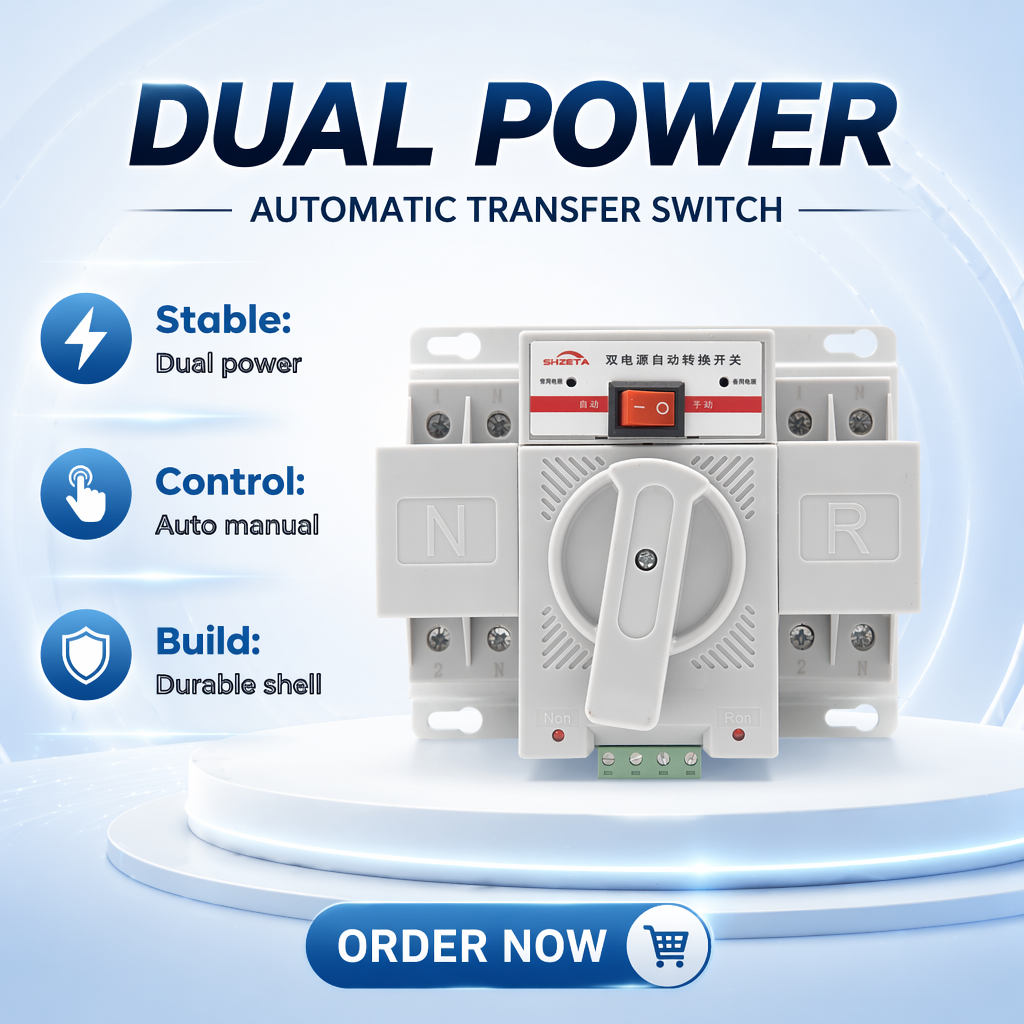
4P 63A Single Phase Manual Changeover Switch Transfer with Breaker Circuit Breaker Type Ats
- Switch TypeCB-Class Circuit Breaker
- Rated Current63A Thermal Trip
- Interlock MechanismMechanical Cam Interlock
- ApplicationGrid-to-Gen Changeover
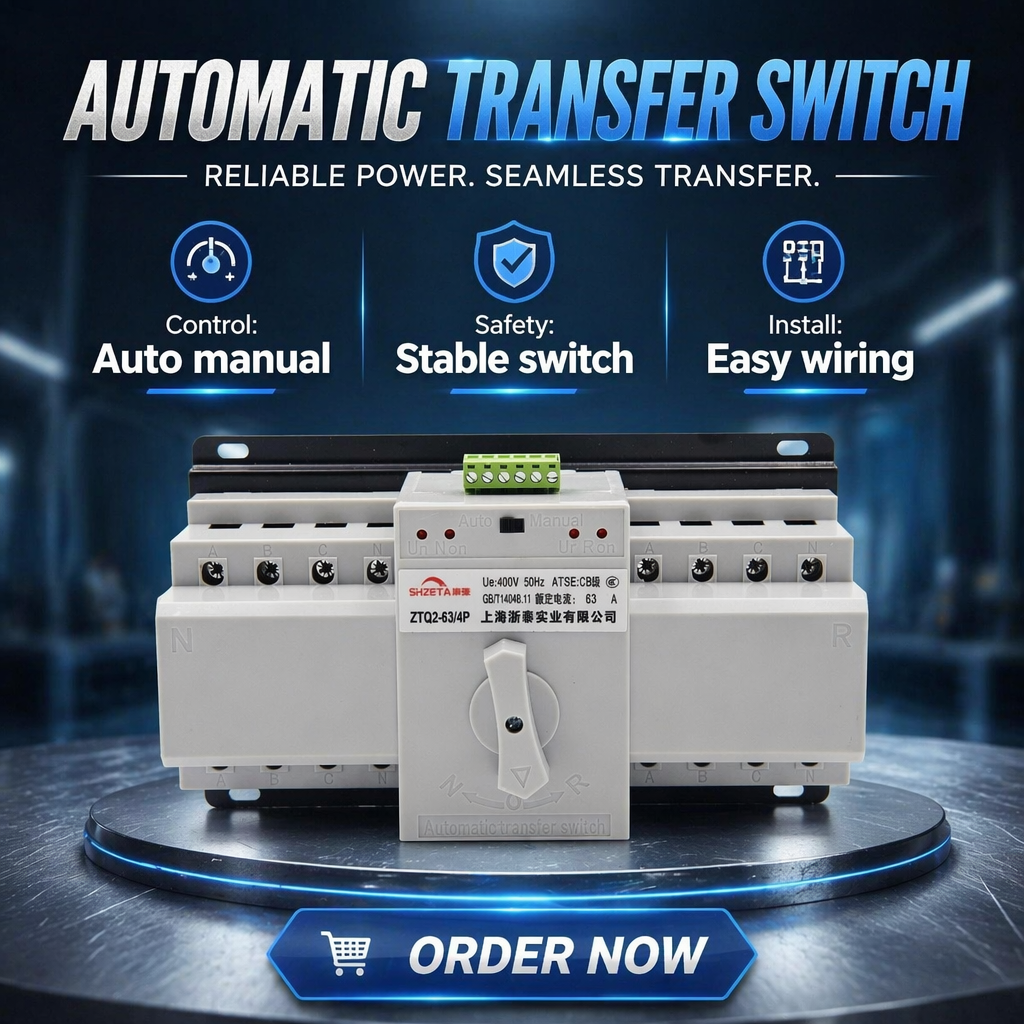
4P 63A Manual Changeover Switch Reliable Dual Power Transfer Integrated Circuit Breaker Type ATS for Home and Industrial Use
- Poles / Phase4-Pole Switched Neutral
- Breaking Capacity4.5kA / 6kA (Icu)
- Enclosure RatingV0 Flame Retardant
- MountingStandard 35mm DIN-Rail
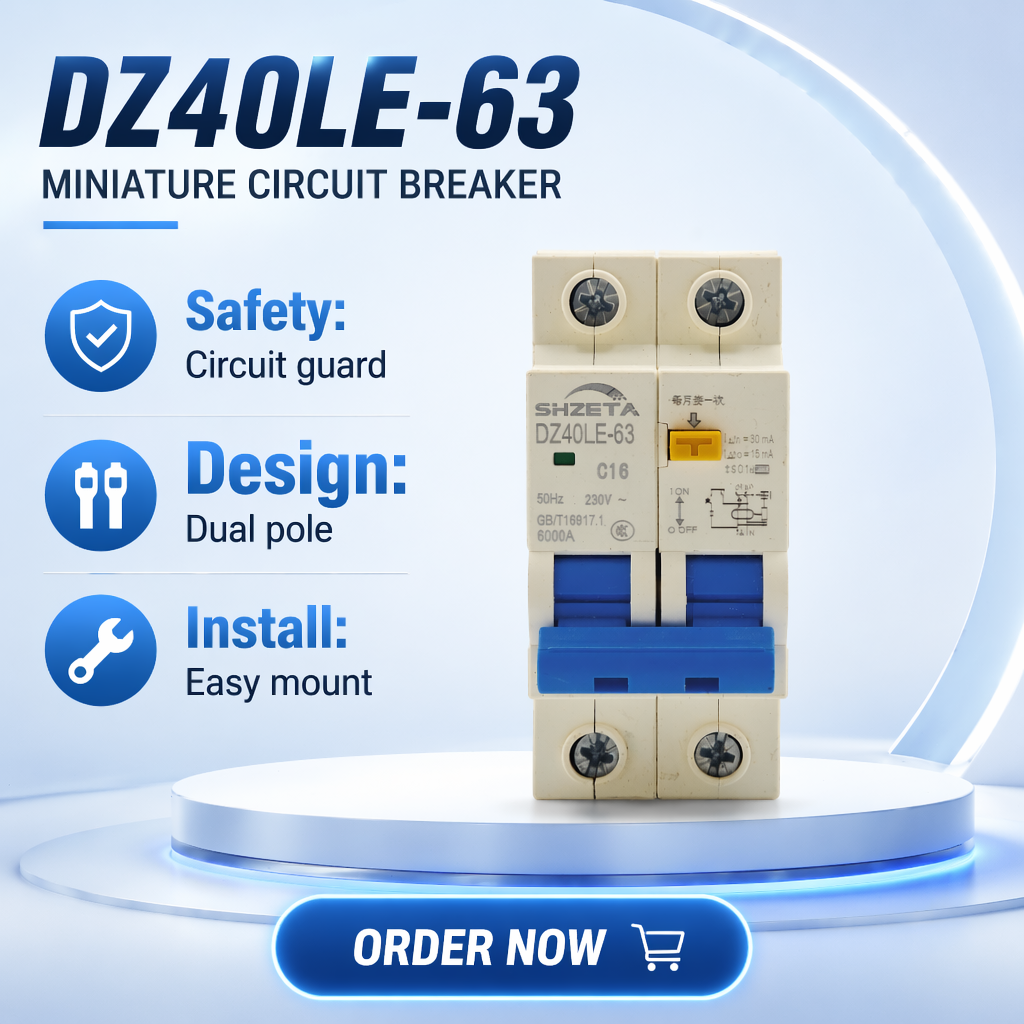
DZ47 63 DC MCB (PA66) BCD Curve C 6kA Rail Mounting Circuit Protection System for Electric Power Applications
- Rated Voltage12V - 1000V DC
- Trip CurveCurve B, C, D Configurable
- Short Circuit Icu6kA High-Performance
- MaterialPA66 Reinforced Shell
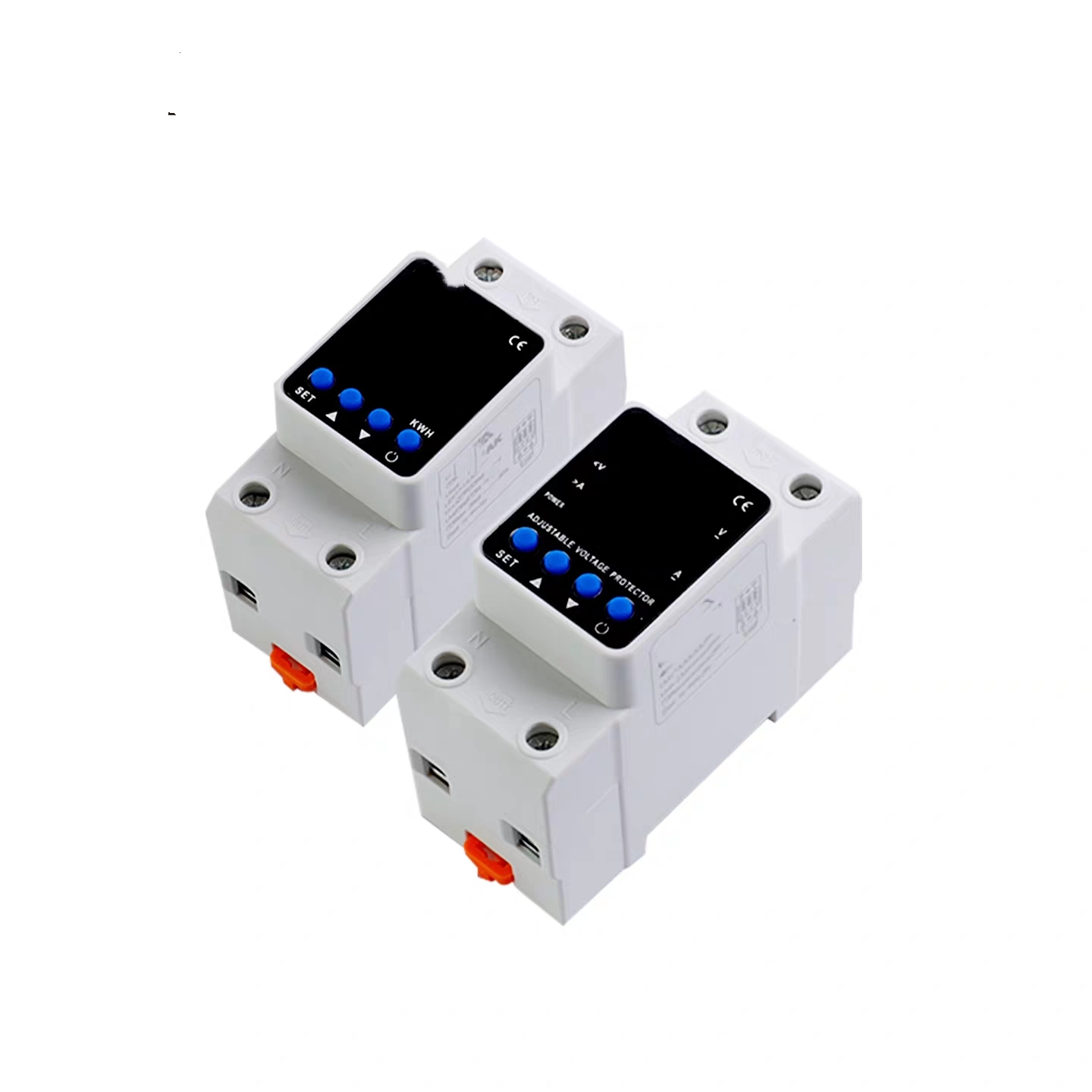
Single-phase Overcurrent, Undervoltage Protector, AC 220V Voltage 32 A-100 a Voltage Regulator Protector
- Current Setting32A - 100A Adjustable
- Threshold ProtectionOver/Under Voltage Auto-Reset
- Response Time< 0.1s Fast Sensing
- DisplayDual Real-time LED Digital
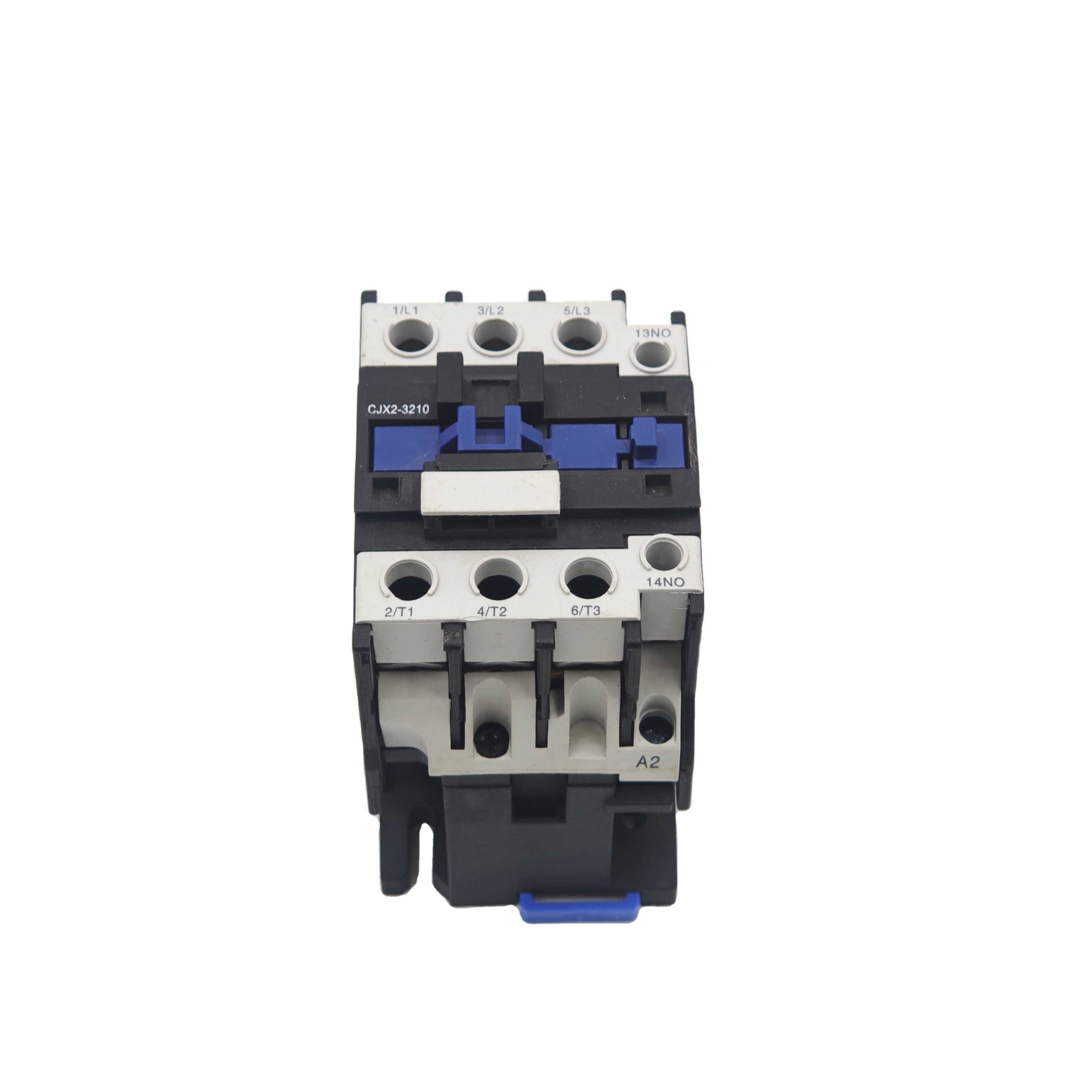
CJX2-1210 Magnetic Electric Contactor AC Three-Phase Surface-Mounted 220V/380V
- Rated Operational (Ie)12A (AC-3 duty)
- Coil Voltage24V / 110V / 220V / 380V
- Auxiliary Contact1NO / 1NC Built-in
- Electrical Life> 1,000,000 Operations
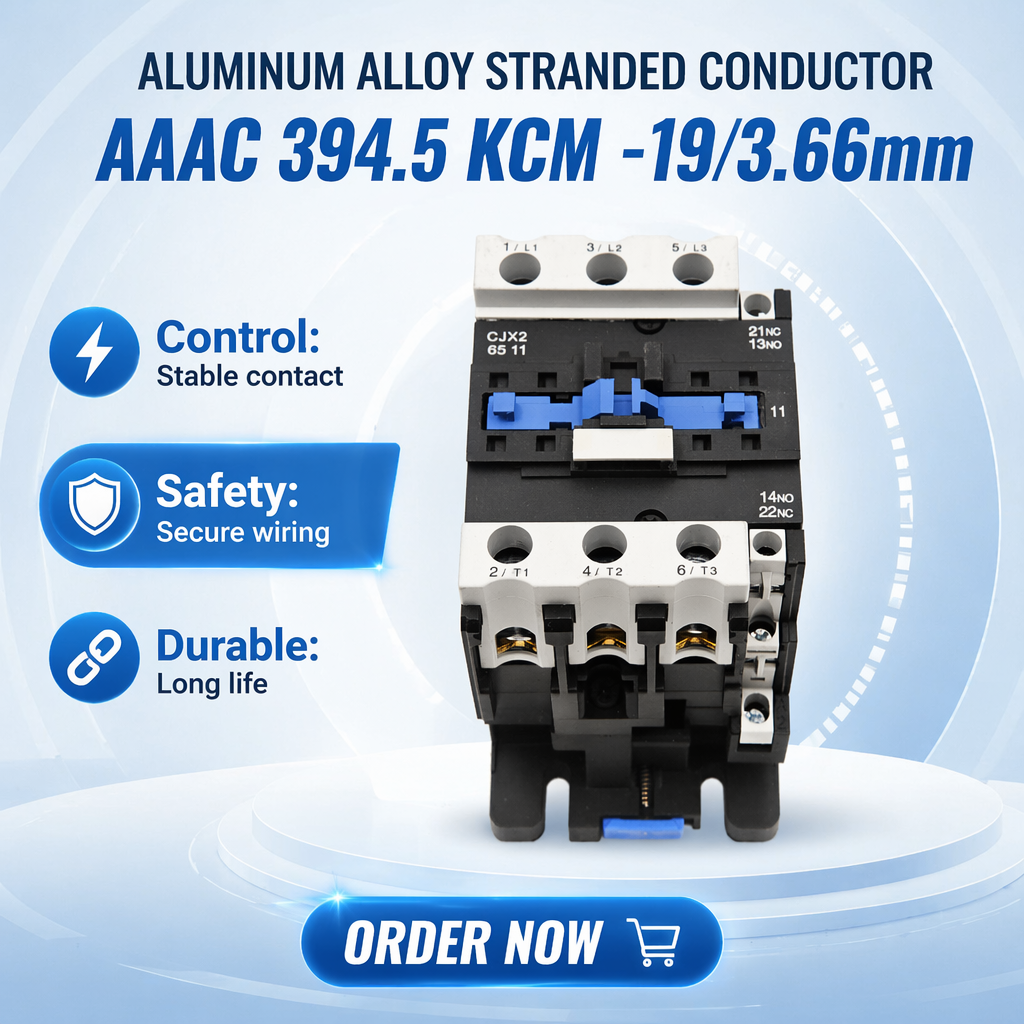
Electrical AC Magnetic Contactor 50Hz 3 Phase 3 Poles Main Circuit Rating Din Rail Mount Industrial Automation Use CJX2-8011
- Heavy-Duty Rating80A Continuous Duty
- Motor CapacityUp to 37kW at 380V
- Arc SuppressionMulti-slot De-ion Grid
- StandardIEC 60947-4-1
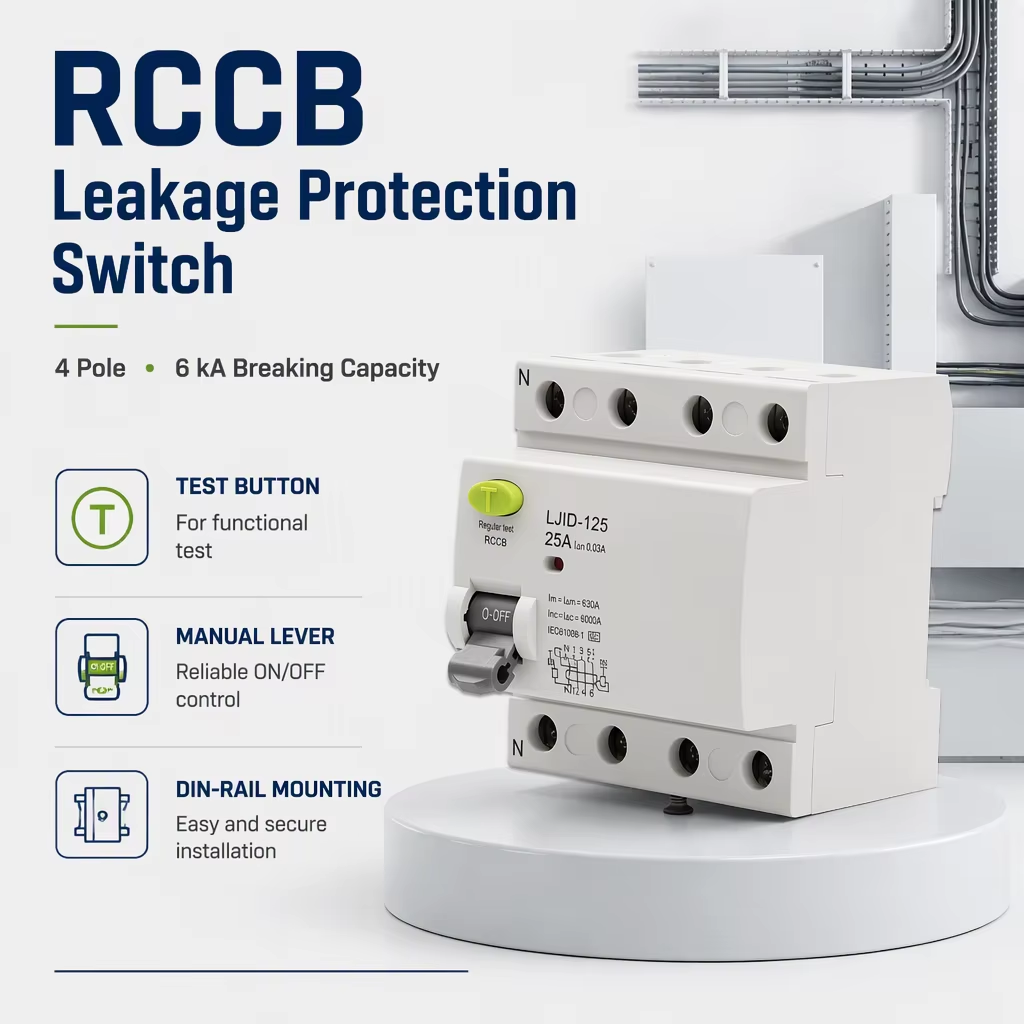
RCCB Leakage Protection Switch 24P Electromagnetic Miniature Type 16-63A
- Poles2P / 4P Vector Toroid
- Sensitivity (IΔn)30mA / 100mA / 300mA
- Release MechanismPure Electromagnetic (No aux)
- StandardIEC 61008-1 / EN 61008
Engineering Architecture of Dual Power Automatic Transfer Switches
An Automatic Transfer Switch (ATS) is an autonomous electromechanical assembly tasked with monitoring primary power supplies (typically the municipal utility grid) and seamlessly transferring critical circuits to an emergency power reserve (such as a standby diesel generator, photovoltaic inverter, or BESS energy storage bank) upon fault condition detection.
1. PC-Class vs. CB-Class: Mechanical & Electrical Distinctions
Under IEC 60947-6-1, transfer switches are demarcated into fundamental topologies based on their short-circuit handling methodology:
- PC-Class ATS (Power Contact): Built purely with dedicated power contactors or high-speed double-throw switch disconnectors. PC units do not incorporate integral thermal or magnetic overload releases. Instead, they exhibit extraordinary rated short-time withstand current ($I_{cw}$) capabilities, designed to ride through short-circuit stresses until downstream overcurrent protective devices clear the anomaly. They feature fewer moving parts, rapid operational cycles (<50 ms), and exceptionally high electrical endurance.
- CB-Class ATS (Circuit Breaker): Formed by mechanically linking two moulded case circuit breakers (MCCB) or miniature circuit breakers (MCB) via an motorized or electromagnetic interlocking mechanism. A CB-Class switch incorporates overcurrent trip units, providing both primary switching and integral overload/short-circuit protection. If a fault occurs downstream, the respective breaker trips independently.
Key Transfer Transition Topologies
Modern ATS assemblies are selected according to load sensitivity during transition:
- Open Transition (Break-Before-Make): Complete mechanical separation of Source I prior to closing Source II. Standard transfer time ranges from 30ms to 120ms. Ideal for general resistive, commercial lighting, and standard machinery panels.
- Delayed Transition (Center-Off Programmed): Incorporates an intentional dwell delay in the neutral 'OFF' position. Crucial for heavy induction motor and inductive transformer loads to allow inductive rotor back-EMF field decay, preventing catastrophic inrush current surges.
- Closed Transition (Make-Before-Break): Momentary paralleling (≤100ms) between synchronous sources. Used in data centers and acute healthcare where zero transient loss is mandatory.
2. Mechanical Cam vs. Solenoid Actuation Dynamics
The primary cause of failure in low-grade transfer switches is mechanical binding or contact welding resulting from asynchronous source collision. Top-tier China manufacturers utilize double-throw mechanical rocker interlocks paired with heavy-duty copper coil solenoid drives. This physical cam architecture ensures that regardless of electronic control board faults or firmware exceptions, simultaneous closure of Source I and Source II is physically impossible, mitigating out-of-phase cross-connection catastrophic events.
Dual Power ATS Sourcing Trends & Next-Gen Technologies (2025–2030)
Accelerated by global renewable expansion, decentralized microgrids, and hyperscale edge-computing infrastructure, dual power transfer equipment is undergoing a rapid technological evolution from static switchgear to digital energy routing assets.
1. Hybrid PV-BESS Microgrid Synchronization
Traditional utility-to-diesel generator topologies are being superseded by multi-source microgrids incorporating photovoltaic (PV) inverters and Battery Energy Storage Systems (BESS). Next-generation transfer switches feature bidirectional sensing to manage non-linear regenerative feeds and prevent anti-islanding violations during instantaneous microgrid cutovers.
2. Microsecond Solid-State & Hybrid Switching
For mission-critical computing and semiconductor manufacturing, standard electromechanical transfer times (30–80ms) necessitate costly upstream UPS batteries. Procurement demand is surging for hybrid transfer systems combining silicon-controlled rectifiers (SCRs) with parallel bypass mechanical contacts, achieving transfer latencies under 5 milliseconds with zero arc erosion.
3. Embedded Telemetry & Predictive IoT
Global panel builders are standardizing on ATS controllers equipped with isolated RS-485 Modbus RTU and Ethernet TCP/IP. Real-time telemetry logs phase voltage imbalances, harmonic distortion factors (THD), and internal terminal temperature gradients via thermistor arrays, enabling predictive maintenance prior to catastrophic contact pitting.
4. Switched 4th Pole Harmonization in TT/TN Systems
As modern building power architectures contend with substantial third-harmonic currents generated by switch-mode power supplies, floating neutral potentials represent severe safety hazards. Sourcing protocols are shifting decisively toward true 4-pole ATS units with overlapping neutral contacts, eliminating neutral discontinuities during phase transfers.
5. Miniaturization & Modular DIN-Rail Architecture
The convergence of residential backup generator installations with smart homes has triggered aggressive demand for compact, modular DIN-rail dual power transfer switches (such as 2P/4P 63A–125A units) capable of fitting standard consumer units without bespoke sheet-metal enclosures.
6. Supply Chain Rationalization in Liushi, Wenzhou
Western and Middle Eastern engineering buyers are increasingly pivoting away from multinational branding premiums (Schneider, ABB) in favor of direct Tier-1 China factories in Liushi that provide certified, private-label OEM equipment manufactured to identical IEC standards at a 40–60% lower total cost of acquisition.
B2B Selection Matrix: Transfer Switching Equipment (TSE)
System designers must calibrate transfer switch electrical ratings against prospective short-circuit currents, load inductive characteristics, and duty utilization categories per IEC 60947-6-1.
| Classification | Operational Principle | Transfer Speed | Utilization Category | Withstand Current ($I_{cw}$) | Primary Industrial Use-Case |
|---|---|---|---|---|---|
| PC-Class ATS High Endurance |
Dedicated double-throw contactor mechanism; no built-in overcurrent trip release. | ≤ 30 - 50 ms | AC-33B (Motor loads, mixed resistive/inductive) | High (10kA - 50kA for 0.1s to 1s) | Hospitals, Tier II-IV Data Centers, Water Pumping Facilities, Main Distribution Panels |
| CB-Class ATS Integrated Protection |
Interlocked MCCB / MCB breakers with integrated bimetallic & magnetic releases. | ≤ 80 - 150 ms | AC-31B (Non-inductive or slightly inductive loads) | Equated to Breaker Breaking Capacity ($I_{cu}$) | Commercial Office Sub-boards, Residential Standby Gensets, Telecom Cellular Towers |
| Manual Changeover Mechanically Driven |
Hand-operated 3-position (I-0-II) rotary cam switch with external handle. | Manual Operator Dependent | AC-21A / AC-22A (Resistive and moderate inductive) | Limited to upstream fuse/breaker coordination | Agricultural backup, isolated industrial workshops, non-critical sub-circuits |
| Solid-State ATS (SSTS) Zero Interruption |
Static semiconductor SCR thyristor switching without mechanical movement. | ≤ 2 - 5 ms | AC-35B (Sensitive electronic processing loads) | Requires ultrafast semiconductor fuse protection | Semiconductor cleanrooms, server racks, critical flight control infrastructure |
Why Global Importers Source Dual Power ATS from Graybar Electric
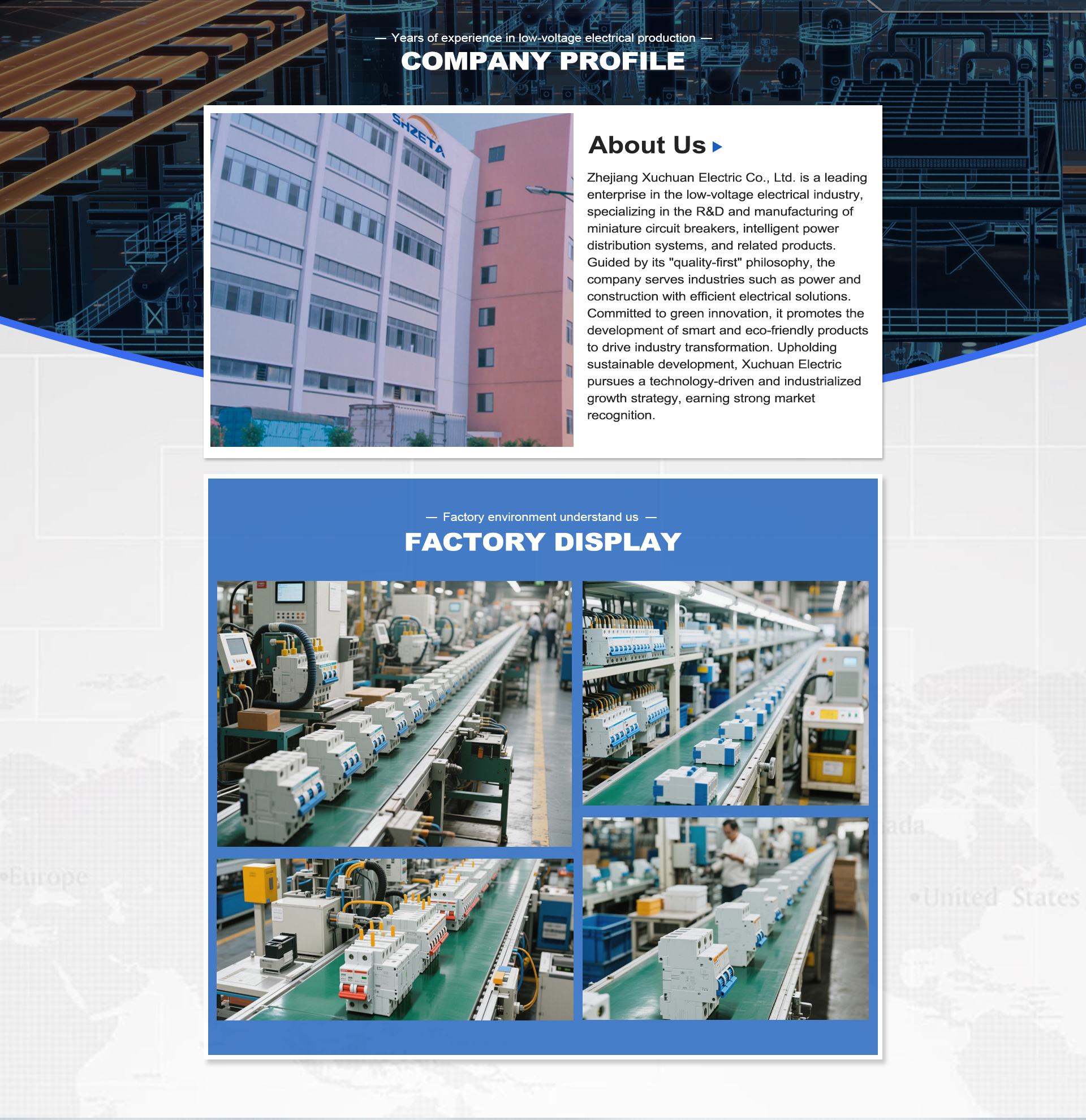
Located in Huangyu Village, Liushi Town—globally recognized as China’s low-voltage electrical manufacturing capital—Zhejiang Graybar Electric Co., Ltd. combines localized supply chain agility with rigorous international compliance testing.
Vertically Integrated Manufacturing Ecosystem
Unlike generic trading firms, Graybar Electric manages the entire value chain within our Liushi production facility. From precision polymer injection of PA66 flame-retardant enclosures (UL94-V0 rated) to high-speed progressive metal stamping of copper terminal busbars and silver-alloy ($AgCdO$ / $AgSnO_2$) contact riveting, every component is calibrated in-house.
Our proximity to the world's most concentrated micro-component electrical cluster allows immediate sourcing of specialized core materials, such as grain-oriented silicon steel laminations and custom multi-voltage electromagnetic coils, keeping production lead times under 15–20 working days even during seasonal supply surges.
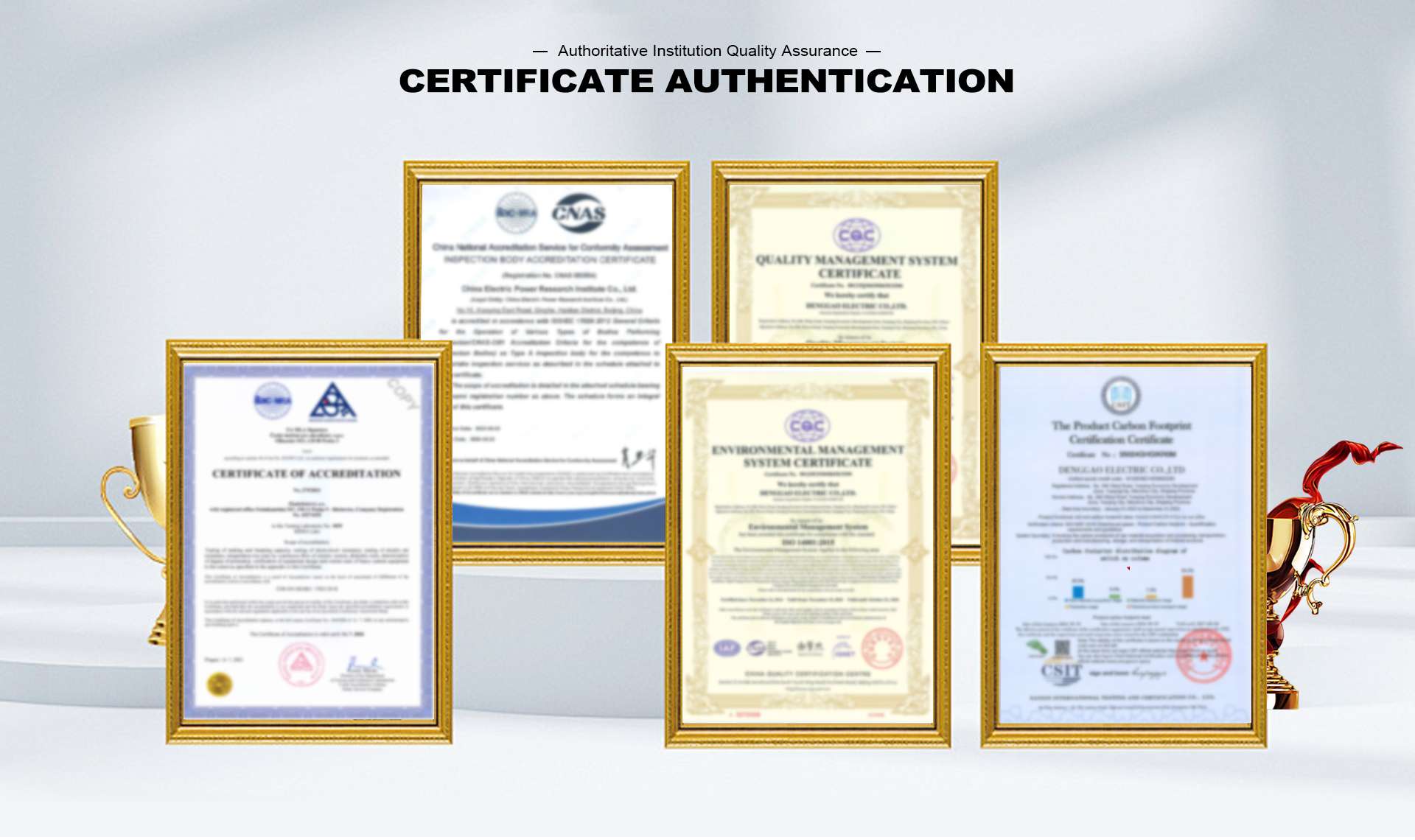
- Rigorous Routine Testing: 100% automated check of dielectric withstand (2500V/min), mechanical interlock integrity, and dynamic contact transition timing.
- Flexible B2B Order Economics: Evaluation sample MOQ of 1–5 units for engineering approvals before committing to 20GP/40HQ full-container deliveries.
- Comprehensive OEM / ODM Customization: Private laser branding, custom dial calibrations, multi-lingual schematics, and client-specified terminal configurations.

Frequently Asked Questions by Electrical Engineers & Sourcing Managers
Direct technical answers regarding sizing, mechanical interlocks, compliance documentation, and export logistics for dual power automatic transfer switches.
What are the key technical differences between an ATS and an MTS (Manual Transfer Switch)?
Why is switched neutral (4-Pole ATS) critical in three-phase generator installations?
How do you calculate the required Short-Time Withstand Current ($I_{cw}$) for an ATS?
Thermal Stress: $I^2 \cdot t \le I_{cw}^2 \cdot t_{spec}$
If the prospective fault level at the incoming switchgear is 25kA and the upstream circuit breaker requires 0.1 seconds to trip, the ATS must possess a rated $I_{cw}$ of at least 25kA for 0.1s. Graybar engineers assist clients in verifying coordination tables to ensure total selectivity.
What international testing standards apply to dual power transfer switches produced in China?
What is the difference between Open Transition and Delayed Transition?
How does Graybar handle OEM brand labeling, laser printing, and packaging for distributors?
What are the lead times and minimum order quantities (MOQ) for international orders?
How does the built-in generator auto-start signaling logic operate?
Request Direct Factory Quotations & Technical Drawings
Submit your single-line diagram (SLD), bill of materials (BOM), or customized OEM specifications directly to our engineering department in Liushi Town, Wenzhou. We provide rapid technical reviews and commercial proposals within 24 hours.