Featured Smart & Industrial Circuit Breaker Systems
Engineered in Liushi, Wenzhou—China's low-voltage manufacturing hub. From electromagnetic residual current devices to high-capacity automatic transfer switches, explore our IEC-compliant product lines built for harsh industrial environments and mission-critical installations.
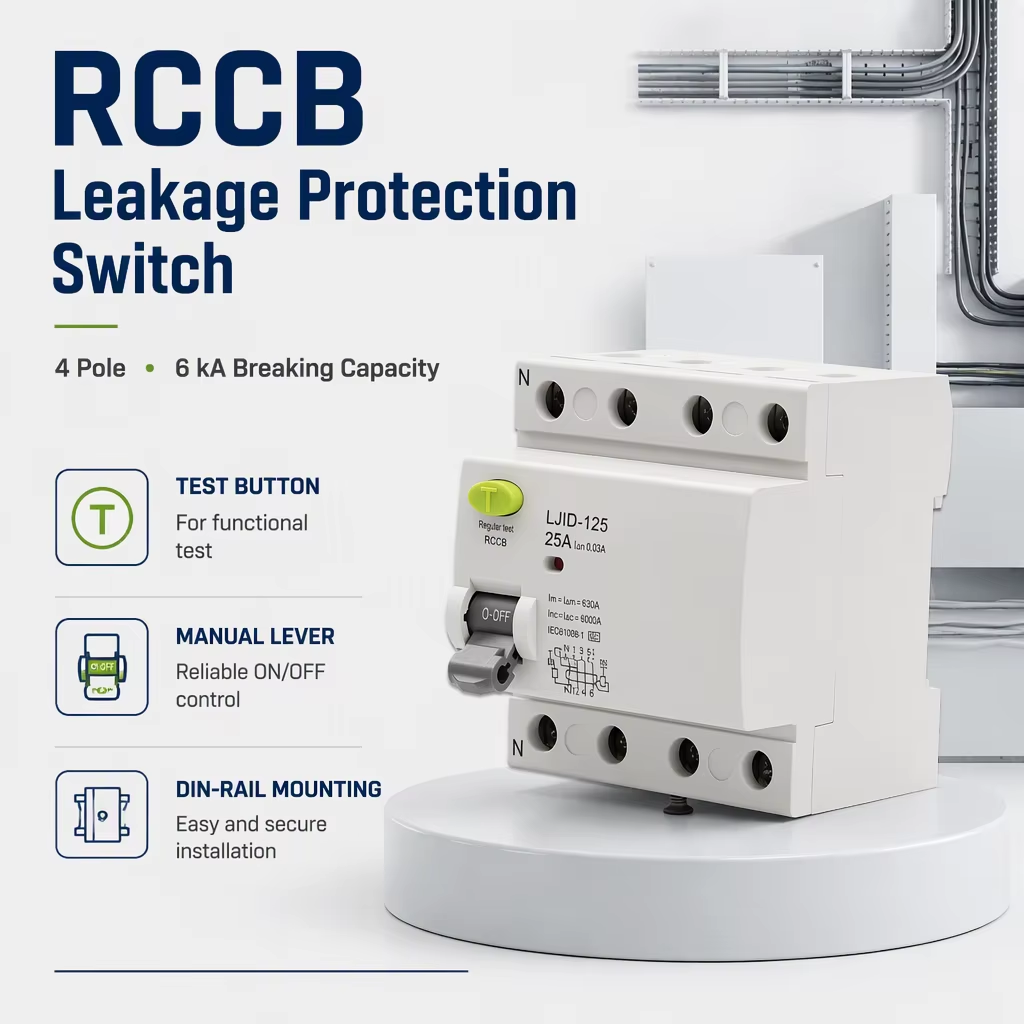
RCCB Leakage Protection Switch 24P Electromagnetic Miniature Type 16-63A
- Poles:2P, 4P Compact
- Rated Current:16A – 63A
- Mechanism:Pure Electromagnetic
- Residual Sensitivity:30mA, 100mA, 300mA
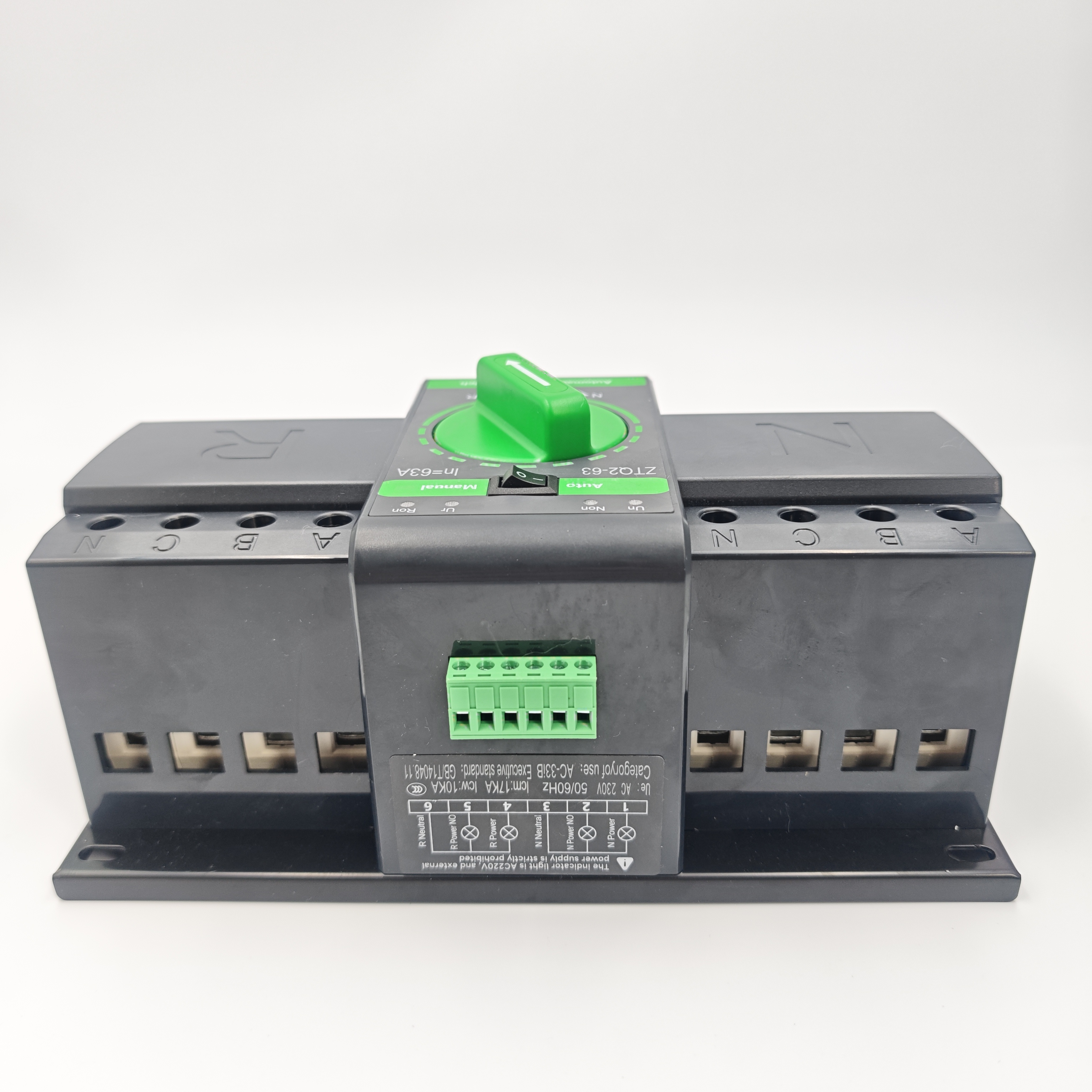
Dual Power Transfer Switch Circuit Automatic ATS PC Three Phase 63 A -125A
- Class:PC Class High Reliability
- Frame Rating:63A – 125A Frame
- System Voltage:400VAC 3-Phase
- Transfer Time:< 50ms Seamless
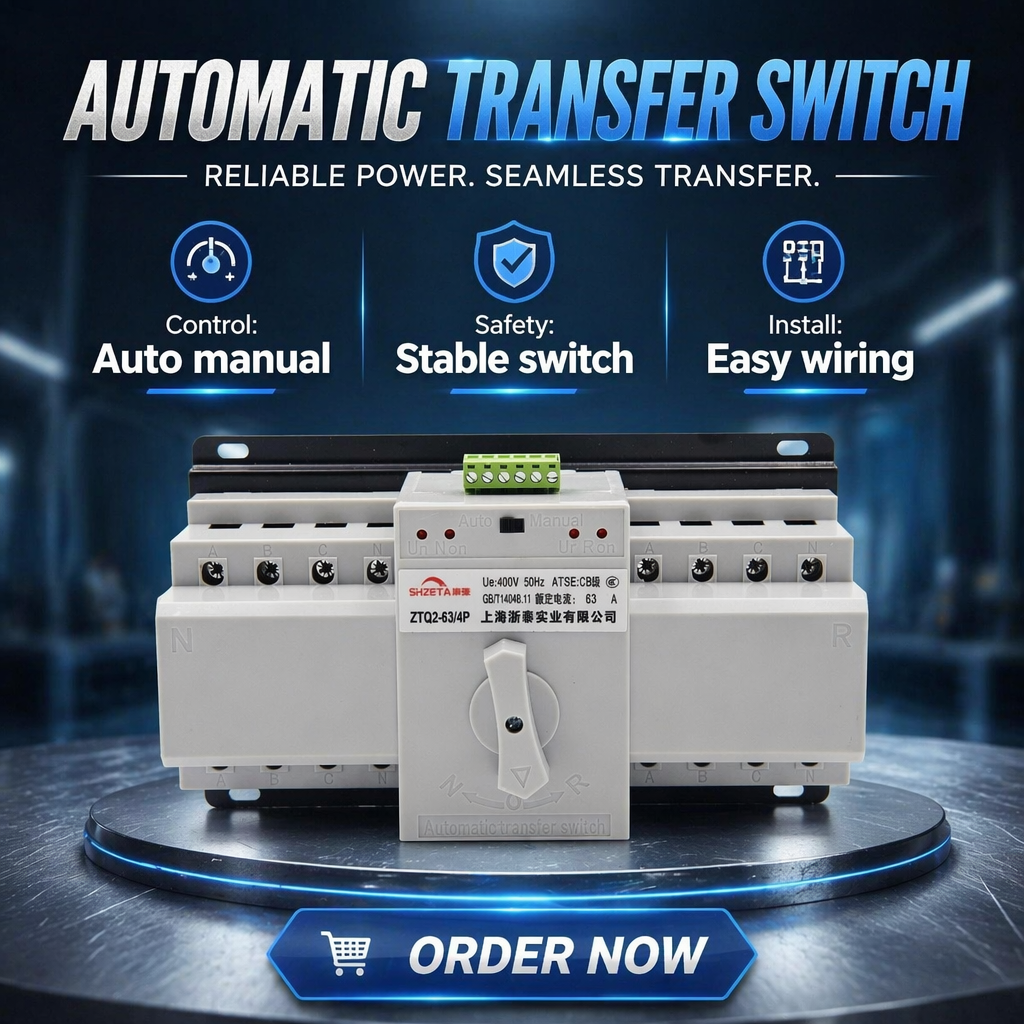
4P 63A Manual Changeover Switch Dual Power Transfer Integrated Breaker
- Configuration:4-Pole Isolation
- Nominal Current:63A Continuous
- Interlock:Fail-Safe Mechanical
- Application:Generator / Mains Utility
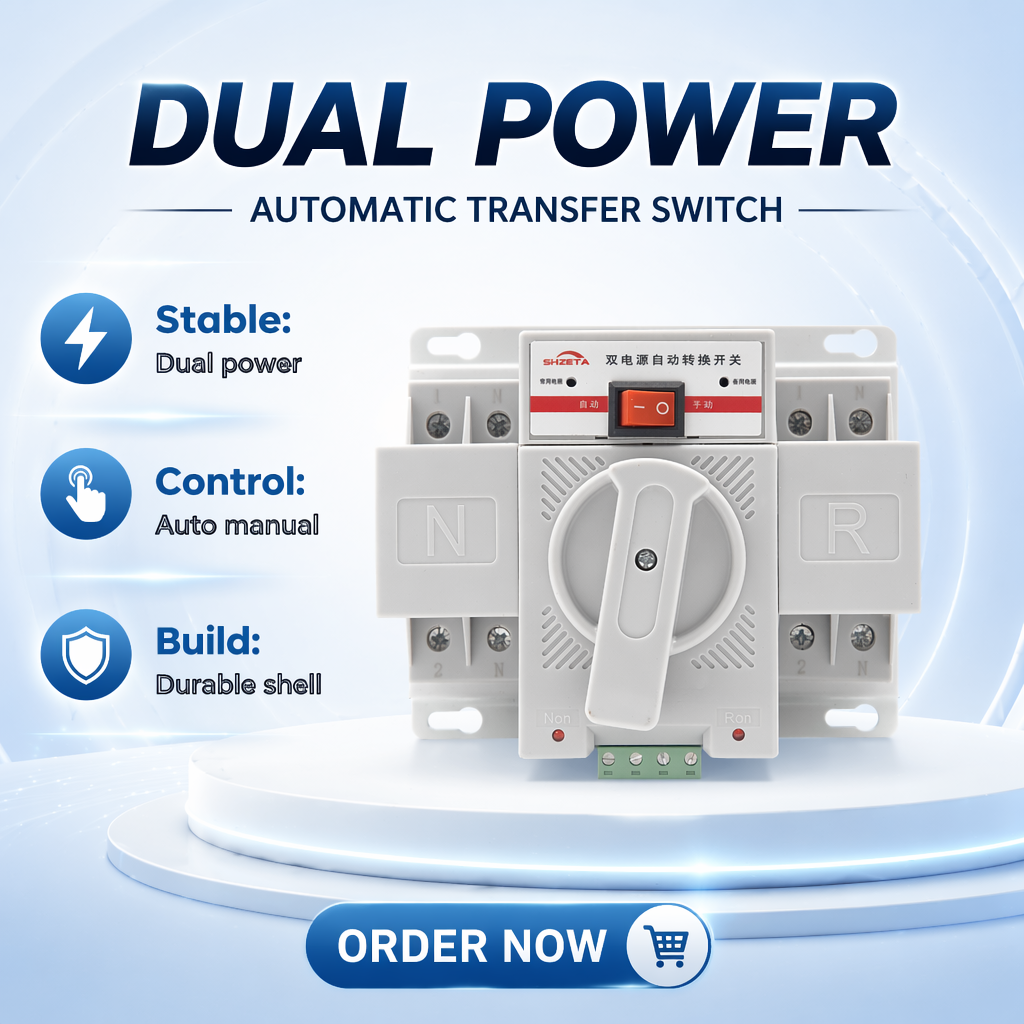
Din Rail 2P ATS Dual Power Automatic Transfer Switch 63A 230V 3kA
- Mounting:35mm DIN Rail Standard
- Nominal Current:63A (230VAC 1P+N)
- Breaking Rating:3kA Icn
- Controller:Auto / Manual Toggle
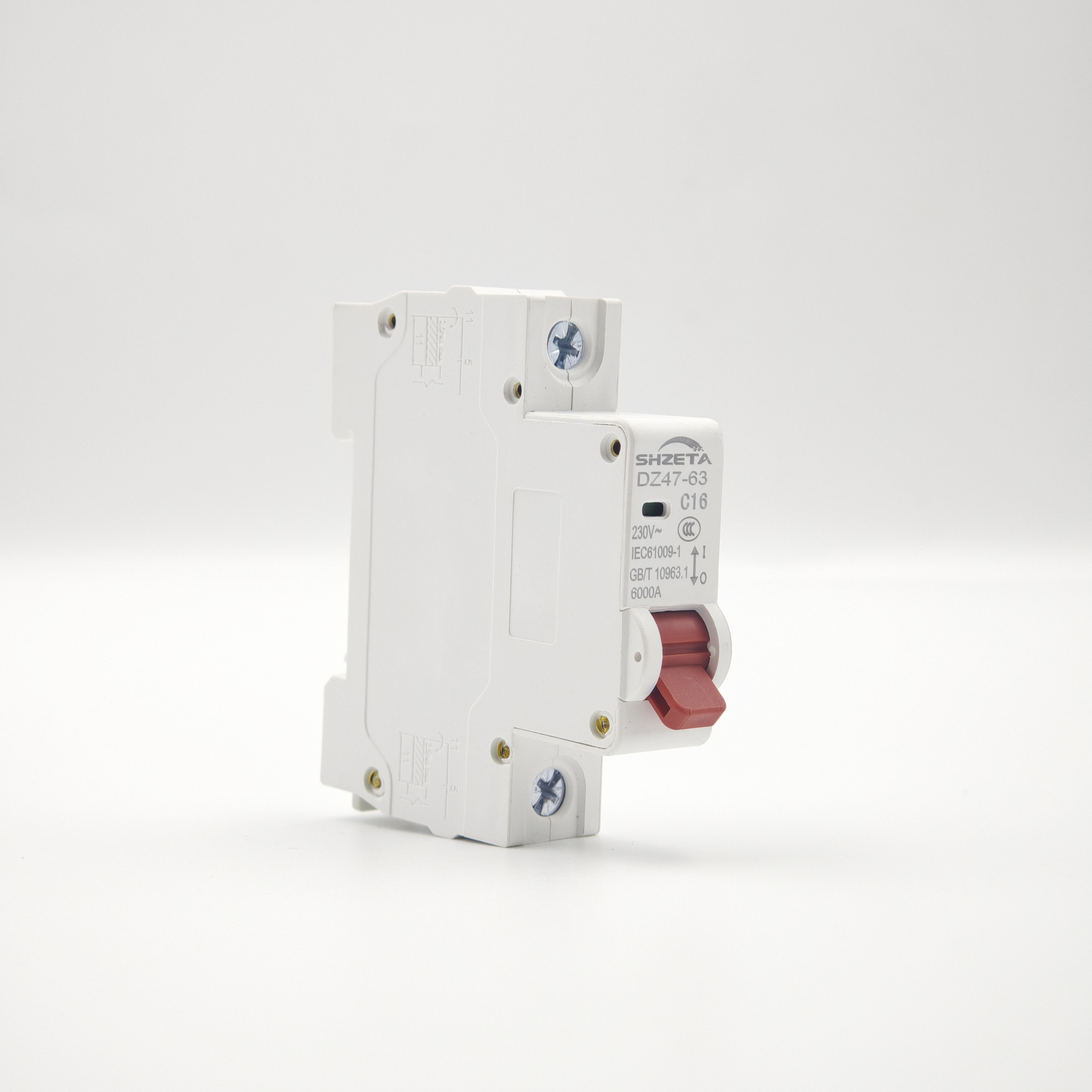
Mini Circuit Breaker Mechanical Interlocking DC MCB 1P+N 2P 3P 4P
- Voltage Rating:Up to 1000V DC / 400V AC
- Topology:Mechanical Interlock
- Tripping Curve:B, C, D Characteristics
- Arc Extinction:Magnetic Blowout Plates
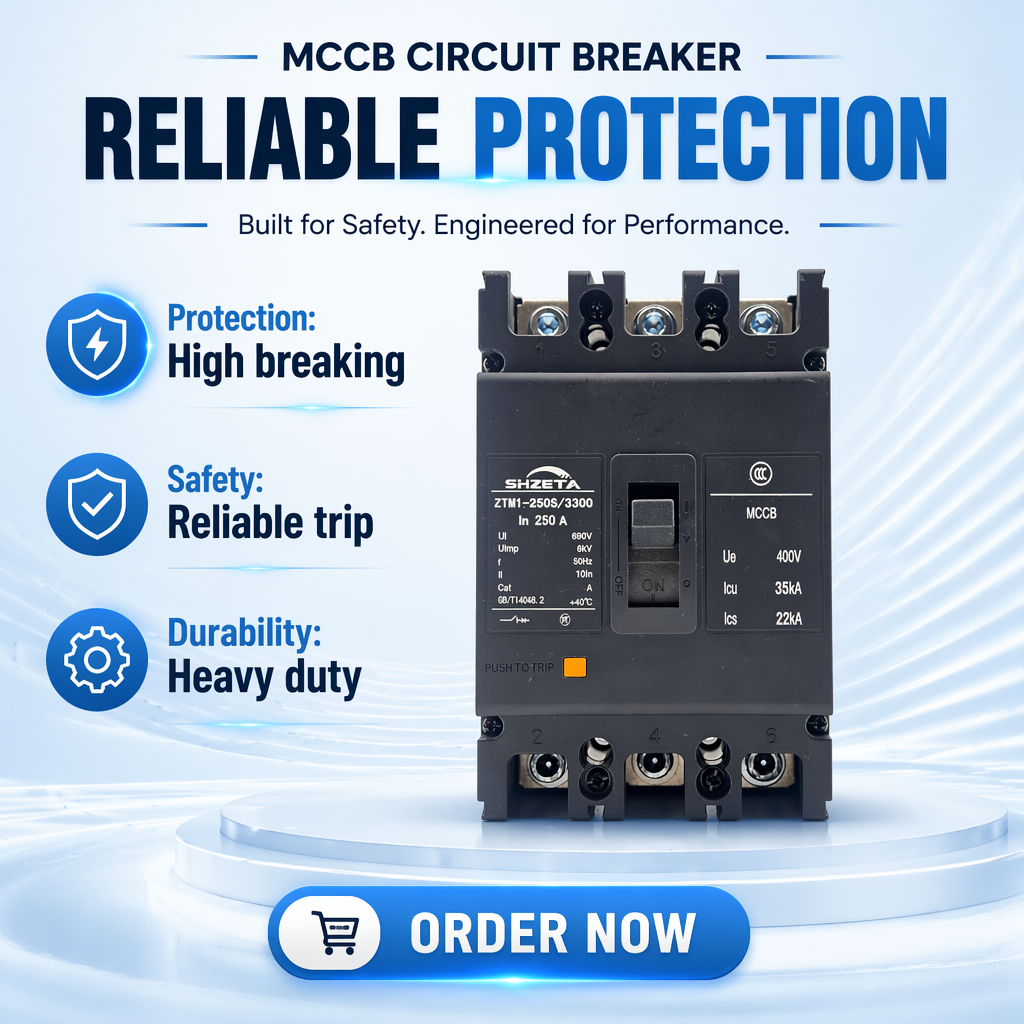
MCCB Thermal-Magnetic Trip Unit 50kA/100kA 400VAC/690VAC
- Breaking (Icu):50kA / 100kA High-Fault
- Voltage Range:400VAC / 690VAC Industrial
- Trip Elements:Bimetal + Magnetic Plunger
- Contact Alloy:High Silver Matrix
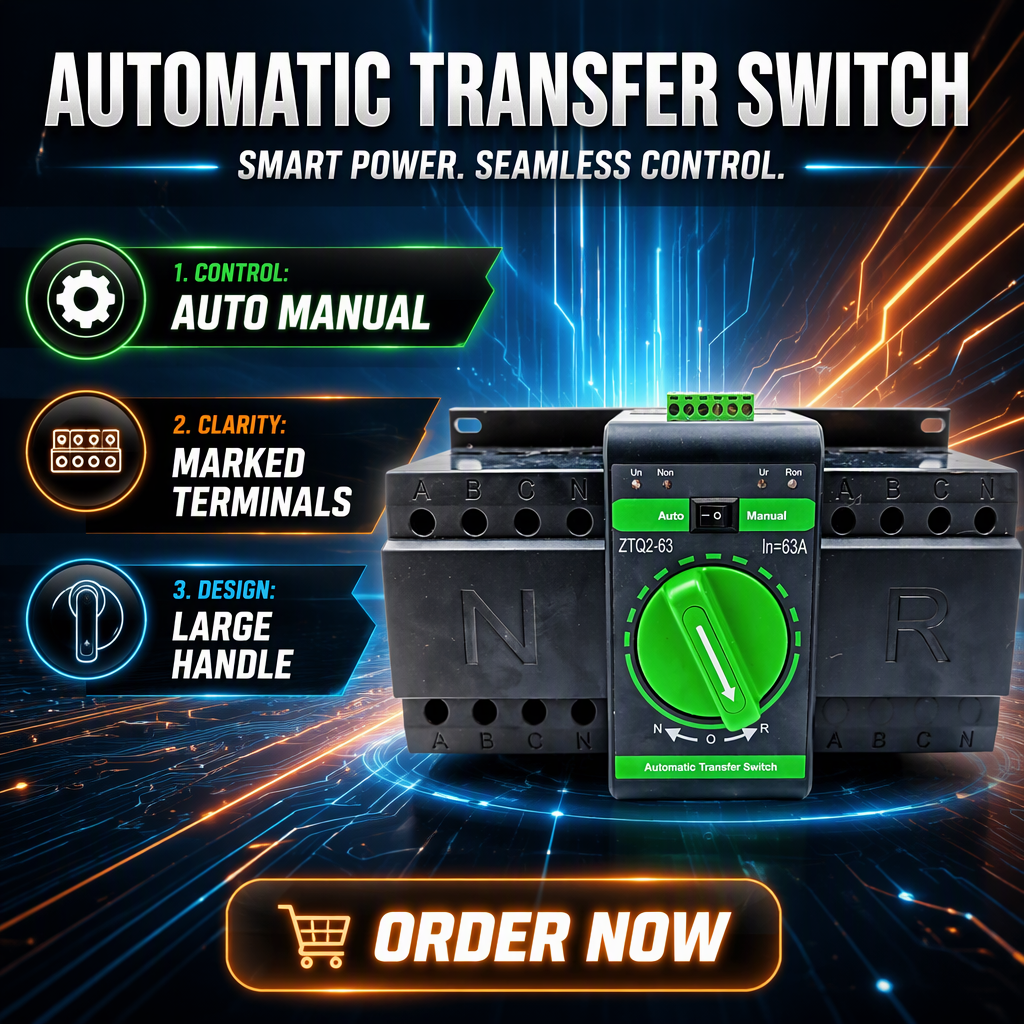
Customizable 2P/4P Manual Conversion ATS 10kA 125A Frame
- Frame Rating:125A Frame Current
- Breaking (Icn):10kA Prospective Fault
- Phases:Single & Three Phase
- Customization:OEM Auxiliary / Shunt Trips
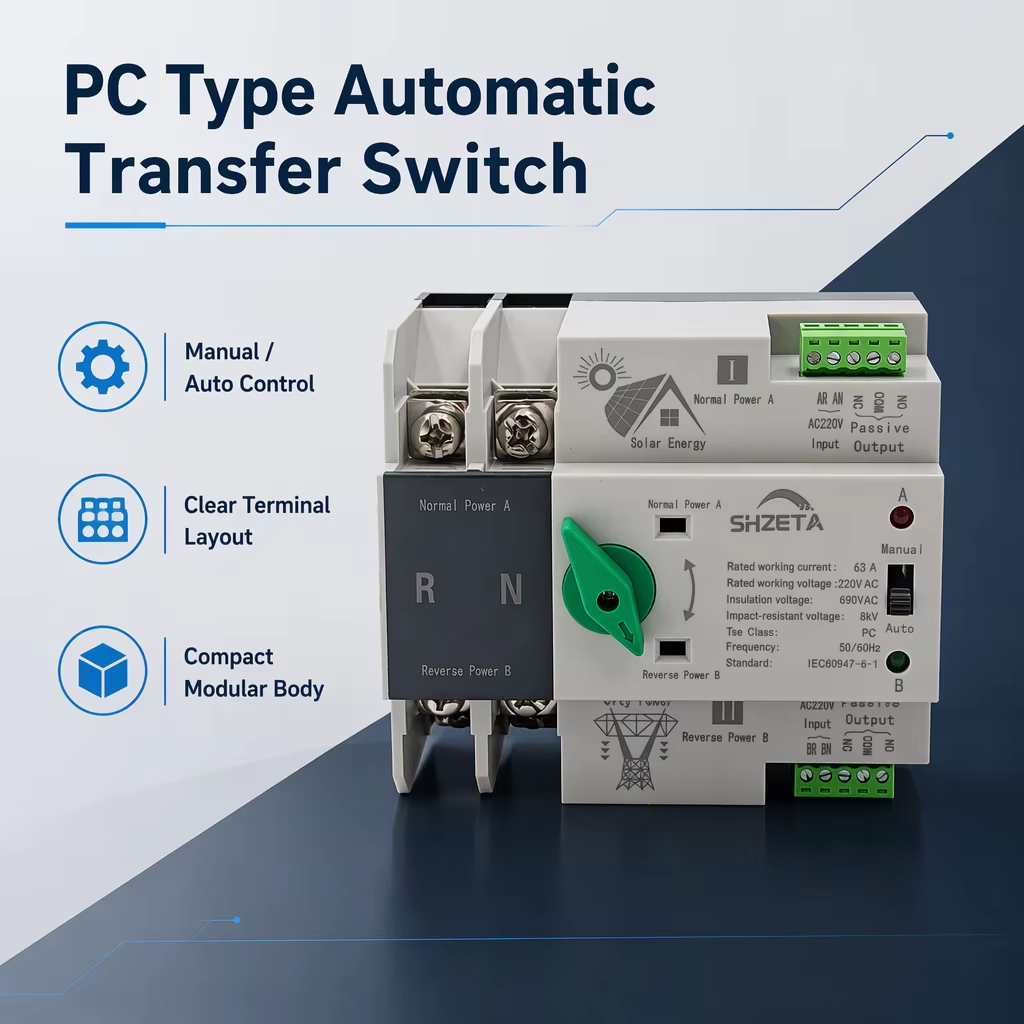
PC Type Automatic Transfer Switch 220V AC Modular for Solar Power
- Application:BESS / Solar Inverter Shift
- Classification:PC Class (No Trip Mechanism)
- Drive System:Solenoid Instantaneous Drive
- Duty Cycle:AC-33iB Microgrid Load
The Architecture of Next-Generation Smart Circuit Breakers
Modern electrical distribution is rapidly shifting from passive overcurrent disconnection to active, telemetry-driven microgrid management. Explore the hardware, edge firmware, and sensor integration driving intelligent solid-state and hybrid electromechanical protection.
Solid-State & Hybrid Arc Quenching
Traditional electromechanical breakers rely on physical contact parting and arc chutes, introducing mechanical trip latencies between 15ms and 35ms. Modern hybrid smart breakers deploy silicon carbide (SiC) and gallium nitride (GaN) solid-state semiconductor topologies operating alongside mechanical bypasses.
- Sub-millisecond arc quenching eliminating contact carbonization.
- Zero-crossing voltage synchronization to suppress switching transients.
- Extended galvanic contact life exceeding 100,000 switching operations.
High-Precision Edge Telemetry & Class 0.5S Metering
Smart circuit breakers integrate multi-channel Rogowski coils, micro-current transformers, and hall-effect sensors directly into the pole assembly. Microcontrollers continuously calculate True RMS voltage, current, power factor, and total harmonic distortion (THD up to the 31st harmonic).
- IEC 62053-22 Class 0.5S active revenue-grade energy metering.
- Real-time temperature telemetry at contact terminals to identify loose torques.
- Under/over-voltage and neutral discontinuity algorithmic detection.
Industrial Fieldbus & Wireless IoT Protocols
Gone are the days of closed contact auxiliary signalling. Contemporary smart distribution demands native protocol translation. Smart MCBs and MCCBs interface seamlessly with supervisory control systems, PLCs, and SCADA architectures without bulky external gateways.
- Isolated RS-485 Modbus-RTU and Ethernet Modbus-TCP fieldbuses.
- Deterministic wireless mesh topologies: Zigbee 3.0, Matter, and Wi-Fi 6.
- Remote firmware updates (OTA) with signed cryptographic validation.
Global Procurement Trends: What B2B Buyers Must Prepare For
International distribution contractors and panel builders face stringent regulatory shifts, decentralized DC power generation, and increasing demands for lifecycle asset monitoring. Here is how global procurement profiles are evolving toward 2030.
Rise of DC Breakers for PV, ESS & EV Infrastructure
With the exponential deployment of commercial rooftop photovoltaics, battery energy storage systems (BESS), and DC fast charging plazas, procurement volumes for dedicated DC miniature and molded case circuit breakers have grown over 35% year-on-year. Buyers are shifting away from AC breakers de-rated for DC to purpose-built polarized and non-polarized units rated up to 1500V DC with permanent-magnet arc blowout systems.
Supply Chain Consolidation & BOM Optimization
Procurement teams are reducing the logistical overhead of dealing with fragmented vendor tiers. Global importers favor integrated suppliers capable of packaging incoming Air Circuit Breakers (ACB), sub-feeder MCCBs, modular DIN-rail MCBs, Surge Protective Devices (SPD), and PC-Class Automatic Transfer Switches (ATS) into unified export consignments with consistent certification dossiers.
Mandatory Life-Cycle Carbon & Environmental Auditing
European and North American switchboard builders face rigorous circular economy documentation mandates under RoHS 3, REACH, and ISO 14064. Procurement contracts increasingly evaluate suppliers on lead-free silver alloy contacts (AgSnO2 instead of AgCdO), halogen-free flame-retardant polyamide enclosures (PA66 with UL94 V-0 flame ratings), and audited factory carbon offsets.
Comprehensive Engineering Selection Matrix
Selecting the appropriate protection tier requires analyzing fault clearance speeds, breaking capacities, and isolation requirements across varying distribution levels.
| Equipment Family | Primary Standards | Rated Current (In) | Breaking Capacity | Trip Unit Technology | Typical B2B Applications |
|---|---|---|---|---|---|
| Miniature Circuit Breakers (MCB) | IEC/EN 60898-1 IEC/EN 60947-2 |
0.5A to 125A | 4.5kA, 6kA, 10kA (Icn) | Thermal bimetal strip + Magnetic fixed solenoid | Final residential & light commercial branch circuits, sub-distribution boards. |
| Molded Case Breakers (MCCB) | IEC/EN 60947-2 | 16A to 1600A | 25kA to 100kA (Icu @ 400V) | Adjustable Thermal-Magnetic or Microprocessor Electronic (LSIG) | Main power feeder lines, heavy motor control centers (MCC), commercial HVAC chillers. |
| Air Circuit Breakers (ACB) | IEC/EN 60947-2 | 630A to 6300A | 50kA to 150kA (Ics = 100% Icu) | Digital Intelligent Trip Controller with Harmonic Filtering | Low-voltage transformer secondaries, utility substations, data center main switchboards. |
| Automatic Transfer Switches (ATS) | IEC/EN 60947-6-1 | 16A to 3200A | Up to 100kA short-circuit withstand (Icw) | PC Class (High-speed Solenoid) or CB Class (Dual Interlocked Breaker) | Emergency utility-to-generator switching, hospital operating suites, solar microgrids. |
| Residual Current Breakers (RCCB/RCBO) | IEC/EN 61008-1 IEC/EN 61009-1 |
10A to 100A | 6kA, 10kA Residual with overcurrent | Electromagnetic zero-sequence current core (Toroid transformer) | Life safety, direct-contact shock prevention (30mA), and electrical fire prevention (300mA). |
Direct-from-Source Precision Manufacturing in Liushi, Wenzhou
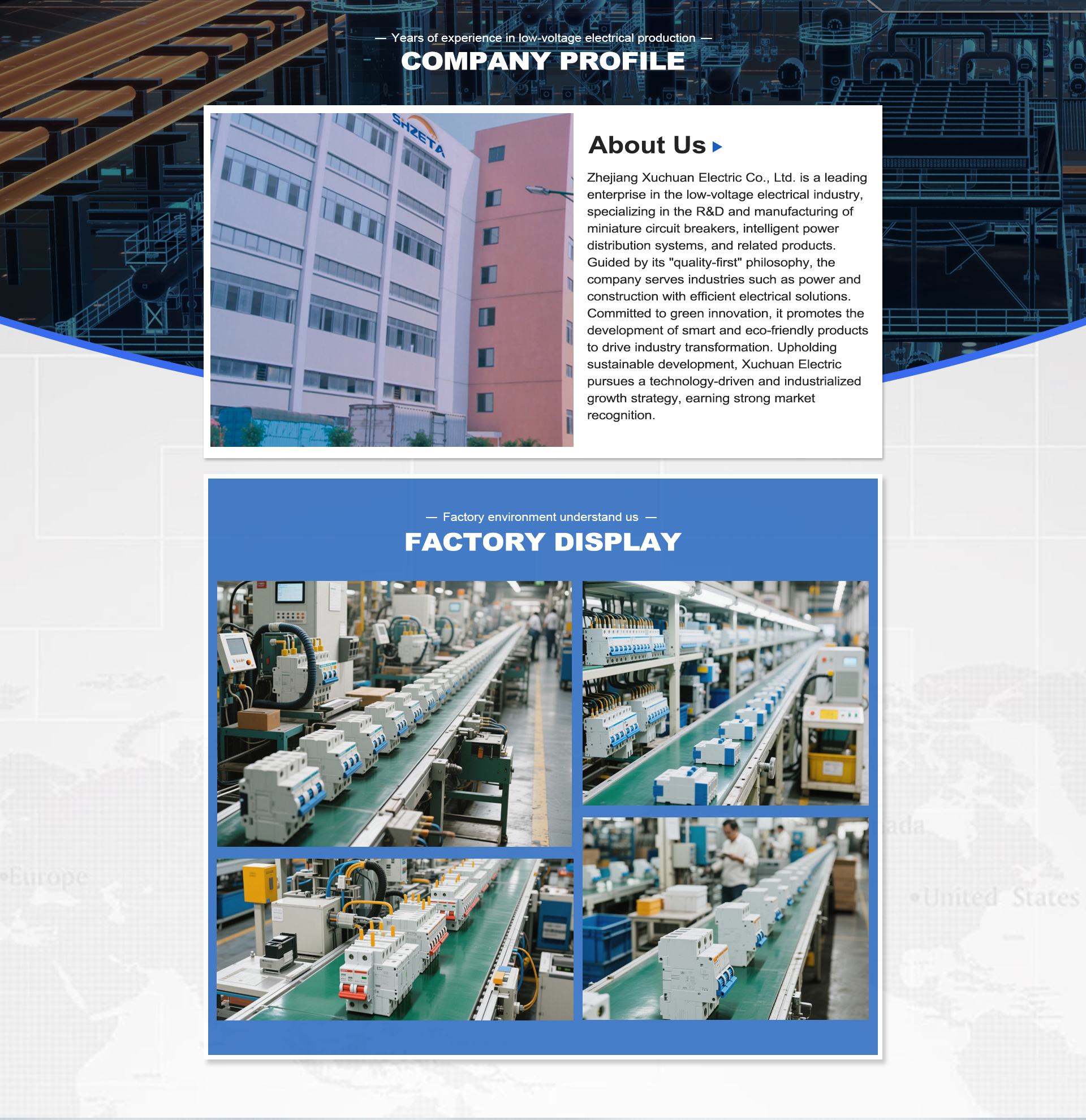
Zhejiang Graybar Electric Co., Ltd. operates in the epicenter of global low-voltage component engineering. Located in Huangyu Village, Liushi Town, our integrated production footprint eliminates third-party trading markups, giving our distribution partners exceptional cost-to-performance ratios and direct access to precision component tooling.
Our quality management infrastructure is built upon uncompromised material auditing. We utilize high-conductivity E-Cu copper bus components, reinforced DMC/BMC molding compounds, and AgSnO2 alloy silver contacts with high anti-welding characteristics. Every single manufacturing lot undergoes automated trip calibration, withstand voltage testing, and computer-verified pole synchronization before vacuum sealing.
Full In-House Calibration
Automated thermal-magnetic test benches ensure instantaneous tripping curves (B, C, D) strictly match IEC 60898-1 calibration tolerances without manual deviation.
Flexible OEM / ODM Support
Laser marking, private-label pad printing, customized rated currents, dual-voltage auxiliary trips, and custom neutral pole configurations delivered for global brands.
Audited On-Site Verification
Our manufacturing workshops, raw material inventories, and financial compliance records have been comprehensively vetted by independent third-party verification authorities.
Low-Risk Agile Sourcing
We break standard Chinese factory barriers by offering starting order minimums of just 5 units for MCB, MCCB, and SPD lines, enabling full compliance testing prior to mass orders.
Frequently Asked Questions by Global Buyers & Engineers
Detailed answers covering breaking capacity selection, type-testing certification, environmental durability, and commercial delivery agreements.
What is the distinction between Icu and Ics ratings when specifying MCCBs?
Icu (Ultimate Short-Circuit Breaking Capacity) defines the maximum fault current a breaker can clear twice (O - t - CO test sequence) without exploding, though it may no longer carry rated current safely afterwards. Ics (Service Short-Circuit Breaking Capacity) indicates the fault current level the breaker can interrupt repeatedly while remaining fully operational. For critical infrastructure, always specify Ics = 100% Icu rather than the lower 50% or 75% thresholds common in budget products.
How does an Electromagnetic RCCB differ from an Electronic RCCB?
Electromagnetic RCCBs use the residual current's own energy via a differential current transformer (core) to trip the mechanism mechanically. They provide 100% human-touch protection even if the incoming neutral wire is lost or line voltage drops below 50V. Electronic (voltage-dependent) RCCBs rely on an internal amplifier circuit powered by mains voltage; if the neutral is severed, electronic RCCBs will fail to trip during an earth fault, presenting critical safety hazards.
Why choose PC-Class Automatic Transfer Switches over CB-Class ATS?
PC-Class ATS devices are dedicated double-throw switching units designed solely to carry and withstand short circuits, utilizing high-pressure solenoid mechanisms that transition power in under 30–50ms without an integrated trip mechanism. CB-Class ATS units use two mechanically interlocked circuit breakers equipped with thermal-magnetic trip units. While CB-Class provides overcurrent protection, an overload on the essential load will trip the breaker, permanently severing emergency backup supply until manually reset.
What tripping curves (B, C, D) are recommended for specific load types?
Curve B trips between 3–5 In and is reserved for resistive loads like domestic heaters, incandescent circuits, and long cable runs where fault loop impedance is high. Curve C trips between 5–10 In and serves as the global standard for general residential, lighting, and light motor loads. Curve D trips between 10–14 In (or up to 20 In under industrial specs) to withstand heavy inrush currents from inductive transformers, industrial motors, and welding equipment without nuisance tripping.
What testing documentation is provided with wholesale export orders?
Every commercial consignment is accompanied by comprehensive quality dossiers: Factory Acceptance Test (FAT) records, dielectric withstand validation reports, high-temperature calibration certificates, and material compliance certificates for contact silver content and fire-retardant casing compounds. Type-test reports matching IEC 60898-1, IEC 60947-2, and IEC 61643-11 are furnished during project technical review stages.
What is the standard manufacturing lead-time and export packaging standard?
Standard sample orders ship within 5 to 7 business days. Batch orders for full container loads (FCL) of mixed MCBs, MCCBs, and ATS equipment require 20 to 30 calendar days. Export shipments utilize reinforced corrugated master cartons with sealed inner moisture barriers, individual multi-language terminal instruction sheets, and fumigated solid timber euro-pallets stretch-wrapped for sea freight stability.