Featured Low Voltage MCCBs & Industrial Switching Systems
Precision-manufactured in Liushi, Wenzhou under rigorous IEC 60947-2 and IEC 60898-1 standards. Tested for high prospective short-circuit clearance, multi-pole selectivity, and maximum duty endurance.
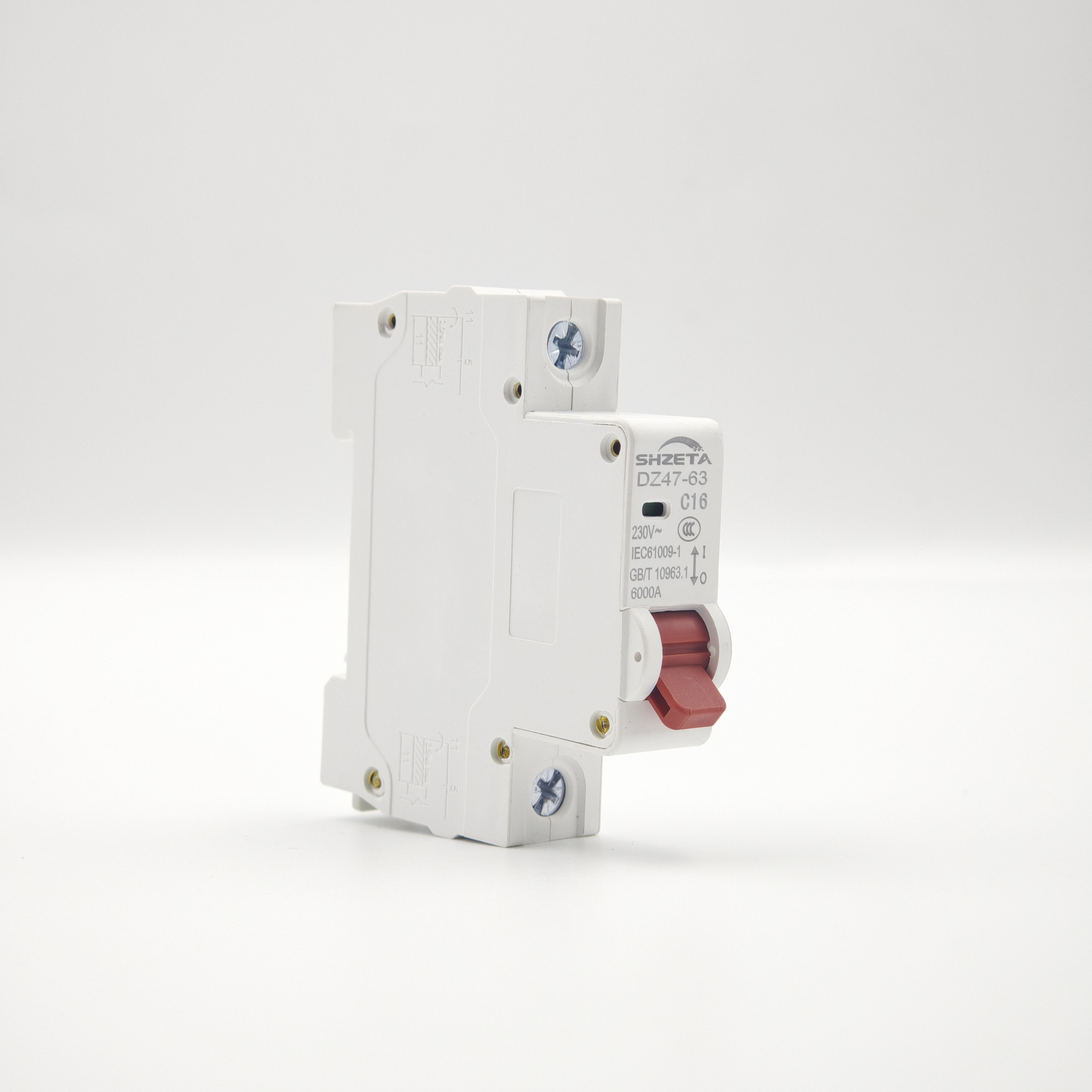
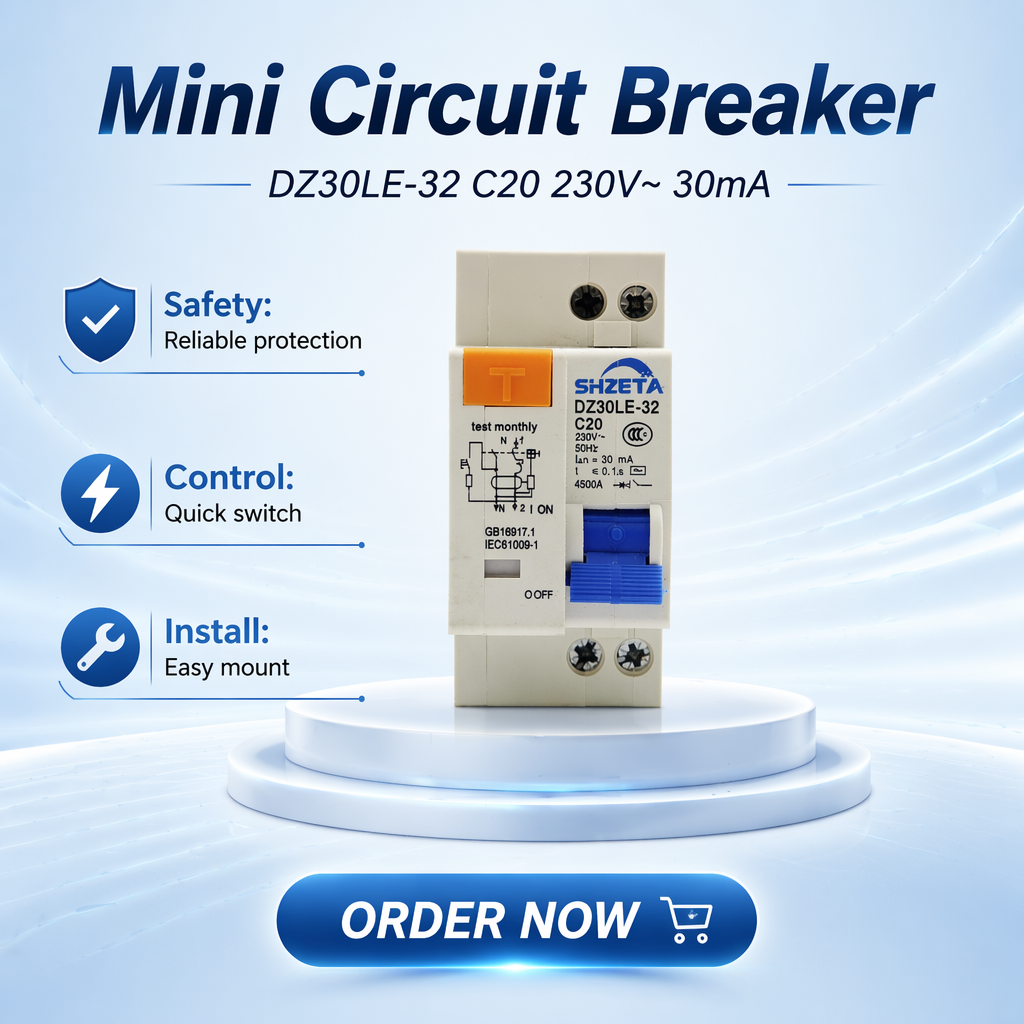
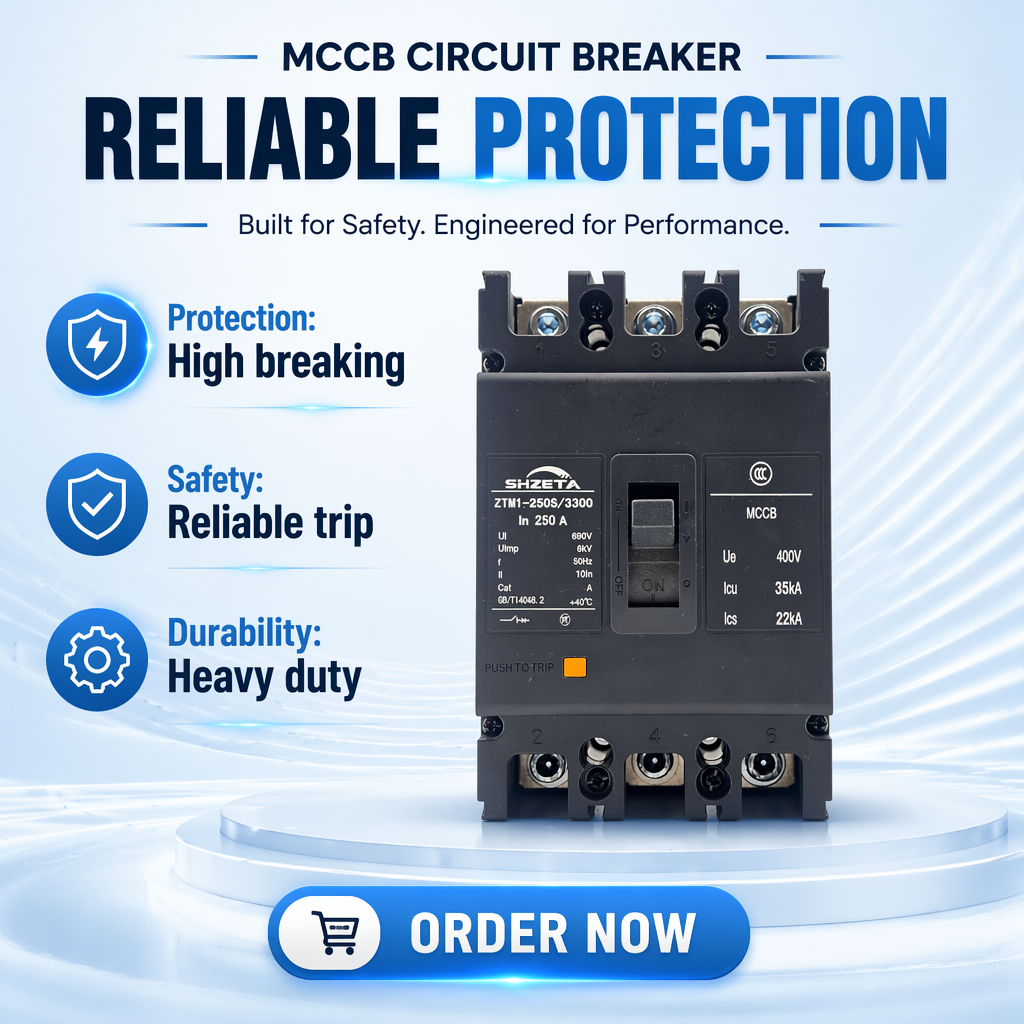
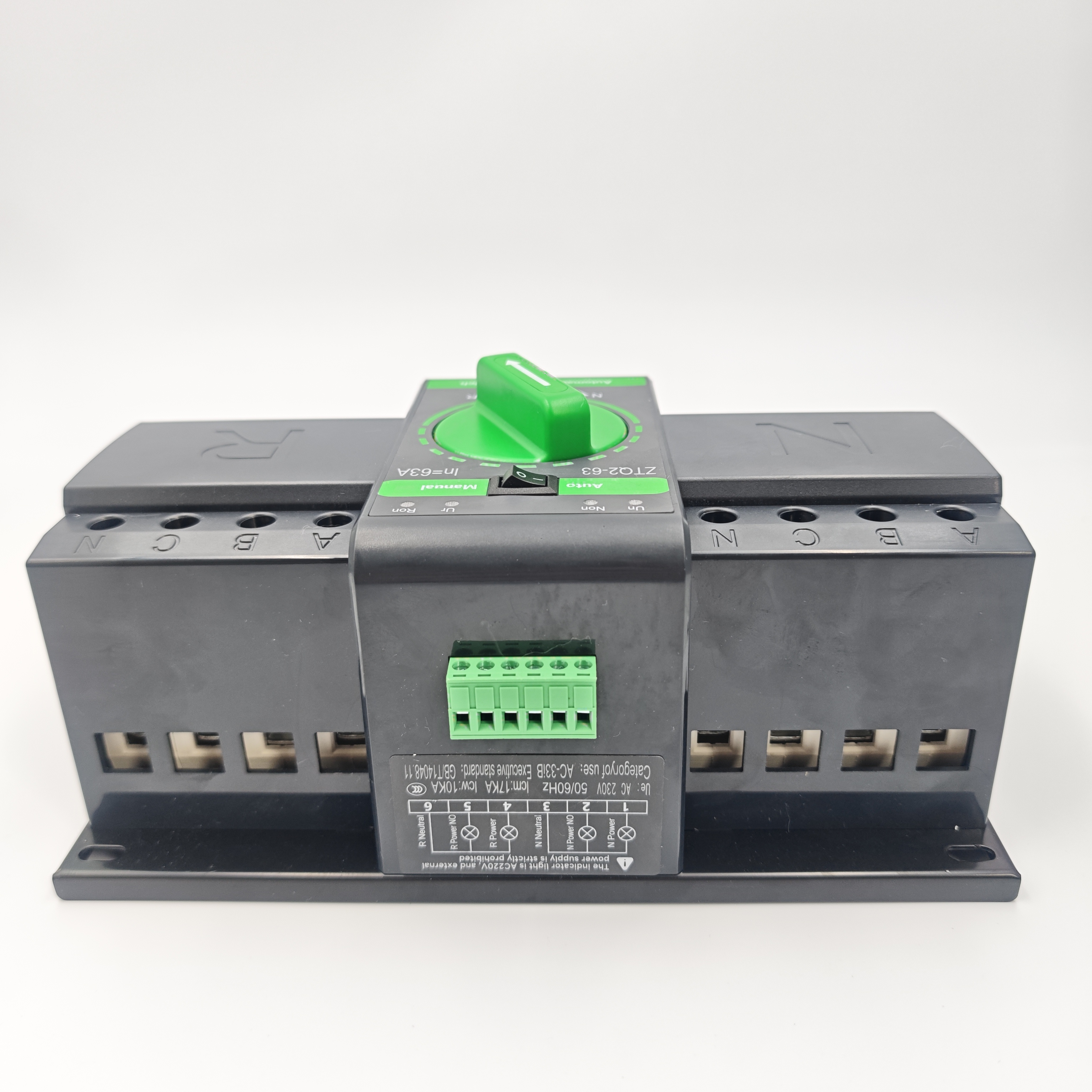
1. The Engineering Anatomy of Low Voltage Molded Case Circuit Breakers (MCCB)
A Low Voltage Molded Case Circuit Breaker (LV MCCB) is a mechanical switching apparatus engineered to connect, conduct, and disconnect electrical currents under normal circuit environments, while automatically extinguishing severe fault conditions such as sustained overloads and high-energy short-circuit faults. Built in accordance with IEC 60947-2 and equivalent EN/UL directives, MCCBs bridge the operational gap between Miniature Circuit Breakers (MCBs), which manage final distribution up to 125A, and Air Circuit Breakers (ACBs), which handle main incomers reaching 6300A.
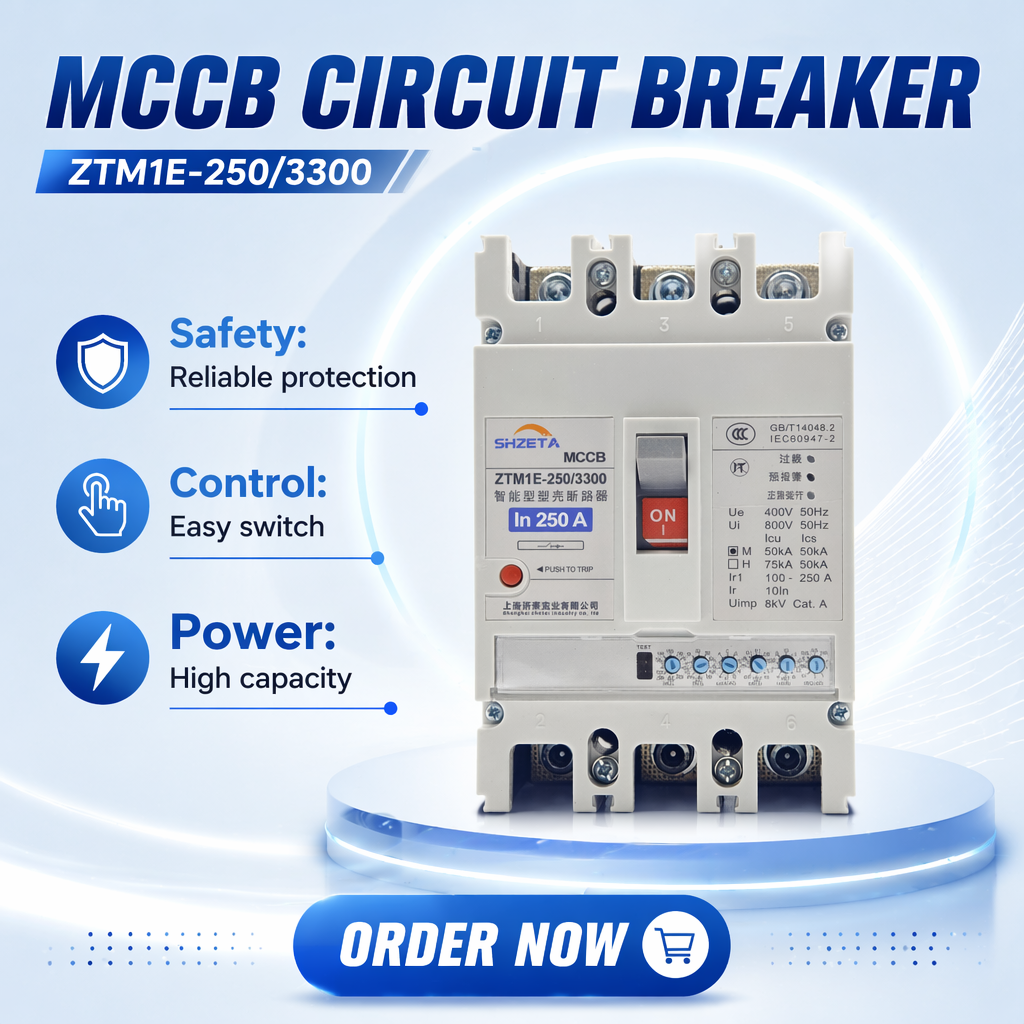
Modern electrical distribution networks demand uninterrupted service reliability and extreme arc-extinguishing precision. The internal topology of an industrial-grade MCCB combines five interdependent sub-assemblies: the structural thermoset housing, the contact mechanism, the arc-extinguishing chamber (chute), the operating mechanism, and the trip unit (thermal-magnetic or electronic).
Arc Quenching Dynamics
Utilizes de-ionizing steel splitter plates configured in narrow parallel arrays. High magnetic fields drive the plasma arc into the chute, rapidly extending and cooling it within milliseconds to guarantee high Ics values.
Silver-Alloy Metallurgy
Stationary and moving contacts are sintered from high-density Silver-Nickel (AgNi) or Silver-Tin-Oxide (AgSnO2) composites, preventing contact welding and sustaining rated life under heavy inductive motor switching.
Trip Discrimination
Available in inverse-time bimetallic mechanisms for thermal overload coupled with instantaneous electromagnetic solenoids, or digital Electronic Trip Units (ETU) supporting LSI and LSIG programmable coordination curves.
When selecting low-voltage protective devices, design consultants and panel builders must evaluate two primary short-circuit ratings: the Ultimate Short-Circuit Breaking Capacity (Icu) and the Service Short-Circuit Breaking Capacity (Ics). While standard commodity breakers offer an Ics that is merely 50% or 75% of their nominal Icu, premium Chinese manufacturers engineered in Liushi now consistently guarantee Ics = 100% Icu across critical industrial frame sizes up to 690VAC. This performance metric ensures that after interrupting a catastrophic short circuit, the breaker remains fully operational without degradation of contact resistance or dielectric clearance.
2. Engineering Specification & Selection Matrix
Understanding the exact thermodynamic and electrodynamic parameters is essential for electrical consultants designing Motor Control Centers (MCC), Substation Switchboards, and Photovoltaic Combiner Panels. The following reference matrix delineates the core parameters verified across our manufacturing lines.
| Frame Size (AF) | Rated Current (In) | Poles Configuration | Breaking Capacity (Icu @ 400V) | Trip Unit Technology | Primary Industrial Application |
|---|---|---|---|---|---|
| 63A / 125AF | 16A – 125A | 1P, 2P, 3P, 4P | 25kA – 50kA | Thermal-Magnetic Fixed | Commercial sub-feeders, HVAC units, light industrial distribution |
| 160AF / 250AF | 100A – 250A | 3P, 4P (Neutral Switched) | 35kA – 65kA | Adjustable Thermal / Fixed Mag | Heavy motor feeders, marine switchboards, building mains |
| 400AF / 630AF | 250A – 630A | 3P, 4P | 50kA – 85kA | Electronic Trip Unit (ETU / LSI) | Secondary substation incomers, data center power trains |
| 800AF / 1250AF | 630A – 1250A | 3P, 4P | 65kA – 100kA | Microprocessor LSIG + RS485 | Heavy metallurgy, solar farm central inverters, mining grids |
| DC Solar Frame | 63A – 500A | 2P, 4P (In Series) | 10kA – 25kA @ 1500VDC | Magnetic Flux Blowout | BESS Battery racks, 1000V/1500V DC solar PV combiners |
*Note: All ratings are confirmed via third-party type test reports under standard IEC 60947-2 operating cycles: O - t - CO (Open - wait - Close/Open).
3. Product Development Trends: The Evolution of Intelligent & DC MCCBs (2025–2030)
The global low-voltage circuit breaker market is traversing a profound paradigm shift driven by renewable electrification, decentralized microgrids, and digital facility management. Leading Chinese manufacturers are investing heavily in R&D to stay ahead of these regulatory and architectural changes.
1. IoT Telemetry & Microprocessor Trip Units
Traditional passive thermal-magnetic strips are being displaced by digital Electronic Trip Units (ETU) integrating continuous harmonic analysis, thermal imaging algorithms, and wireless communications (Modbus-RTU, BACnet, and LoRaWAN). Predictive maintenance algorithms alert operators to high contact temperatures prior to catastrophic arc flash events.
2. 1500V DC Architecture for Solar & BESS
The global rollout of utility-scale Battery Energy Storage Systems (BESS) and high-voltage string inverters demands circuit breakers capable of interrupting high DC arcs without zero-crossing points. Modern Chinese MCCBs feature high-speed permanent magnetic blowout systems and elongated ceramic splitter plates engineered to isolate up to 1500VDC safely.
3. Solid-State (SSCB) & Hybrid Breakers
For mission-critical data centers and semiconductor manufacturing plants where even a quarter-cycle interruption causes devastating financial loss, hybrid solid-state topologies are emerging. Combining Silicon Carbide (SiC) power semiconductors with mechanical galvanic air gaps allows trip times below 50 microseconds—virtually eliminating fault current propagation.
4. Strategic Procurement Trends: How Global B2B Buyers Optimize TCO
Procuring low-voltage electrical switchgear has evolved beyond simply cross-referencing factory catalog prices. Experienced procurement directors for multinational engineering firms, panel builders, and regional distributors employ a Total Cost of Ownership (TCO) approach. The primary sourcing strategies shaping today's B2B supply chains include:
De-risking Through Liushi Industrial Agglomeration: Liushi Town in Yueqing, Wenzhou, produces over 60% of China's low-voltage electrical apparatus. Sourcing directly from an established Liushi manufacturer such as Zhejiang Graybar Electric provides an unmatched structural advantage: direct physical access to local copper extruders, silver-alloy sintering plants, precision mold fabrication facilities, and terminal block stampers. This eliminates supply chain friction, stabilizes lead times during global commodity fluctuations, and drastically lowers unit fabrication expenses.
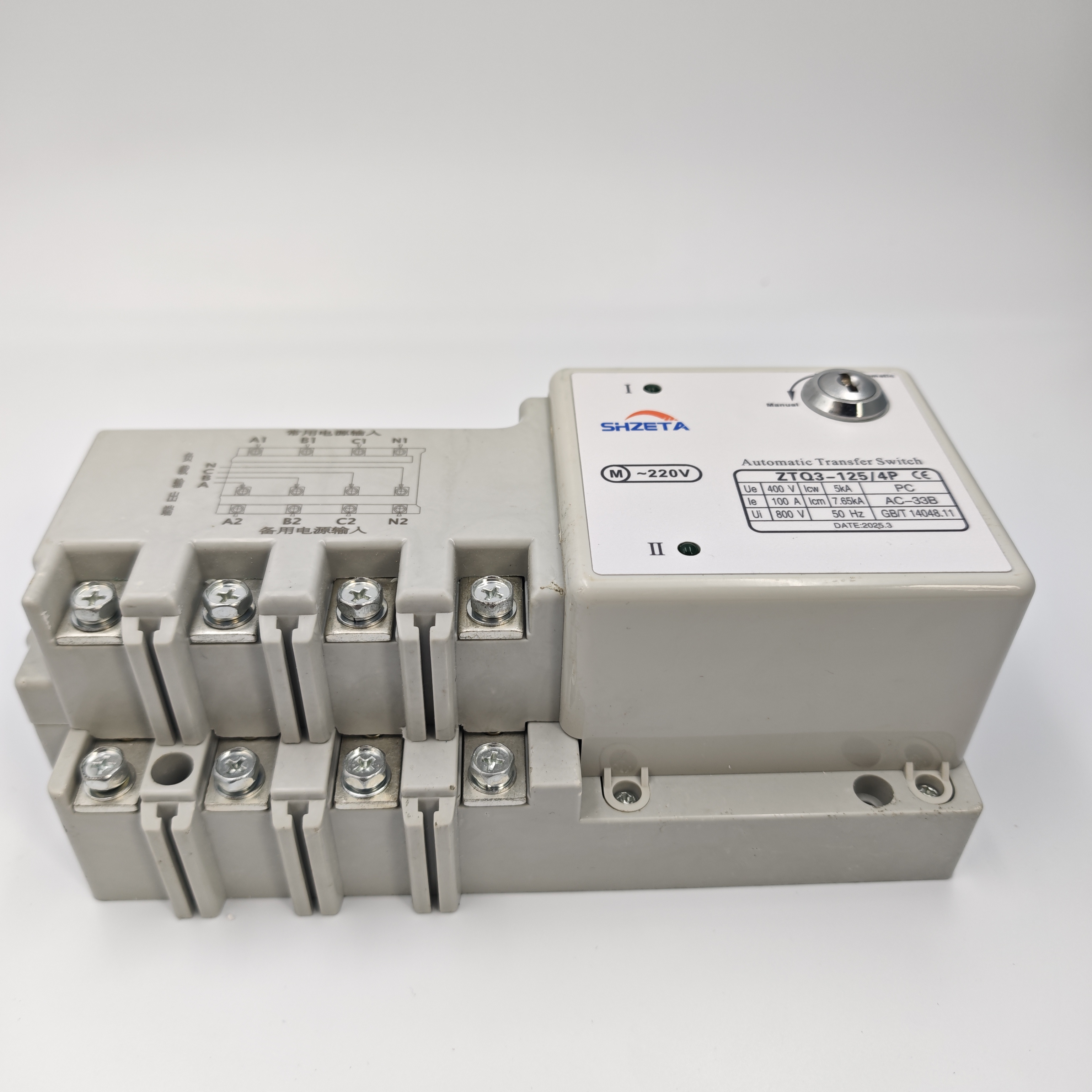
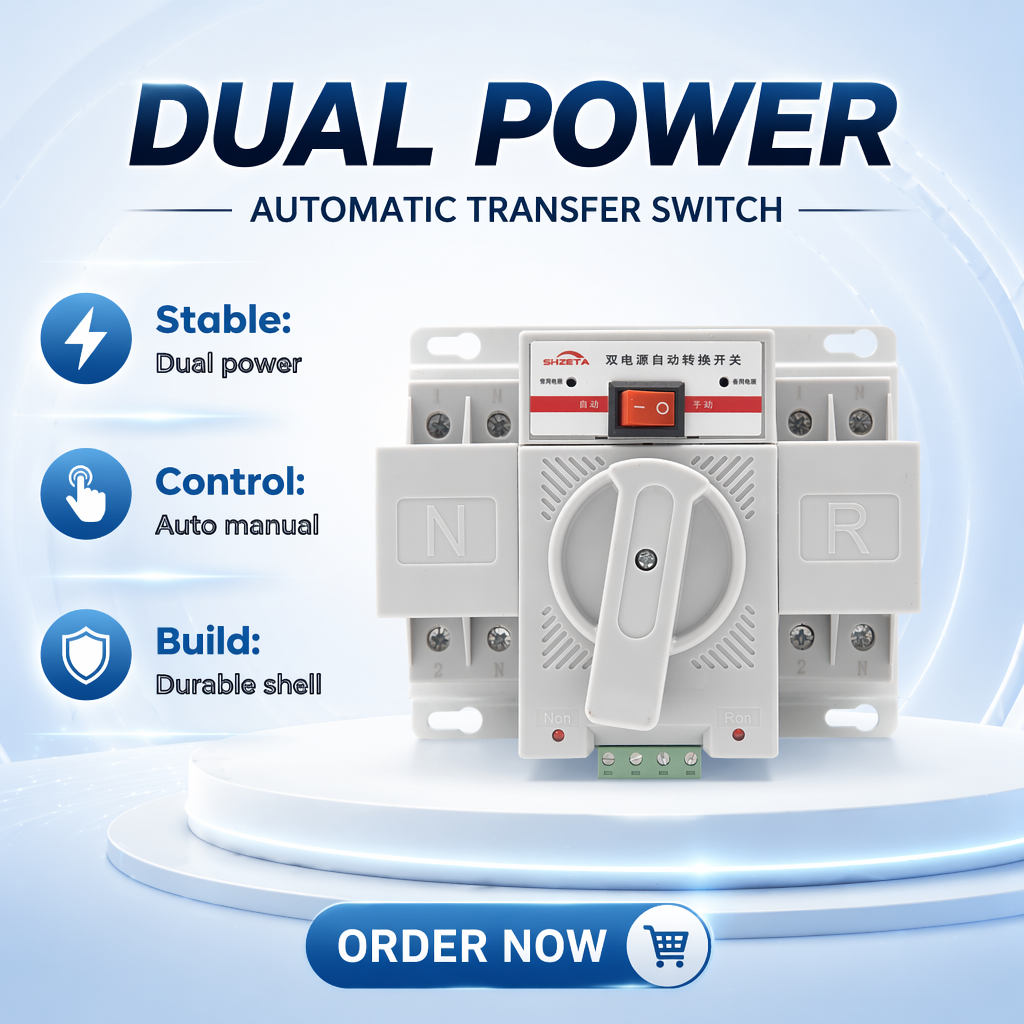
BOM Consolidation Across Distribution Tiers: Project contractors prefer manufacturers capable of supplying the full electrical cascade rather than isolated part numbers. Combining Air Circuit Breakers (ACB) for primary switchgear, Molded Case Circuit Breakers (MCCB) for intermediate distribution panels, Automatic Transfer Switches (ATS) for backup gensets, and Surge Protective Devices (SPD) within a single consolidated sea container minimizes customs clearing documentation costs, port handling fees, and multi-vendor coordination overhead.
Factory Verification and Type-Test Certification Transparency: Stringent compliance testing under IEC 60947-2, CE low-voltage directives, and CB Scheme certifications is non-negotiable. Leading tier-one Chinese factories now supply comprehensive high-power laboratory test oscillograms (issued by accredited test bodies such as CQC, TUV, or Intertek) demonstrating temperature rise limits, mechanical endurance (up to 20,000 operations), and short-circuit break times to streamline local municipal code approvals in Europe, South America, Southeast Asia, and the Middle East.
5. Manufacturing Strengths & Engineering Edge: Zhejiang Graybar Electric
Located in Huangyu Village, Liushi Town, Zhejiang Graybar Electric Co., Ltd. has established itself as an authoritative manufacturer and international exporter of high-reliability circuit protection systems. Our operational philosophy is built on technical transparency, engineering rigor, and an agile commercial approach tailored for global OEMs, wholesalers, and panel builders.
Vertical Integration
- Direct procurement of pure electrolytic copper busbars and high-grade silver contacts.
- In-house thermoset plastic molding to withstand extreme arc temperatures (UL 94V-0 rated).
- Tooling customization for rapid private label branding and bespoke terminal pitch dimensions.
100% Quality Inspection
- Automated test benches verify thermal trip response times at 1.05 and 1.30 times rated current.
- High-potential dielectric withstand testing across all poles, phases, and frame enclosures.
- Full optical laser verification of terminal thread machining and surface galvanization depth.
Agile B2B Supply Chain
- Low initial MOQs (from 5 pcs for standard MCCB/MCB, 1 pc for ACBs) enabling rapid sample validation.
- Export-grade corrugated crating with internal anti-vibration shock absorbers and desiccant sealing.
- Direct road dispatch to Ningbo and Shanghai ports within 24 to 48 hours of packaging clearance.
Engineering Support
- Dedicated multilingual electrical sales engineers supporting English, Russian, Spanish, and Arabic.
- Comprehensive coordination curves, CAD block diagrams, and Step/BIM files for switchboard layout.
- Full private label OEM/ODM printing, packaging design, and multilingual user manual adaptation.
6. Comprehensive B2B Procurement FAQ: Technical & Sourcing Inquiries
Below are real-world technical and commercial inquiries addressed by our electrical application engineers during technical procurement reviews with international switchboard fabricators and electrical import houses.
Accelerate Your Electrical Sourcing Pipeline
Connect directly with our senior application engineering desk in Liushi, Wenzhou. Submit your Single-Line Diagrams (SLD), Bill of Materials (BOM), or OEM private-label requirements for an immediate technical evaluation and direct manufacturer quote.