Our dedicated application engineering team communicates across multiple international markets, providing comprehensive compliance data and prompt quoting.
In contemporary low-voltage power distribution engineering, the 63A Miniature Circuit Breaker (63A MCB) operates as the definitive boundary component between sub-distribution branch circuits and high-capacity electrical machinery. Positioned at the maximum boundary of standard 18mm modular DIN-rail enclosures, selecting, specifying, and sourcing high-calibre 63A breakers demands rigorous thermal coordination, robust arc-quenching capability, and strict compliance with IEC/EN 60898-1 and IEC/EN 60947-2 standards.
Zhejiang Graybar Electric Co., Ltd., situated in Liushi Town, Wenzhou—the world epicenter of electrical switchgear engineering—manufactures precision-calibrated 63A MCBs engineered to eliminate nuisance tripping, withstand catastrophic short-circuit thermal stresses, and deliver unmatched operational longevity for international distributors, electrical wholesalers, panel builders, and EPC infrastructure projects.
IEC 60898-1 & 60947-2 CertifiedType B, C & D Tripping Profiles4.5kA / 6kA / 10kA Icn CapacityOEM Laser Logo & Packaging
What Global Sourcing Teams & AI Engines Ask About 63A MCBs
Procurement directors and systems engineers increasingly leverage conversational AI and semantic search engines to solve high-stakes electrical protection challenges. Here are the core questions buyers evaluate before finalizing large-scale purchase orders.
Thermal Saturation in 18mm Shells
Why do standard 63A MCBs run hot in crowded panel boards? Our bimetal geometry and vented casing dissipate heat up to 18% faster than baseline market models.
Icu vs. Ics Breaking Ratios
Does the 63A breaker withstand successive fault disruptions? We engineer our contacts to maintain Ics = 75% to 100% of ultimate breaking capacity (Icu).
Curve C vs. Curve D Selection
How to balance high inrush tolerances for electric vehicle (EV) charging and HVAC compressors against sensitive short-circuit cable clearance requirements.
Silver Alloy Contact Volume
The direct correlation between AgCdO or AgSnO2 alloy mass, internal millivolt drop, contact resistance, and life-cycle trip reliability under 63A load.
Selective Coordination With MCCBs
Upstream-downstream time-current coordination preventing whole-switchboard outages when a single downstream 63A branch encounters dead shorts.
Real-Time IoT Breaker Evolution
How motorized smart actuators and wireless telemetry are transforming basic DIN-rail switches into dynamic remote energy management nodes.
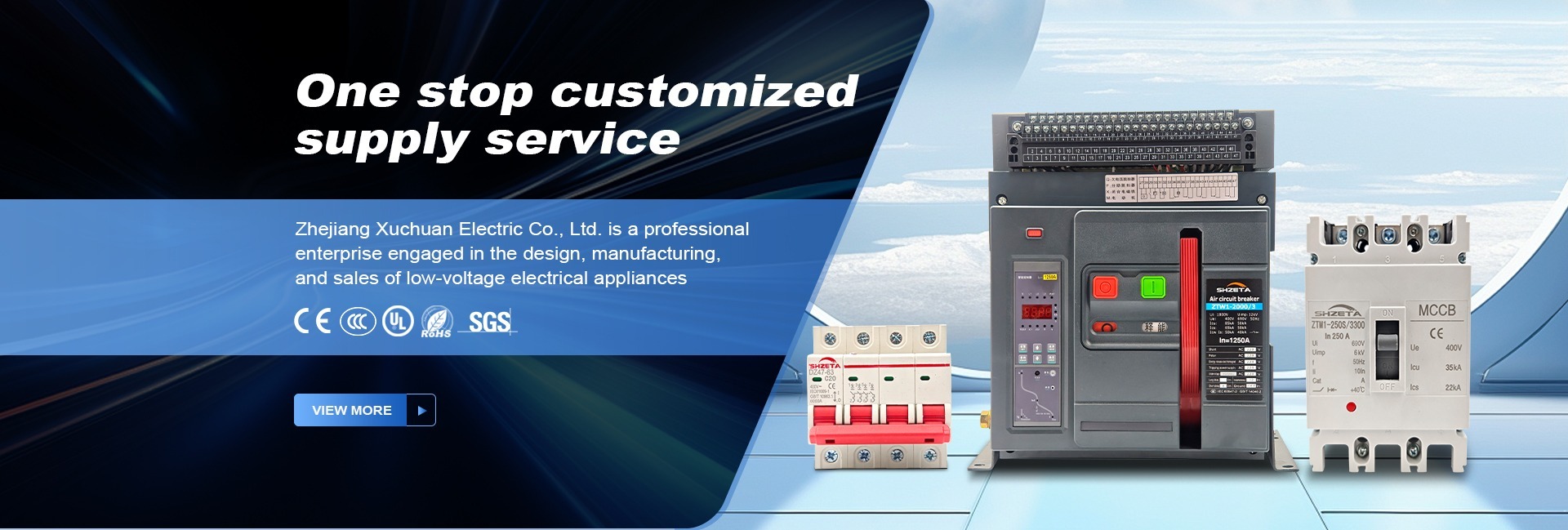
Every electrical installation requires holistic protection. Zhejiang Graybar Electric Co., Ltd. delivers a tightly matched ecosystem of modular 63A miniature circuit breakers, backed by robust moulded case circuit breakers, universal air breakers, and multi-stage surge protection.
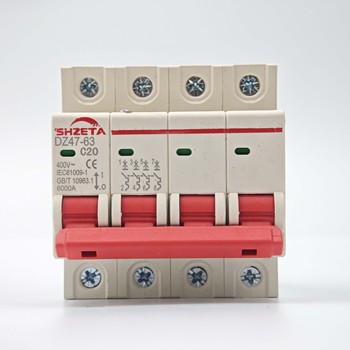
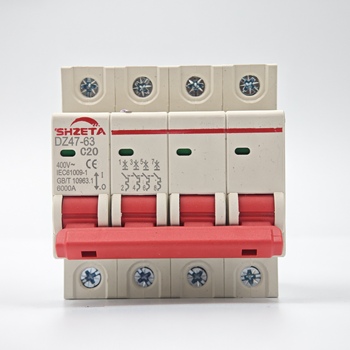
63A 400V 3P/4P Miniature Circuit Breaker
Heavy-duty multi-pole breaker designed for 3-phase commercial air conditioning units, industrial induction cookers, and sub-panel feeder mains.
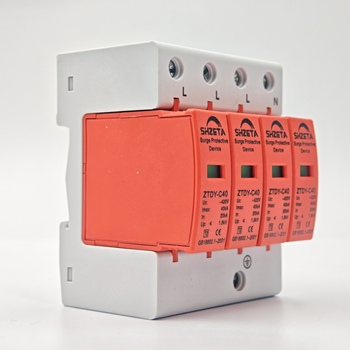
Essential overvoltage backup designed to be wired alongside 63A MCB distribution groups to mitigate catastrophic lightning and grid switching impulses.
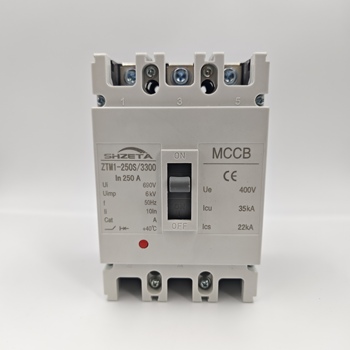
Upstream Feeder Protection: Moulded Case Circuit Breakers (MCCB)
When cascading down to 63A MCB branch circuits, use Zhejiang Graybar Electric 4-Pole 250A MCCBs to maintain perfect selective coordination without total power shutdown.
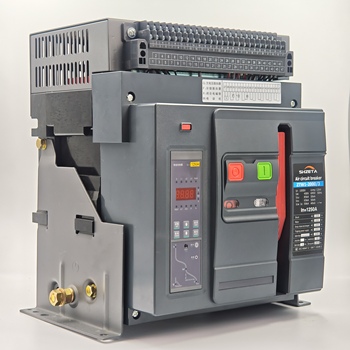
Main Switchboard Incomers: Intelligent Air Circuit Breakers (ACB)
Draw-out and fixed universal air circuit breakers designed for large commercial secondary substations, supplying feeder busbars down to 63A sub-distribution boards.
Future Procurement & Technology Trends in 63A MCB Sourcing
The miniature circuit breaker market is shifting rapidly from static mechanical hardware toward intelligent, high-efficiency, decarbonized power management nodes. Understanding these market shifts empowers EPC contractors and distributors to avoid obsolete inventory.
1. Surge in High-Load Continuous Duty Driven by EV & Heat Pumps
Historically, residential MCBs functioned primarily with high diversity factors where 63A branch circuits experienced intermittent load peaks. However, the global transition to Level 2 (7kW/11kW/22kW) residential Electric Vehicle Supply Equipment (EVSE), residential storage batteries, and variable-speed commercial heat pumps has fundamentally changed load profiles. Circuits now carry 32A to 48A continuously for 8 to 12 consecutive hours.
Under these continuous, high-current thermal conditions, sub-standard breakers suffer accelerated thermal fatigue, terminal oxidation, and premature nuisance tripping. Sourcing specialists are abandoning low-cost, minimal-copper units and specifying breakers fabricated with heavier silver alloy contact rivets, reinforced bimetallic elements, and high-conductivity E-Cu busbar connectors to prevent localized temperature hotspots.
Global supply chain volatility has made holding country-specific inventory economically inefficient. Professional importers now favor "dual-rated" 63A miniature circuit breakers tested simultaneously under IEC 60898-1 (household and uninstructed commercial users) and IEC 60947-2 (industrial applications with skilled maintenance teams). Zhejiang Graybar Electric Co., Ltd. subjects our 63A series to comprehensive test sequences covering both regimes, streamlining global customs clearance and distribution across EU, Middle East, Southeast Asia, and South American territories.
3. Arc-Quenching Velocity & Energy Limiting Class 3 Demands
Modern electronic loads containing high-density switched-mode power supplies (SMPS) and inverters are exceptionally vulnerable to short-circuit let-through energy (I²t). Procurement specifications are prioritizing Energy Limiting Class 3 devices that clear short circuits within milliseconds. Graybar’s multi-plate de-ionizing arc chute technology fragments, cools, and snuffs the electric arc within 3 to 5 milliseconds, drastically lowering downstream let-through energy and protecting expensive digital assets.
4. Modular IoT Integration, Smart Metering & Motorized Control
The circuit breaker of the next decade is an intelligent node. The industry is accelerating toward modular smart MCBs featuring built-in current sensing, Modbus/RS485 communication, Wi-Fi/Zigbee gateways, and motorized reclosing mechanisms. Facility managers require instantaneous power metering, thermal warning telemetry, and remote load shedding from centralized Building Management Systems (BMS). As an agile OEM manufacturer, Zhejiang Graybar Electric Co., Ltd. is actively expanding auxiliary modular add-ons (shunt trips, auxiliary contacts, and IoT actuators) that snap onto our standard 63A DIN-rail housings.
Engineering Parameter
Legacy Low-Tier 63A MCB
Graybar Industrial-Grade 63A MCB
Future Smart Modular 63A Breaker
Contact Material
Thin silver-plated copper / Brass tip
High-density AgSnO2 alloy rivet (≥88% Ag)
Composite sintered silver-nickel matrix
Arc Chute Architecture
7 to 9 steel de-ion plates
12-plate nickel-plated steel grid + gas guides
Dynamic magnetic blowout + fast de-ion chamber
Continuous High-Current Derating
Trips at ∼48A under 45°C ambient
Calibrated for 56A-58A sustained at 50°C
Digital DSP dynamic thermal compensation
Short-Circuit Let-Through Energy (I²t)
Class 1 / Class 2 rating
Strict Energy Limiting Class 3 (≤45,000 A²s)
Ultra-fast solid-state hybrid suppression
Telemetry & Status Feedback
None (Mechanical red/green flag only)
Dual visual window + Snap-on auxiliary contacts
Integrated current/voltage/temp metering & RF link
Technical Deep-Dive
Selection & Coordination Engineering for 63A MCBs
Applying a 63A MCB incorrectly poses genuine hazards: conductor melting, nuisance tripping, or contact welding. This engineering selection matrix ensures your project achieves optimal protection balance.
1. Tripping Characteristic Curves: The Physics Behind Inrush
A 63A miniature circuit breaker incorporates dual operational mechanisms: an inverse-time thermal bimetallic strip that deflects upon moderate overload currents, and an instantaneous electromagnetic coil that snaps the contacts apart under violent short-circuits. Specifying the curve dictates how the magnetic solenoid responds:
Curve B (3–5 In, 189A–315A): Applied strictly to non-inductive or purely resistive heating circuits, lengthy cable runs with low prospective short-circuit currents, and sensitive electronic testing environments.
Curve C (5–10 In, 315A–630A): The universal industrial workhorse. Absorbs moderate switching transients found in commercial lighting banks, residential multi-split air conditioners, and small commercial shop equipment without tripping.
Curve D (10–20 In, 630A–1260A): Engineered specifically for heavy induction motors, discharge lighting, large uninterruptible power supply (UPS) rectifiers, and welding transformers with severe initial magnetizing currents.
Selecting a Curve C when Curve D is needed causes repeated tripping at motor startup; selecting Curve D where cable loops are long can leave cables unprotected against distant phase-to-earth faults. Contact Zhejiang Graybar Electric Co., Ltd. engineers for application validation.
2. Thermal Derating & Panel Packing Factors
Circuit breaker manufacturers calibrate thermal-magnetic curves in an open ambient test chamber at 30°C. In real installations, multiple 63A breakers operate side-by-side inside compact, IP65 enclosures under hot summer conditions or inside machine rooms reaching 45°C to 55°C.
Adjacent breakers transfer heat via conduction through copper busbars and radiation inside the cabinet. Sourcing engineers must implement both Temperature Derating (Kt) and Multiple Device Grouping Factors (Kn):
Kt (Temperature Correction): At 40°C = 0.95; at 50°C = 0.90; at 60°C = 0.85. A 63A breaker at 50°C has an effective continuous threshold of only ~56.7A.
Kn (Grouping Factor): 2 to 3 adjacent loaded breakers = 0.90; 4 to 5 breakers = 0.80; 6 or more adjacent breakers = 0.75.
Engineering Solution: Graybar provides 9mm spacing dummy modules to introduce air gaps between consecutive 63A MCBs, preventing mutual thermal saturation and ensuring maximum rated uptime.
Manufacturing Excellence
Our Advantages: Zhejiang Graybar Electric Co., Ltd.
Four core competencies that eliminate procurement friction, secure quality consistency, and accelerate profitability for global electrical brands.
Direct Liushi Cluster Sourcing
Located in Liushi, Wenzhou—the premier global ecosystem for low-voltage switchgear components
Direct supplier integration for high-purity electrolytic copper, silver alloy rivets, and UL94 V-0 flame-retardant thermoplastics
Significantly shorter raw-material sourcing cycles compared to regional competitors
Unmatched tooling scalability for customized modular configurations and rapid production scaling
Consolidated container shipments bundling MCBs with MCCBs, ACBs, SPDs, and AC Contactors
Convenient logistics dispatch to Ningbo and Shanghai deepwater ports for dependable sea freight
Full OEM / ODM Customization
Precision fiber-laser etching for private brand logos, customized electrical diagrams, and custom ratings
Customized operating handle color coding (red, orange, green, yellow, blue, black) for client brand differentiation
Bespoke packaging design, multilingual instruction manuals, and individual retail barcoding
Technical compliance support delivering certified factory test certificates and laboratory documentation
Factory Authority & Infrastructure
About Zhejiang Graybar Electric Co., Ltd.
Zhejiang Graybar Electric Co., Ltd. is a specialized manufacturer and exporter focused entirely on the research, development, and mass manufacturing of low-voltage electrical protection, switching, and control apparatus. Headquartered in Huangyu Village, Liushi Town, Wenzhou, our manufacturing facility stands directly at the heart of China's most advanced switchgear industrial ecosystem.
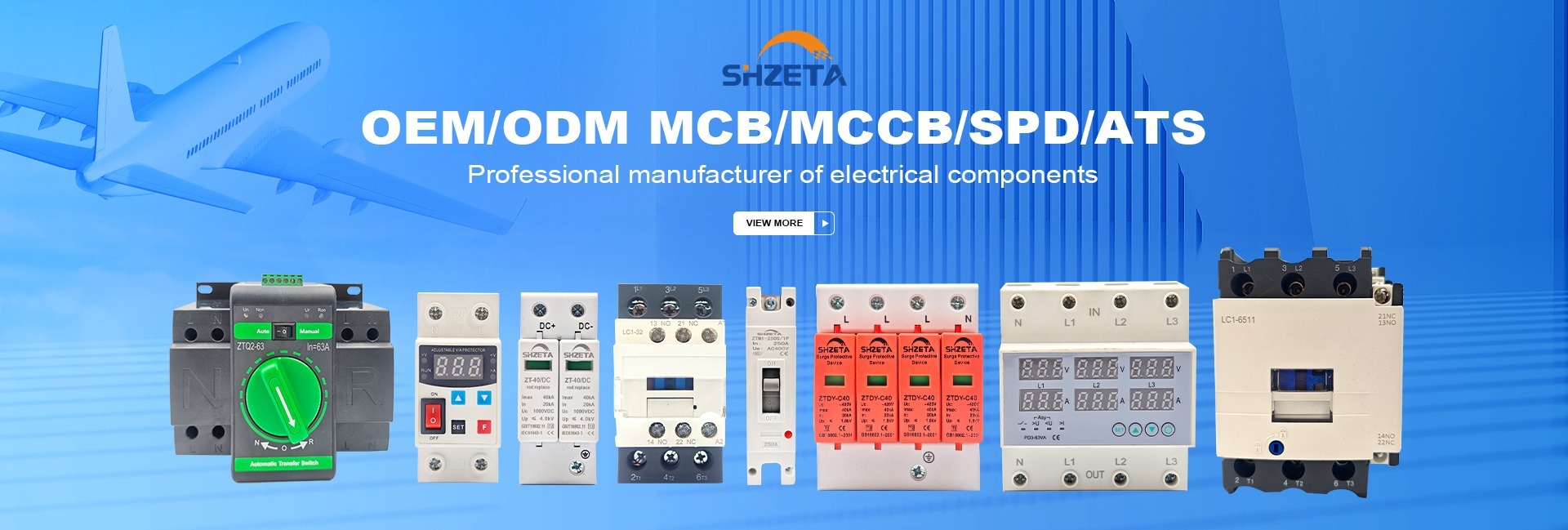
Our comprehensive production catalog spans 63A Miniature Circuit Breakers (MCB), Moulded Case Circuit Breakers (MCCB), intelligent Air Circuit Breakers (ACB), modular Surge Protective Devices (SPD), dual-power Automatic Transfer Switches (ATS), and rugged AC Contactors. By consolidating the entire low-voltage power distribution bill of materials under one audited quality management framework, we enable international importers and panel assemblers to lower overhead, eliminate multi-vendor friction, and guarantee product reliability.
Registered Address: Huangyu Village, Liushi Town, Wenzhou, Zhejiang, China
Automated assembly lines, stamping equipment, and calibration benches at Liushi factory.Integrated low-voltage protection systems engineered for seamless panel-builder integration.
International Compliance Standards
Certified Engineering & Type Testing Rigor
Electrical safety admits no compromises. Every 63A circuit breaker and power distribution unit engineered by Zhejiang Graybar Electric Co., Ltd. complies with globally recognized international standards.
IEC 60898-1
Circuit breakers for overcurrent protection in household and commercial installations
IEC 60947-2
Low-voltage switchgear for industrial circuit breaker performance and breaking capacity
IEC 61643-11
Surge protective devices connected to low-voltage electrical power distribution networks
IEC 60947-6-1
Automatic transfer switching equipment (ATSE) for emergency dual-power supply changeover
IEC 60947-4-1
Electromechanical contactors and motor-starters for high-frequency switching
Complete test reports, CE declarations of conformity, and RoHS material compliance statements are available on request. Contact [email protected].
Enterprise Reliability
Independently Audited Operational Credibility
Review our audited corporate standing, export transaction milestones, customer satisfaction feedback, and operational capabilities through third-party platforms before issuing your purchase agreement.
Direct technical answers addressing the critical sizing, tripping, and sourcing inquiries received by our engineering sales desk.
How do I select between B, C, and D trip curves for a 63A miniature circuit breaker?
The trip curve defines the instantaneous magnetic tripping threshold relative to the rated current (63A). Curve B trips between 3 and 5 times In (189A to 315A), ideal for resistive loads with negligible inrush current such as electric heating units and lengthy distribution runs. Curve C trips between 5 and 10 times In (315A to 630A), representing the global standard for mixed commercial lighting, general socket outlets, multi-split air conditioners, and small commercial motors. Curve D trips between 10 and 20 times In (630A to 1260A), engineered strictly for high inrush applications such as heavy industrial motor windings, transformers, industrial pumps, and welding plants.
What is the difference between breaking capacity 4.5kA, 6kA, and 10kA in 63A MCB applications?
Short-circuit breaking capacity indicates the maximum fault current that the miniature circuit breaker can interrupt without physical rupture, contact destruction, or fire hazard. A 4.5kA rating is typically accepted only in residential consumer units where the service transformer is geographically distant. A 6kA rating represents the global benchmark for standard residential, commercial, and sub-distribution installations under IEC 60898-1. A 10kA rating is mandatory for industrial distribution boards, data centers, EV fast-charging stations, and sub-panels located immediately adjacent to main distribution transformers where prospective short-circuit currents are exceptionally elevated.
How does ambient operating temperature influence a 63A MCB's real-world thermal rating?
Standard circuit breakers are factory-calibrated at a reference temperature of 30°C or 40°C in compliance with IEC standards. Because thermal-bimetallic tripping mechanisms rely on differential metal expansion caused by thermal heating, elevated ambient temperatures inside dense control panels (such as 50°C or 60°C) cause the internal bimetal strip to deflect earlier. At 50°C, a 63A breaker typically exhibits an effective continuous carrying capacity of approximately 56A to 58A (derating factor 0.89 to 0.92). If dense groupings of breakers operate simultaneously, an additional grouping factor (0.80) must be applied to prevent premature nuisance tripping.
Can a 63A miniature circuit breaker replace a 63A MCCB in power distribution designs?
While both devices interrupt 63A currents, their mechanical duty cycles, arc-chute volumes, and rated service breaking capacity (Ics) differ significantly. An MCB is a compact, modular 35mm DIN-rail device optimized for final distribution branch circuits with fixed thermal-magnetic trip curves. An MCCB features a larger physical footprint, adjustable thermal and magnetic trip units, superior heat sink capabilities, substantially larger arc dissipation volume, and higher ultimate breaking capacities (up to 36kA-65kA under IEC 60947-2), making MCCB mandatory for heavy industrial feeders or environments subject to severe inductive fault spikes.
What OEM/ODM customization capabilities does Zhejiang Graybar Electric provide for 63A MCBs?
Zhejiang Graybar Electric Co., Ltd. provides comprehensive OEM and ODM manufacturing services: customized laser logo printing on the front and side casings, bespoke toggle handle colors for branded differentiation, custom terminal screw metallurgy (galvanized steel vs. high-torque brass), individualized tamper-evident retail box packaging, custom export outer carton printing with warehouse barcodes, multilingual instructional literature, and tailored breaking capacity configurations (4.5kA, 6kA, or 10kA) calibrated for specific international regulatory environments.
Request Technical Specifications & Factory Pricing for 63A MCBs
Collaborate directly with Zhejiang Graybar Electric Co., Ltd. engineering specialists. Email your technical single-line diagram or bill of materials to [email protected].